
Why Your Dryer Might Be Draining Your Wallet
If you’re facing high utility bills in Portland, your clothes dryer might be the culprit. An energy saving dryer can slash your energy costs while protecting the environment—and choosing the right one doesn’t have to be complicated.
Quick Guide to Energy-Saving Dryers:
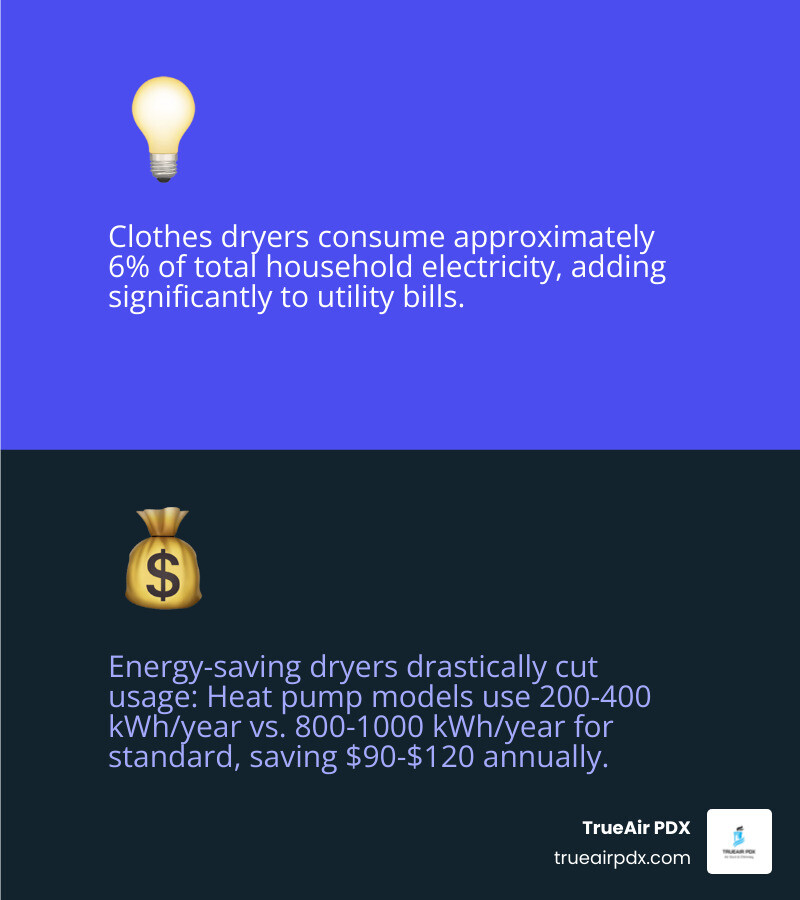
- Heat Pump Dryers use up to 70% less energy than conventional models (200-400 kWh/year vs. 800-1,000 kWh/year)
- ENERGY STAR Certified Models save an average of $210 over their lifetime and use at least 20% less energy
- Annual Savings range from $16 for standard efficient electric dryers to $90-$120 for heat pump models
- Federal Tax Credits of up to $2,000 are available for qualifying heat pump dryers through the Inflation Reduction Act
- Key Features to look for include moisture sensors, high Combined Energy Factor (CEF) ratings, and automatic cycle termination
Dryers account for about 6% of your household’s electricity consumption. That might not sound like much, but it adds up fast—especially when you consider that most standard dryers consume 800 to 1,000 kilowatt-hours per year.
The good news? Modern energy-efficient dryers use advanced technology to cut that consumption dramatically. Heat pump dryers, for instance, operate on a closed-loop system that recycles warm air instead of venting it outside. Others use smart sensors to detect exactly when clothes are dry, preventing the energy waste of over-drying.
But here’s what many Portland homeowners don’t realize: even the most efficient dryer won’t save you money if its vent is clogged with lint. A blocked dryer vent forces your appliance to work harder and longer, wasting energy and creating a serious fire hazard. Regular maintenance isn’t just about safety—it’s about protecting your investment in efficiency.
Energy saving dryer definitions:
Decoding Efficiency: What Makes a Dryer “Energy-Saving”?
An energy saving dryer is designed to use less electricity or gas to dry your clothes. Its efficiency is primarily measured by two key indicators: the ENERGY STAR certification and the Combined Energy Factor (CEF).
Understanding the ENERGY STAR Label
The ENERGY STAR label, backed by the U.S. EPA, is your assurance of efficiency. To earn this label, a dryer must be at least 20% more energy-efficient than standard models, saving an average of $210 in energy costs over its lifetime. These dryers use advanced features like automatic termination sensors, which shut the machine off when clothes are dry to prevent energy waste and fabric damage. When shopping, look for the blue label, and for top-tier performance, seek out the “ENERGY STAR Most Efficient” designation. You can Find and Compare ENERGY STAR models on their official website.
What is the Combined Energy Factor (CEF)?
While ENERGY STAR tells you a dryer is efficient, the Combined Energy Factor (CEF) tells you how efficient it is. CEF measures the pounds of clothing a dryer can dry per kilowatt-hour (kWh) of energy. Simply put, a higher CEF rating means a more efficient dryer.
This metric provides a standardized way to compare models. For example, ultra-efficient heat pump dryers can achieve a CEF of 11.0, while other leading energy saving dryer models boast ratings of 9.0 or higher. Comparing CEF ratings helps you identify which dryers offer the best performance for your money and the environment.
Understanding Your Options for an Energy-Saving Dryer
Choosing an energy saving dryer involves picking the right technology for your home, needs, and budget. The market offers several types, each with unique benefits.
Heat Pump Dryers: The Ultimate in Efficiency
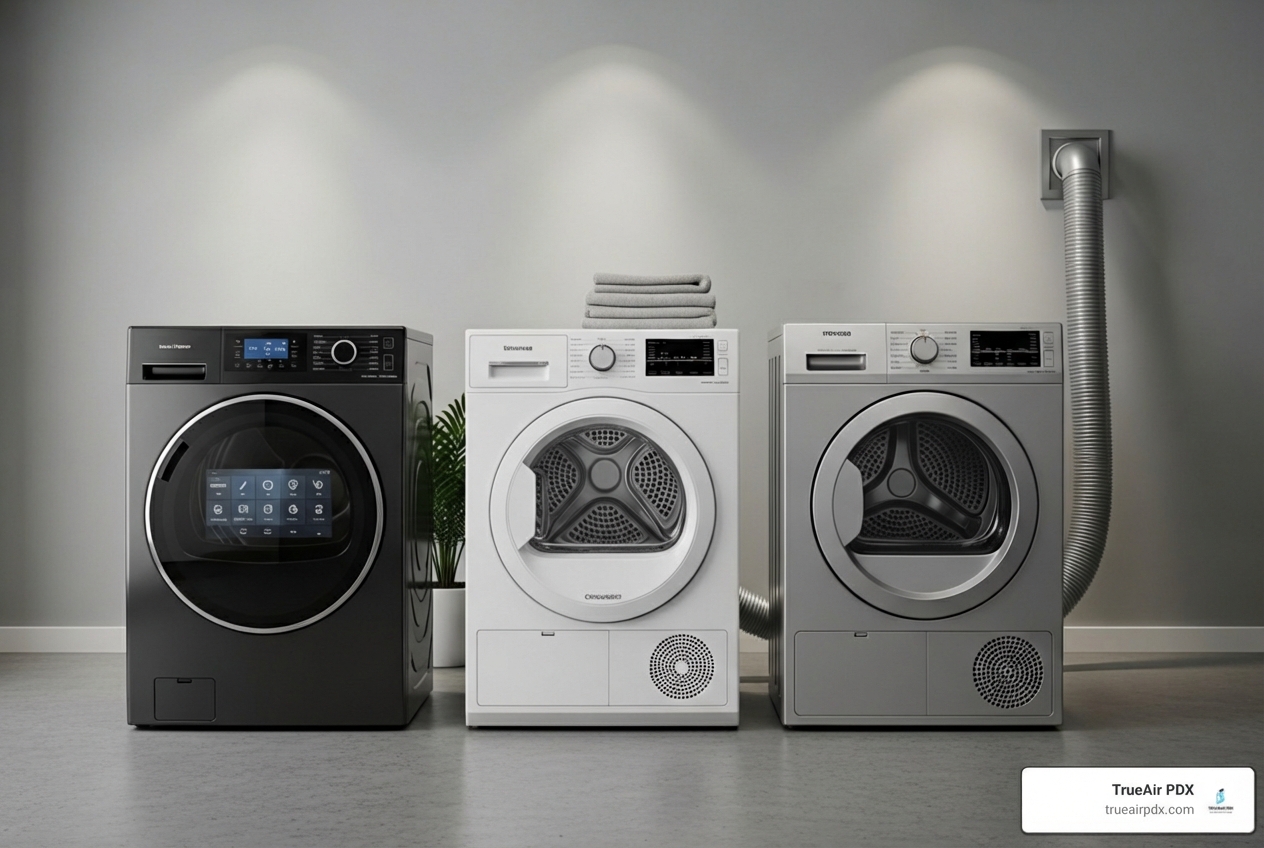
For maximum energy savings, heat pump dryers are the top choice. They represent the pinnacle of efficiency technology.
How They Work: Instead of venting hot air outside, heat pump dryers use a closed-loop refrigeration system to recycle warm air. This process removes moisture from clothes without significant heat loss, allowing them to use up to 70% less energy than conventional models (200-400 kWh/year vs. 800-1,000 kWh/year). You can Watch this video to see a heat pump dryer in action.
Advantages:
- Exceptional Energy Savings: The most efficient option available, reducing CO2 emissions by 600-800 pounds annually.
- Ventless Design: Offers incredible installation flexibility, perfect for apartments, condos, or homes where venting is difficult.
- Gentle on Fabrics: Lower drying temperatures help preserve your clothes.
Disadvantages:
- Higher Initial Cost: Upfront prices are higher ($1,200-$2,500).
- Longer Dry Times: Cycles can take 1.5-2 hours due to lower heat.
- Water Drainage: Condensed water must be drained via a tank or a drain line.
Refrigerant Considerations: Look for models with low Global Warming Potential (GWP) refrigerants, like R-290, to minimize environmental impact.
Condenser Dryers: A Ventless Alternative
Condenser dryers are another ventless option, offering a middle ground in efficiency between traditional and heat pump models.
How They Work: These dryers circulate hot air to collect moisture, then pass it over a cold coil to condense the water into a collection tank or drain. The dry air is then reheated and recirculated.
Advantages:
- Ventless Installation: Can be placed almost anywhere with a power outlet.
- Improved Efficiency: Generally 20-30% more efficient than conventional vented dryers.
Disadvantages:
- Less Efficient Than Heat Pump Models: They don’t match the energy savings of heat pump technology.
- Water Collection: The water tank requires regular emptying unless plumbed to a drain.
- Room Ventilation: They can release some heat and humidity into the room.
High-Efficiency Vented Dryers: Electric vs. Gas
For homes with existing vents, high-efficiency vented dryers are a popular and effective choice. Modern versions incorporate features like moisture sensors and optimized airflow to reduce energy use.
Electric vs. Gas:
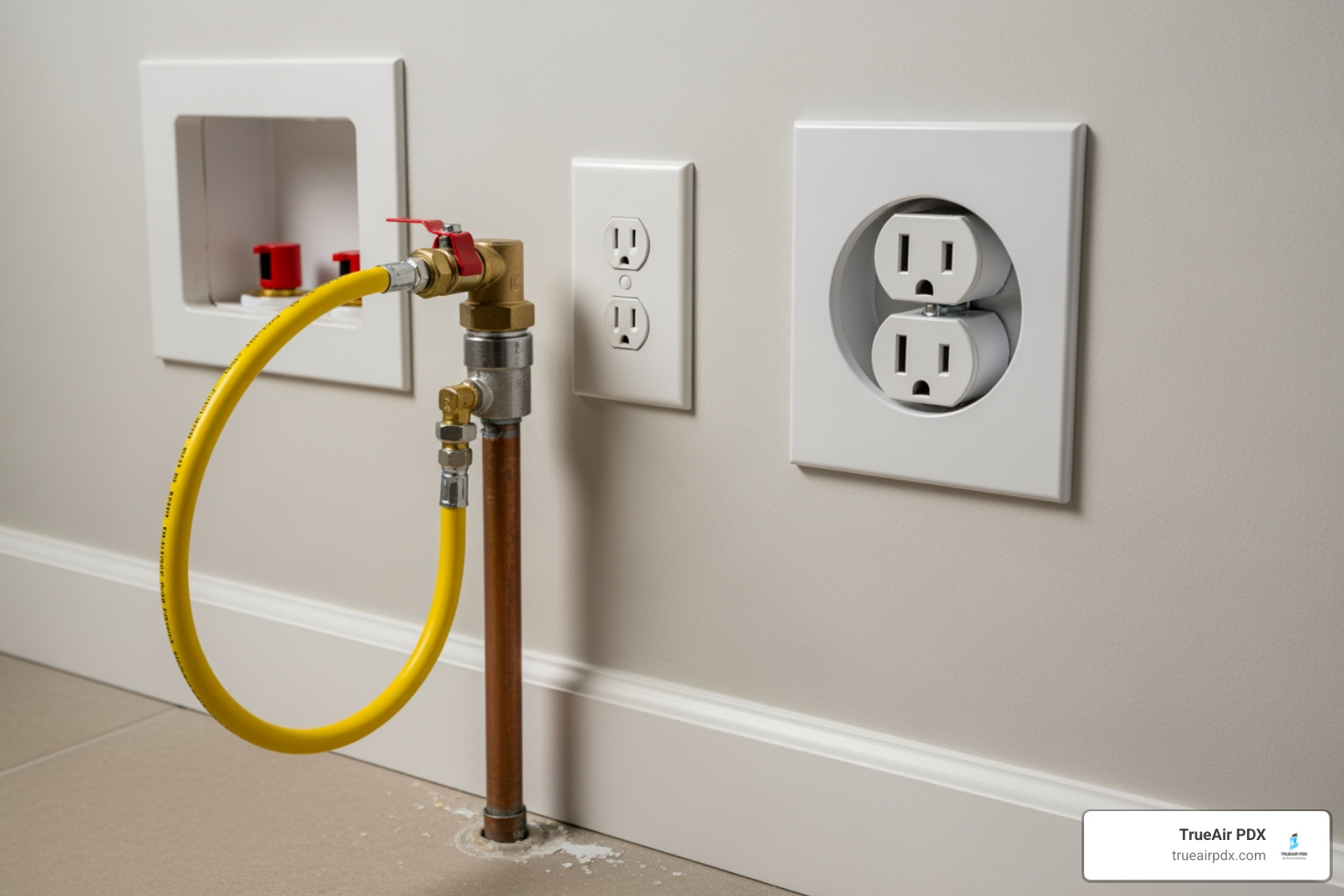
- Electric Dryers: Common and require a 240V outlet. Operating costs depend on local electricity rates.
- Gas Dryers: Require a gas line and a 120V outlet. They often dry clothes faster and can be cheaper to run, depending on local gas prices in the Portland area.
Installation Requirements:
- Venting: Both types require an external vent to expel moist air and lint. Proper dryer vent cleaning is crucial for efficiency and safety.
- Hookups: Gas dryers need a gas line, and electric dryers need a 240V outlet. Professional installation may be required if your laundry area isn’t already equipped.
Key Features That Boost Dryer Efficiency
Beyond the dryer type, several features significantly boost energy-saving capabilities, preventing energy waste and extending the life of your garments.
The Importance of an energy saving dryer with Moisture Sensors
One of the most impactful features for an energy saving dryer is the moisture sensor. Instead of relying on a simple timer, these sensors detect the actual moisture level in your clothes.
How Sensors Work: When clothes reach the desired dryness, the dryer automatically shuts off. This “automatic cycle termination” is a game-changer, as it prevents over-drying—a major source of energy waste and fabric damage. Advanced sensors use multiple detection points for even greater accuracy.
Benefits:
- Prevents Over-drying: Protects clothes from damage, shrinkage, and wear.
- Saves Energy: Reduces energy consumption by running only as long as necessary.
- Convenience: No more guessing the correct drying time.
Smart Features and Connectivity
Modern energy saving dryer models often include Wi-Fi connectivity, allowing you to control and monitor them from your smartphone.
- Remote Control: Start, pause, and monitor cycles from anywhere.
- Energy Reports: Get insights into your dryer’s energy consumption.
- Time-of-Use Optimization: If your Portland-area utility offers variable rates, you can program the dryer to run during cheaper, off-peak hours.
- Smart Home Integration: Connect your dryer with other smart devices for a seamless experience.
These features add convenience and empower you to make smarter energy decisions.
Proper Capacity and Load Sizing
The size of your dryer and how you load it are crucial for efficiency. It’s not just about the machine, but how you use it.
Impact of Load Size:
- Overloading: Restricts airflow, forcing the dryer to work longer and use more energy, often leaving clothes damp.
- Underloading: Drying just a few items is also wasteful, as the dryer still uses energy to heat the large drum.
Right-Sizing for Your Household:
- Match Washer Capacity: Your dryer’s capacity should be slightly larger than your washer’s to handle a full load efficiently.
- Optimal Airflow: Fill the drum about two-thirds full to allow clothes to tumble freely.
- Consider Your Habits: A large-capacity dryer is more efficient for a large family doing frequent, big loads, while a compact unit may suit a smaller household.
The Financial Picture: Costs, Savings, and Incentives
Investing in an energy saving dryer is a smart financial move that leads to significant long-term savings. While the initial cost may be higher, the lower lifetime operating costs provide a compelling return on investment (ROI).
Initial Cost vs. Lifetime Savings
A conventional dryer might cost $400-$800, while a high-efficiency heat pump model can range from $1,200-$2,500. However, the savings quickly add up:
- Annual Savings: A heat pump dryer can save you $90-$120 annually on energy bills. An ENERGY STAR certified vented dryer saves less but still offers a reduction.
- Payback Period: With energy savings, the higher cost of a heat pump dryer is often paid back in 7-10 years.
- Lifetime Value: Over a 15-year lifespan, a heat pump dryer can save $600-$1,000, not including rebates. ENERGY STAR models alone save an average of $210 over their lifetime.
Finding Rebates and Tax Incentives for your energy saving dryer
Financial incentives can help offset the initial cost of an energy saving dryer.
- Federal Tax Credits: The Inflation Reduction Act (IRA) offers tax credits up to $2,000 for qualifying heat pump dryers, significantly lowering the purchase price.
- State and Local Rebates: Utility companies serving the Portland area often provide rebates for ENERGY STAR appliances. Check with resources like the Washer and Dryer – Incentives – Residential – Energy Trust of Oregon for current offers in your location.
Reducing Your Carbon Footprint
Choosing an energy saving dryer is also a tangible way to help the environment. Less energy consumption means fewer greenhouse gas emissions.
- CO2 Emissions Reduction: A heat pump dryer can cut CO2 emissions by 600-800 pounds annually. An ENERGY STAR vented dryer can reduce them by 200-300 pounds per year.
- Sustainable Living: Opting for an efficient appliance is a meaningful step toward a greener future, conserving natural resources and mitigating climate change.
Installation and Maintenance for Peak Performance
Even the most advanced energy saving dryer requires proper installation and regular maintenance to deliver maximum savings and operate safely.
Proper Dryer Installation
Correct installation is foundational to your dryer’s safety and efficiency.
- Vented Dryers: Use smooth metal ducts, not flexible plastic or foil, to prevent lint traps and airflow restriction. Keep the duct run as short and straight as possible. Seal all connections to prevent air leaks.
- Ventless Dryers: For heat pump and condenser models, ensure adequate clearance around the unit for air circulation, as recommended by the manufacturer. This prevents overheating and helps the dryer operate efficiently.
Essential Maintenance for Your Dryer
Regular upkeep is crucial for maintaining energy efficiency and preventing fire hazards.
- Clean the Lint Filter: This is the most important task. Clean the lint filter after every single load. A clogged filter restricts airflow, forcing your dryer to run longer and consume more energy. Learn more with our guide on Cleaning the Lint Filter on a Dryer.
- Why a Clogged Vent Wastes Energy: Over time, the entire dryer vent accumulates lint. A clogged vent traps heat and moisture, making your energy saving dryer work harder and longer, which increases your utility bills.
- Fire Risk: Lint is highly flammable. The combination of trapped lint and high heat is a leading cause of thousands of home fires each year. A clean vent is a safe vent.
- Signs Your Dryer Not Venting Properly: Watch for these warning signs:
- Clothes take much longer to dry.
- The dryer and clothes are unusually hot after a cycle.
- You notice a burning smell.
- The exterior vent flap doesn’t open when the dryer is on.
If you see these signs, your Dryer Not Venting Properly and needs immediate attention.
- Annual Professional Cleaning: While you handle the filter, the entire vent system needs professional cleaning at least once a year. For homes with heavy use or long vents, cleaning may be needed every 6-9 months. Our team at TrueAir PDX provides thorough dryer vent cleaning to ensure your system is clear, safe, and allows your energy saving dryer to operate at peak performance.
Frequently Asked Questions about Energy-Efficient Dryers
We often hear similar questions from our clients in Tigard, Gresham, and other service areas when they’re considering an energy saving dryer. Here are some quick answers.
Are heat pump dryers worth the extra cost?
For many, yes. While the initial cost is higher ($1,200-$2,500), they use up to 70% less energy, saving you $90-$120 annually. With a payback period of 7-10 years, they are a great long-term investment, especially for high-use families or in areas with high electricity rates. Their ventless design is also a major plus for installation flexibility.
How much can I really save with an ENERGY STAR dryer?
An ENERGY STAR certified dryer is at least 20% more efficient than a standard model, saving an average of $210 in energy costs over its lifetime. Savings are even greater with a heat pump model. This efficiency comes from features like moisture sensors that prevent over-drying.
Do energy-saving dryers take longer to dry clothes?
It depends on the type of energy saving dryer.
- Heat pump dryers do take longer (1.5-2 hours) because they use lower heat. This is more energy-efficient and gentler on your clothes, helping them last longer.
- High-efficiency vented dryers generally have drying times comparable to standard models. Their efficiency comes from better design and sensors, not longer cycles.
Conclusion
Choosing an energy saving dryer is a smart investment for your home and a meaningful step towards environmental responsibility. We’ve seen how different types, from the ultra-efficient heat pump models to improved vented options, leverage advanced technology like CEF ratings, ENERGY STAR certification, and smart features to drastically cut down on energy consumption and operating costs. The financial benefits, improved fabric care, and reduced carbon footprint make upgrading to an energy saving dryer a decision that pays dividends for years to come.
However, the journey to maximum efficiency doesn’t end with a purchase. As we’ve emphasized, the critical role of maintenance cannot be overstated. A clean dryer vent is essential for your dryer to operate safely and efficiently, ensuring you reap all the benefits of your energy-saving investment. Without proper airflow, even the most advanced energy saving dryer will struggle, waste energy, and pose a fire risk.
To ensure your new energy saving dryer operates at peak efficiency and safety, regular professional maintenance is key. Our team at TrueAir PDX is proud to serve homeowners in Portland, Gresham, Beaverton, Tigard, and the surrounding areas, providing comprehensive dryer vent cleaning services. We help you protect your home, extend the life of your appliance, and ensure you’re getting the most out of your energy-efficient choice.
Ready to secure your savings and safety? Schedule your professional dryer vent cleaning today with TrueAir PDX!