
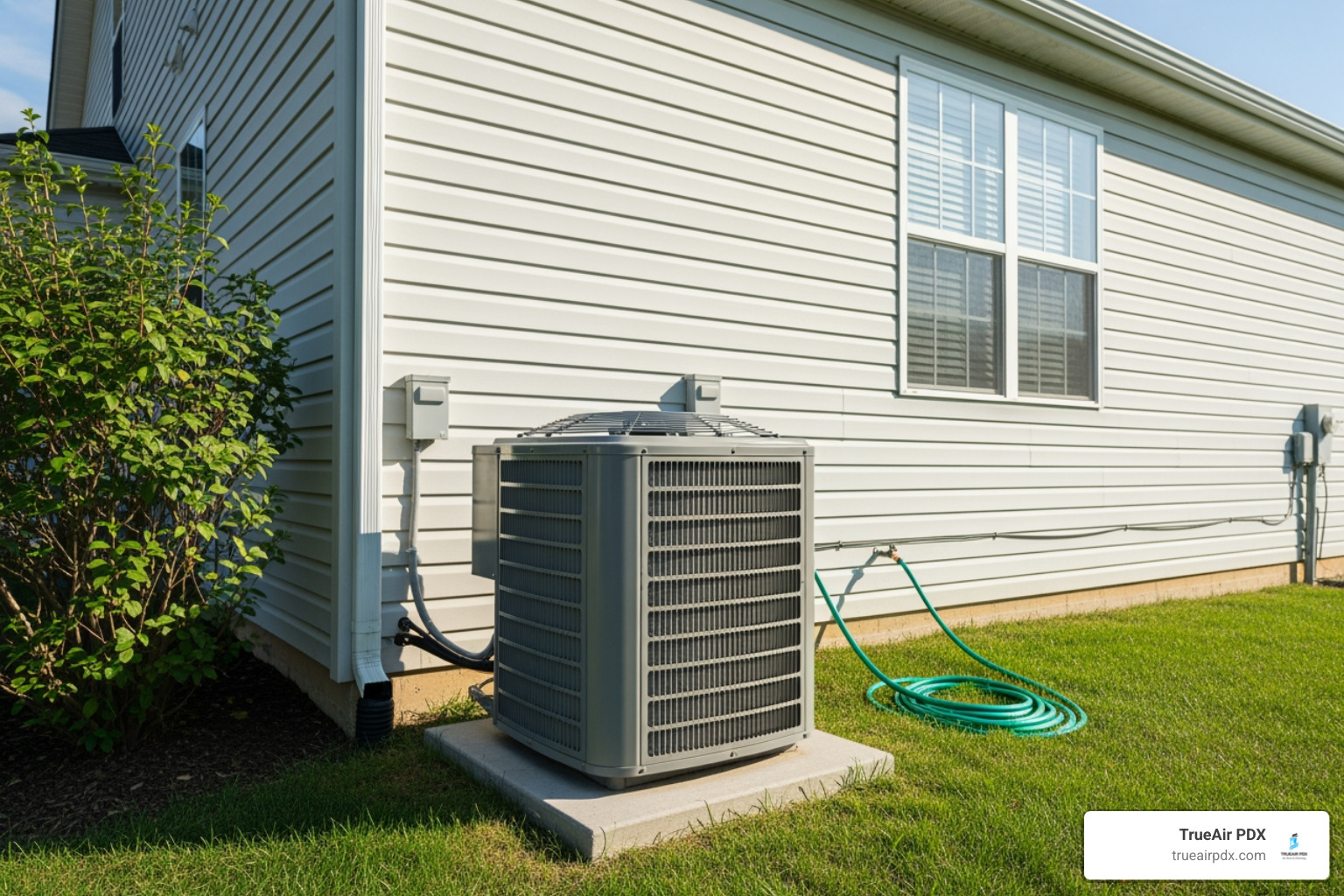
Don’t Be Dirty: A Homeowner’s Guide to Cleaning Your Outdoor AC Unit
Why Your Outdoor AC Unit Deserves Some TLC
Cleaning an outdoor ac unit is a simple home maintenance task that can save you money and keep your home comfortable. Here’s what you need to know:
Quick Answer: How to Clean Your Outdoor AC Unit
- Turn off power at the thermostat and breaker.
- Clear debris like leaves, twigs, and dirt from around the unit.
- Remove the top grille to access the condenser coils.
- Vacuum loose dirt with a soft brush attachment.
- Spray coil cleaner on the fins and let it sit for 10-15 minutes.
- Rinse gently with a garden hose from the inside out (low pressure only).
- Reassemble and let it dry completely before restoring power.
Your outdoor AC unit-the metal box outside your home-works hard during Portland’s warmer months, but it’s constantly exposed to dirt, pollen, leaves, and Pacific Northwest grime. Over time, this debris clogs the delicate aluminum fins and condenser coils. When that happens, your system can’t effectively remove heat, leading to discomfort, higher energy bills, and potential breakdowns that could cost thousands to repair.
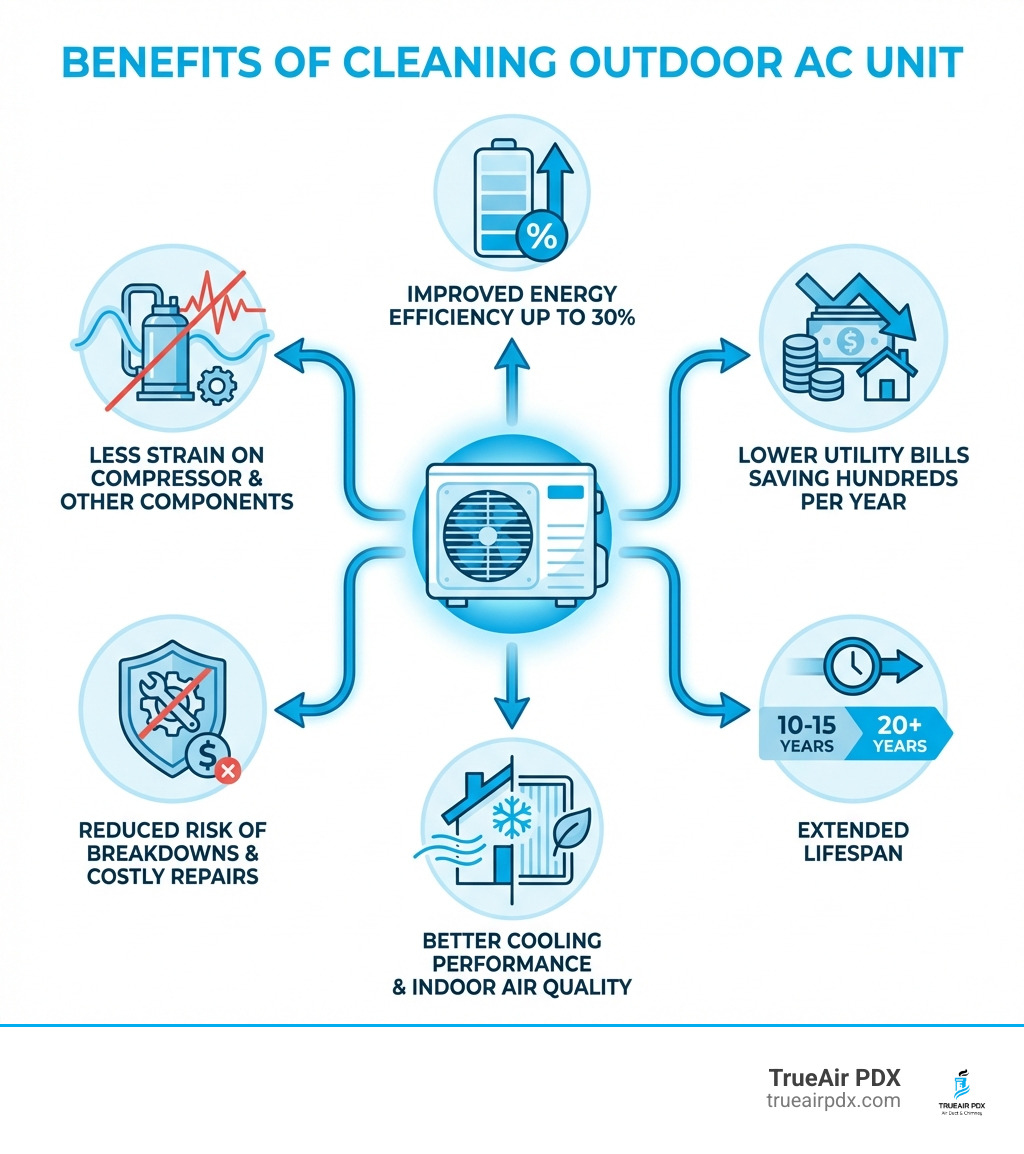
The good news is that cleaning your outdoor ac unit takes just an hour or two once a year. This simple task can extend your system’s lifespan from the typical 10-15 years to 20 years or more. You’ll also enjoy lower utility bills, better cooling performance, and cleaner air in your home.
This guide walks you through the tools and steps for the job. Whether you’re a seasoned DIYer or a first-timer, we’ll show you how to safely and effectively clean your outdoor AC unit.
Why a Clean AC Unit is Your Best Friend
Think of your outdoor AC unit as the unsung hero of home comfort. Regular cleaning an outdoor ac unit is fundamental to its performance, longevity, and your wallet.
A clean unit is more energy-efficient. When dirt and debris accumulate on the condenser coils, they act as an insulating blanket, forcing your AC to work harder and consume more electricity. Keeping the coils clean allows your AC to operate as designed, leading to significant savings on your monthly energy bills.
A well-maintained AC unit also has a longer lifespan. The constant strain from dirty coils can wear out critical components like the compressor. Preventing this strain means fewer repairs and a longer life for your investment. While an air conditioner’s life expectancy is 10 to 20 years, annual cleaning can push it toward the higher end of that range.
Finally, a clean outdoor unit improves cooling performance and contributes to better indoor air quality. When your AC isn’t struggling, it cools your home more effectively. A cleaner system also circulates fresher air, creating a healthier living environment.
Signs Your AC Unit Needs a Bath
Your AC unit will often show signs when it needs attention. Look out for these indicators that it’s time for cleaning an outdoor ac unit:
- Reduced Airflow: If air from your vents feels weak or some rooms are less cool, a dirty outdoor coil could be the cause.
- Unit Runs Longer Than Usual: An AC that runs constantly is a classic sign it’s working overtime because dirty coils are making it less efficient.
- Higher Energy Bills: A sudden jump in your electricity bill often means your AC is consuming more power to overcome dirty coils.
- Ice on Coils: Ice forming on the outdoor unit indicates a serious airflow problem, often due to dirt buildup, which can cause system damage.
- Strange Noises: Grinding, buzzing, or squealing can indicate that the compressor or fan motor is under strain from a dirty coil.
- Visible Dirt and Debris: If you can see leaves, grass, or a layer of grime on the fins, it’s time for a clean.
- Musty Odors: A buildup of organic debris on dirty coils can sometimes cause musty odors to circulate through your home.
If you notice any of these symptoms, a timely cleaning can resolve the issue and prevent more serious problems.
The Payoff: Energy Efficiency and Cost Savings
The financial benefits of a clean outdoor AC unit are substantial. Your AC’s job is to move heat from inside your home to the outside via the condenser coils. When these coils are caked with dirt, they can’t transfer heat effectively. This inefficiency forces your system to work harder and run longer, increasing energy consumption and your utility bills.
Cleaning your AC condenser can improve energy efficiency, prevent breakdowns, and extend equipment life. We’ve seen homeowners in Portland and Gresham save hundreds in energy and repair costs simply by keeping their unit clean. It’s a small investment of time for a big return, ensuring your system runs reliably for years to come.
Gearing Up: Tools and Cleaners for the Job
Before you start cleaning an outdoor ac unit, it’s important to gather your supplies and prioritize safety. A little preparation makes the job smoother and more effective. You’ll be working around electrical parts and sharp metal fins, so a cautious approach is key.
Essential Tools and Materials
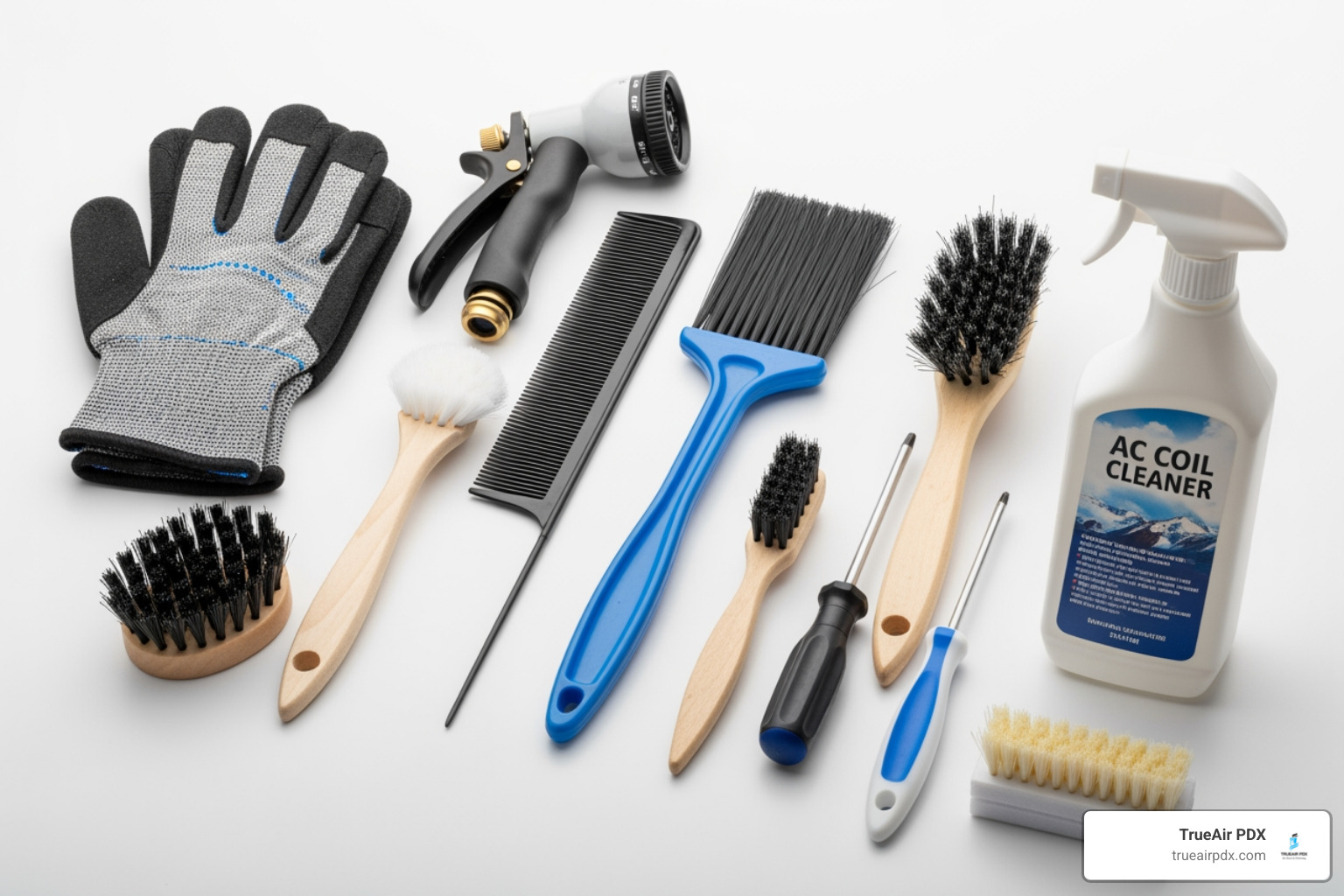
Here’s what you’ll need for your AC cleaning project:
- Work Gloves: Protect your hands from dirt, sharp fins, and chemicals.
- Screwdriver or Nut Driver: To remove the top grille or access panels.
- Shop Vacuum with Soft Brush Attachment: For vacuuming loose debris without damaging the fins.
- Garden Hose with Spray Nozzle: For rinsing. Use a gentle, low-pressure setting. Never use a pressure washer, as it can damage the fins.
- Fin Comb: A tool to straighten bent aluminum fins, which are critical for airflow.
- Commercial AC Coil Cleaner: Specifically designed to break down grime on condenser coils.
- Safety Goggles: Protect your eyes from debris and chemical splashes.
Choosing the Right AC Coil Cleaner
Selecting the right cleaner is important for cleaning an outdoor ac unit. The two main types are foaming and non-foaming. Understanding their differences will help you choose the best one for your unit.
| Cleaner Type | Pros | Cons | When to Use |
|---|---|---|---|
| Foaming | – Deep Cleaning: Expands to lift dirt effectively. – Longer Dwell Time: Sits longer to break down stubborn buildup. – Visual Indicator: Foam shows where you’ve applied it. |
– Harder to Rinse: Requires thorough rinsing to remove all residue. – Potential for Residue: Can leave a sticky film if not fully rinsed. |
Best for heavily soiled coils with stubborn grime, grease, or pollen buildup. Ideal if the unit hasn’t been cleaned in over a year, especially in areas like Beaverton or Tigard. |
| Non-Foaming | – Gentler: Less aggressive, good for regular maintenance. – Easier Rinse: Requires less rinsing and is less likely to leave residue. – Quick Application: Faster to apply and rinse off. |
– Less Effective on Heavy Grime: May not break down extreme buildup as well. – Less Visual: Harder to see where it has been applied. |
Best for routine, annual cleaning or units with moderate dirt. A good choice if you maintain your unit regularly and want an easy-to-use option. |
Regardless of your choice, always follow the manufacturer’s instructions. Ensure the product is safe for your coil material (usually aluminum and copper). Never use acidic cleaners like vinegar, as they can corrode the coils.
The Ultimate Guide to Cleaning an Outdoor AC Unit
Now that you’re geared up, let’s get to the task of cleaning an outdoor ac unit. This is a DIY job that many homeowners in Portland and Milwaukie can handle. Following these steps carefully is key to preventing damage and ensuring your AC runs smoothly.
Step 1: Safety First – Power Down the Unit
This is the most critical step. Before touching the unit, you must completely cut its power supply to prevent electrical shock or damage.
- Turn Off Thermostat: Go inside and switch your thermostat to the “Off” position.
- Locate Outdoor Disconnect Box: Near your outdoor unit, find the small metal electrical disconnect box.
- Pull the Plug or Switch to OFF: Open the box and either pull out the fuse block or flip the breaker switch to “OFF.” For extra safety, you can also turn off the AC’s breaker in your home’s main electrical panel.
- Verify No Power: Use a non-contact voltage tester to confirm there’s no power running to the unit.
Step 2: Clear Debris and Prepare the Area
With the power off, create a clear workspace around your unit.
- Remove Large Debris: Pick up any leaves, grass clippings, and branches from the top and base of the unit.
- Trim Plants: Trim back any bushes or plants so there is at least 2 to 3 feet of clearance on all sides of the unit. Proper airflow is essential for efficiency, so keeping plants at least 3 ft (0.91 m) away is important in lush areas like the Pearl District or Irvington.
Step 3: Clean the Condenser Fins and Coils
This is where the real cleaning happens for optimal heat transfer.
- Remove the Top Grille/Fan Assembly: Carefully unscrew and lift off the top grille. The fan is often attached, so be gentle with the wires. Set it aside carefully.
- Vacuum Loose Debris: Use a shop vacuum with a soft brush to gently vacuum loose material from inside the unit and around the coils. Brush in the direction of the fins to avoid bending them.
- Straighten Bent Fins: Inspect the aluminum fins for bent sections. Gently use a fin comb to straighten them, as even slightly bent fins can impede airflow.
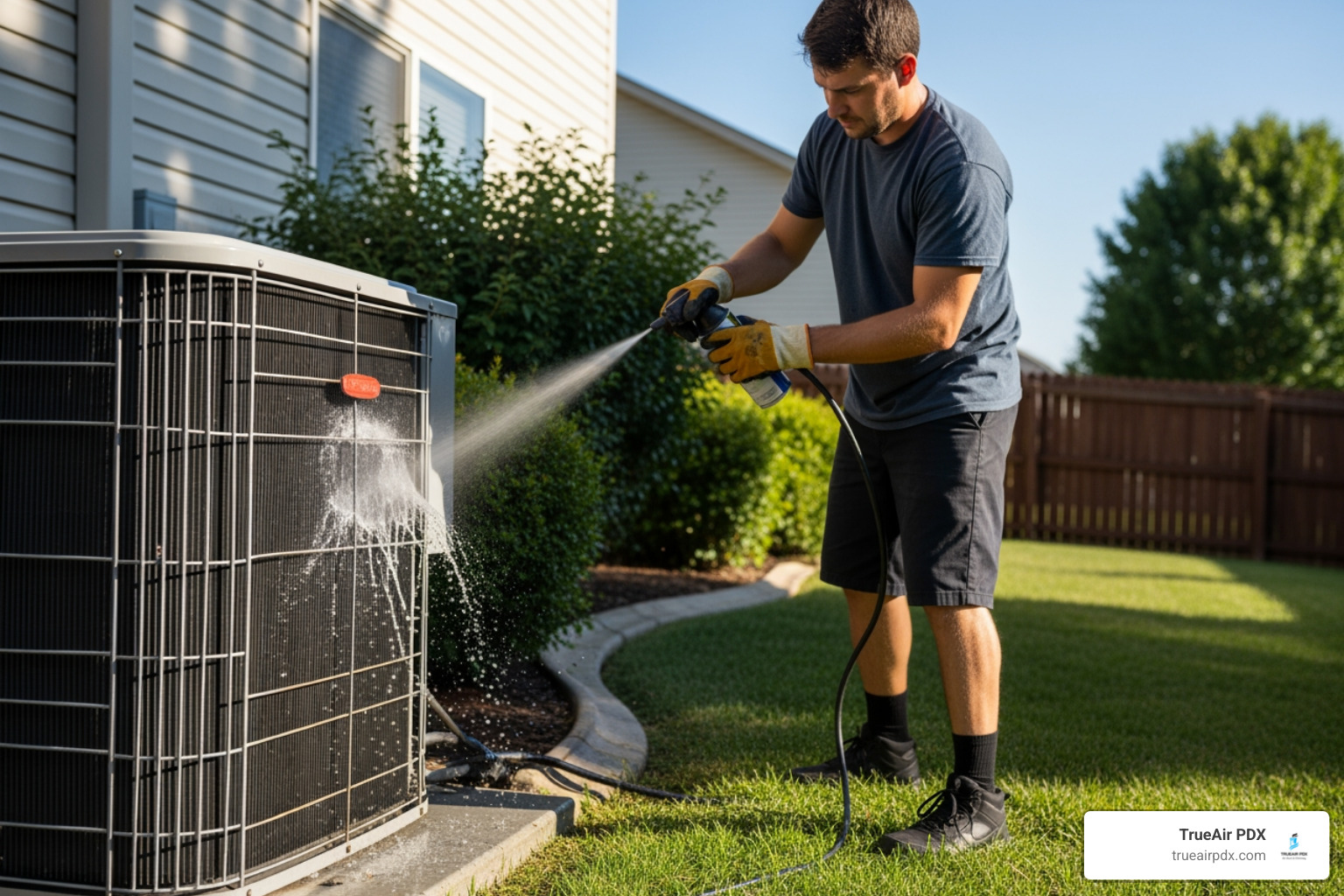
- Spray Coil Cleaner: Apply your commercial AC coil cleaner generously to the coils, following the product’s instructions. Let it sit for the recommended 5-15 minutes to break down the grime.
Step 4: Rinse and Reassemble
Finally, rinse away the cleaner and put everything back together.
- Rinse with a Garden Hose: Set your hose to a gentle spray and rinse the coils from the inside out. This pushes dirt away from the unit instead of deeper into it.
- Avoid Soaking Electrical Parts: Be mindful of where you’re spraying. Try to avoid drenching the fan motor and other electrical components.
- Re-secure the Top Grille: Once the water runs clear, place the fan and top grille back on the unit and re-attach all screws.
- Let the Unit Air Dry: Allow the unit ample time to air dry completely.
- Restore Power: Once the unit is dry, restore power at the disconnect box or main panel. Set your thermostat back to your desired cooling mode.
Pro Tips for Long-Term AC Health
Cleaning an outdoor ac unit once a year is a great start, but ongoing care can make a huge difference in its long-term performance. A little preventative care saves time, money, and headaches.
How Often and When to Clean Your AC
We recommend a thorough deep clean of your outdoor AC unit annually. The best time is in the spring, before the peak cooling season begins in Portland or Gresham. This ensures your unit is in prime condition to handle the summer heat.
In addition to a deep clean, we also advise:
- Check for Debris Monthly: During spring and summer, quickly check your unit for new leaves or grass clippings.
- Rinse as Needed: After a storm or heavy yard work, a quick rinse with a garden hose (low pressure) can dislodge surface dirt.
Preventative Measures for a Cleaner Unit
These simple habits can keep your unit cleaner for longer:
- Maintain Landscaping Clearance: Keep plants and bushes at least 2-3 feet away from your AC unit to ensure proper airflow and prevent debris from being sucked in. This is important in all local communities, from Beaverton to Mt. Tabor.
- Use a Breathable AC Cover in Winter: During cold, rainy months, use a breathable cover that only shields the top. Fully enclosing the unit traps moisture, which can cause rust and mold.
- Regularly Change Indoor Air Filters: A clean indoor filter prevents dust from entering your entire HVAC system. Check and replace your filter every one to three months.
- Consider Professional Air Duct Cleaning: For comprehensive system health, consider professional air duct cleaning in Portland. Clean ducts reduce the load on your AC system.
DIY vs. The Pros: When to Make the Call
While cleaning an outdoor ac unit is a manageable DIY task, sometimes calling a professional is the smartest move.
You should call an HVAC technician if:
- You see major fin damage: A pro can carefully straighten or assess significantly bent or crushed fins.
- There are electrical issues: If you’re unsure about disconnecting power or see frayed wires, leave it to a certified expert.
- The unit still underperforms after cleaning: If your AC still isn’t cooling well, there might be a deeper issue like a refrigerant leak.
- You suspect a refrigerant leak: Refrigerant is a hazardous chemical that only licensed professionals should handle.
- It’s time for an annual tune-up: A professional tune-up includes a full inspection, checking refrigerant levels, and identifying potential problems early. This preventative maintenance ensures longevity and peak efficiency.
For residents in Portland or Southeast Portland, our team at TrueAir PDX is ready to assist with comprehensive HVAC maintenance.
Frequently Asked Questions about AC Cleaning
We often hear similar questions from homeowners in areas from the Pearl District to Montavilla about cleaning an outdoor ac unit. Let’s clear up some common concerns.
What are the risks of improperly cleaning an outdoor AC unit?
Improperly cleaning your AC unit can do more harm than good. Key risks include:
- Bent Condenser Fins: The aluminum fins are delicate. Using high pressure or a stiff brush can easily bend them, which blocks airflow and reduces efficiency.
- Damage to Electrical Components: Getting water into wiring or the fan motor can cause short circuits or create a safety hazard.
- Corrosion from Improper Cleaners: Harsh, acidic cleaners like vinegar can corrode the aluminum and copper coils, leading to premature system failure.
- Pushing Debris Deeper: Spraying from the outside-in can force dirt deeper into the coil, making blockages worse.
Can I just spray my AC unit with a hose while it’s running?
We strongly advise against this. Always turn off the power before cleaning. Here’s why:
- Electrical Shock Hazard: Water and live electricity are a dangerous combination and pose a significant risk of shock.
- Damage to Components: Spraying a running unit can force water into bearings and electrical connections, causing corrosion or short circuits.
- Ineffective Cleaning: The fan will blow water away, preventing a thorough rinse of the coils.
Prioritize safety and take the extra minute to power down the unit completely.
Can I use vinegar to clean my AC coils?
No, you should avoid using vinegar. While it’s a popular household cleaner, its acidic nature is harmful to your AC unit’s delicate components.
The aluminum fins and copper coils are susceptible to corrosion from acids. Over time, vinegar can degrade these metals, leading to leaks and costly repairs. Stick to commercial coil cleaners specifically formulated to be effective on grime without damaging your system.
Conclusion
We hope this guide has empowered you to take charge of cleaning an outdoor ac unit. This simple annual task offers significant benefits, including improved energy efficiency, lower utility bills, a longer system lifespan, and better home comfort and air quality. A clean AC is a happy AC, working smarter to keep your Portland home cool.
While DIY cleaning goes a long way, some tasks are best left to the experts. For comprehensive system maintenance, including professional Furnace HVAC Coil Cleaning, HVAC coil cleaning or furnace coil cleaning, trust the experts at TrueAir PDX. We’re here to ensure your entire system runs flawlessly, providing peace of mind and optimal performance. Don’t hesitate to reach out for your air system cleaning needs in Portland, Gresham, Beaverton, or our other service areas.