
The Basics of Chimney Flue Maintenance and Why It Matters
Why Chimney Flue Maintenance Keeps Your Home Safe and Warm
Chimney flue maintenance is the regular process of cleaning, inspecting, and caring for the passage that carries smoke and gases out of your home. Here’s what you need to know at a glance:
Quick-start chimney flue maintenance checklist:
- Inspect your chimney at least once per year
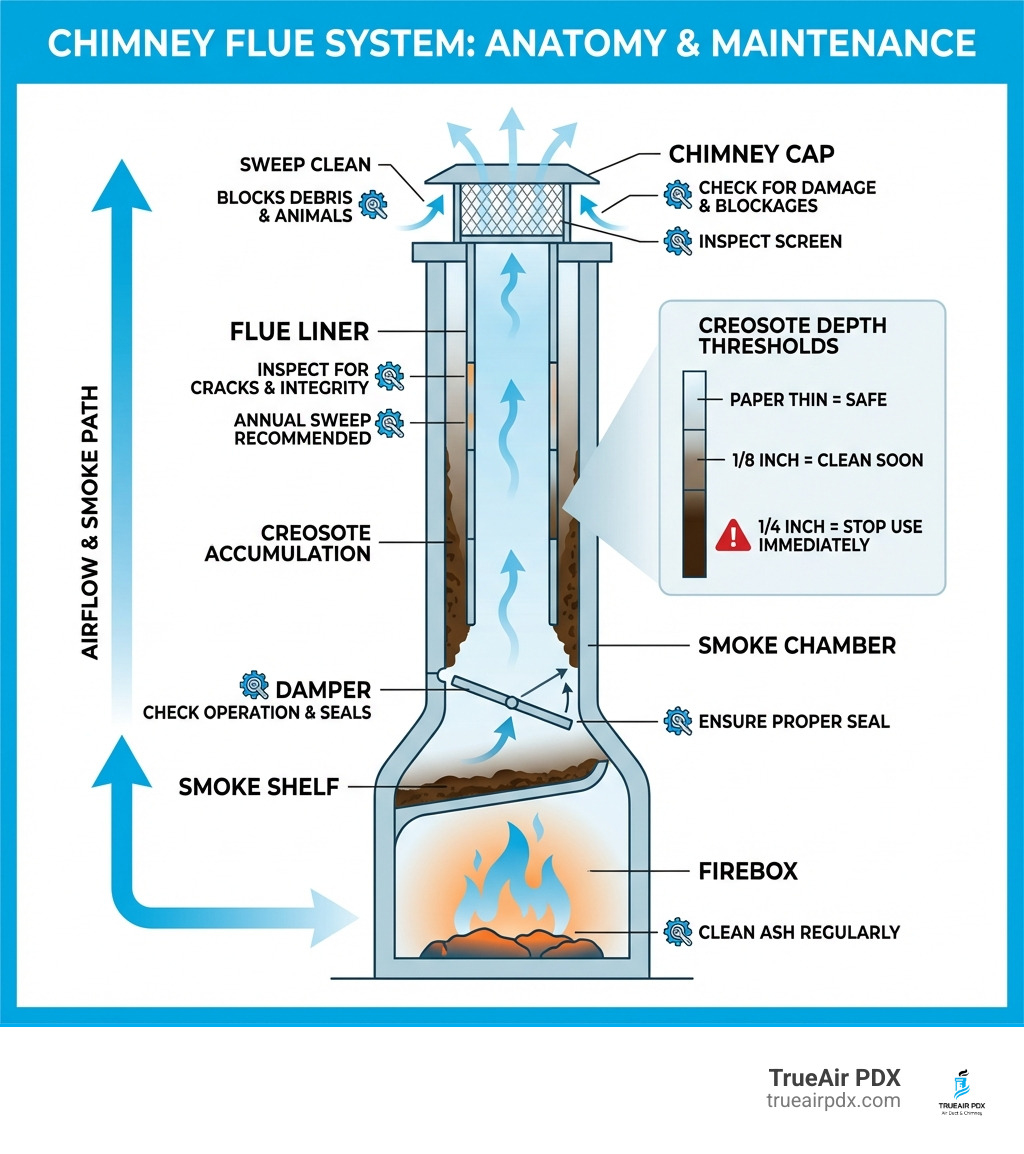
- Clean when creosote buildup exceeds 1/8 inch
- Stop using the fireplace immediately if buildup reaches 1/4 inch or more
- Burn only dry, seasoned wood (moisture below 20%)
- Install a chimney cap to block debris and animals
- Test smoke and carbon monoxide detectors regularly
Every time you light a fire, your chimney goes to work. It pulls smoke, gases, and combustion byproducts up and out of your living space. But over time, a sticky, flammable substance called creosote builds up along the inside of the flue. Left unchecked, it becomes a serious fire hazard — and a health risk for your family.
For Portland-area homeowners already concerned about indoor air quality and home safety, a neglected chimney flue can quietly make things worse. Poor drafting sends smoke back inside. Blocked vents trap carbon monoxide. And a dirty flue can turn a cozy fire into a dangerous one.
The good news? Staying ahead of it is simpler than most people think.
Explore more about chimney flue maintenance:
The Importance of Regular Chimney Flue Maintenance
We often think of our chimneys as permanent, indestructible parts of the house. In reality, they are hard-working ventilation systems that require consistent care. Regular chimney flue maintenance isn’t just about keeping things tidy; it’s a critical safety measure for every household in the Portland metro area, from the Pearl District to the foothills of Mt. Tabor.
Fire Prevention
The primary reason we emphasize maintenance is to prevent chimney fires. When you burn wood, unburned tar vapors condense on the cool inside walls of the flue, creating creosote. This substance is highly combustible. Even a thin layer can ignite, and once a chimney fire starts, it can reach temperatures over 2,000°F—hot enough to melt metal liners or shatter masonry, quickly spreading to the rest of your home.
Air Quality and Carbon Monoxide Risks
A clean flue ensures a strong “draft.” This draft is the suction that pulls smoke out of your home. When the flue is narrowed by soot or blocked by debris (like a bird’s nest), those combustion byproducts have nowhere to go but back into your living room.
Worse than smoke is carbon monoxide (CO). Known as the “silent killer,” CO is odorless and colorless. Proper maintenance ensures that your chimney vents these toxic gases safely outside. For more details on how we keep your air clean, check out our chimney services.
Heating Efficiency and Structural Longevity
A chimney choked with soot is like trying to breathe through a straw. Your fire won’t get enough oxygen, leading to a smoldering, inefficient burn that produces even more creosote. Furthermore, creosote is acidic. If left to sit, it can eat away at mortar joints and metal liners, leading to expensive structural repairs. Regular sweeping removes these corrosive deposits, extending the life of your chimney.
When to Schedule Your Chimney Flue Maintenance
Timing is everything. We recommend scheduling your maintenance in the spring or late summer. Why? Because by the time the first frost hits Gresham or Beaverton, every chimney sweep in town will have a weeks-long waiting list.
The “Rules of Thumb” for Cleaning:
- The Annual Rule: The National Fire Protection Association (NFPA) recommends that chimneys, fireplaces, and vents be inspected at least once per year.
- The 1/8-Inch Rule: If you look up your flue and see a buildup of 1/8 inch or more, it’s time for a cleaning.
- The 1/4-Inch Hazard: If the buildup has reached 1/4 inch, do not light another fire. This is a “severe” fire hazard.
- The Usage Rule: If you burn wood frequently, you may need a cleaning every 1 cord of wood burned. For those using smokeless fuels, once a year is usually sufficient, but wood-burning setups often require quarterly checks during heavy use.
According to scientific research on chimney cleaning frequency, there isn’t one set rule for everyone because burning habits vary. However, consistency is the best way to avoid a mid-winter emergency.
Essential Tools for Chimney Flue Maintenance
If you’re a hands-on homeowner in Tigard or Milwaukie, you might consider the DIY route for basic sweeping. However, you’ll need the right gear to do it safely and effectively.
- Chimney Brushes:
- Wire Brushes: Best for traditional masonry chimneys with clay tile flues. They are stiff enough to scrub away hard soot.
- Polypropylene (Poly) Brushes: Essential for stainless steel chimney liners. Wire brushes can scratch and damage the steel, often voiding your warranty.
- Extension Rods: These screw together to allow the brush to reach the full length of the flue.
- Personal Protective Equipment (PPE): Never skip this. You need a high-quality dust mask (N95 or better), safety goggles, and heavy-duty gloves. Soot and creosote are toxic and can irritate your lungs and eyes.
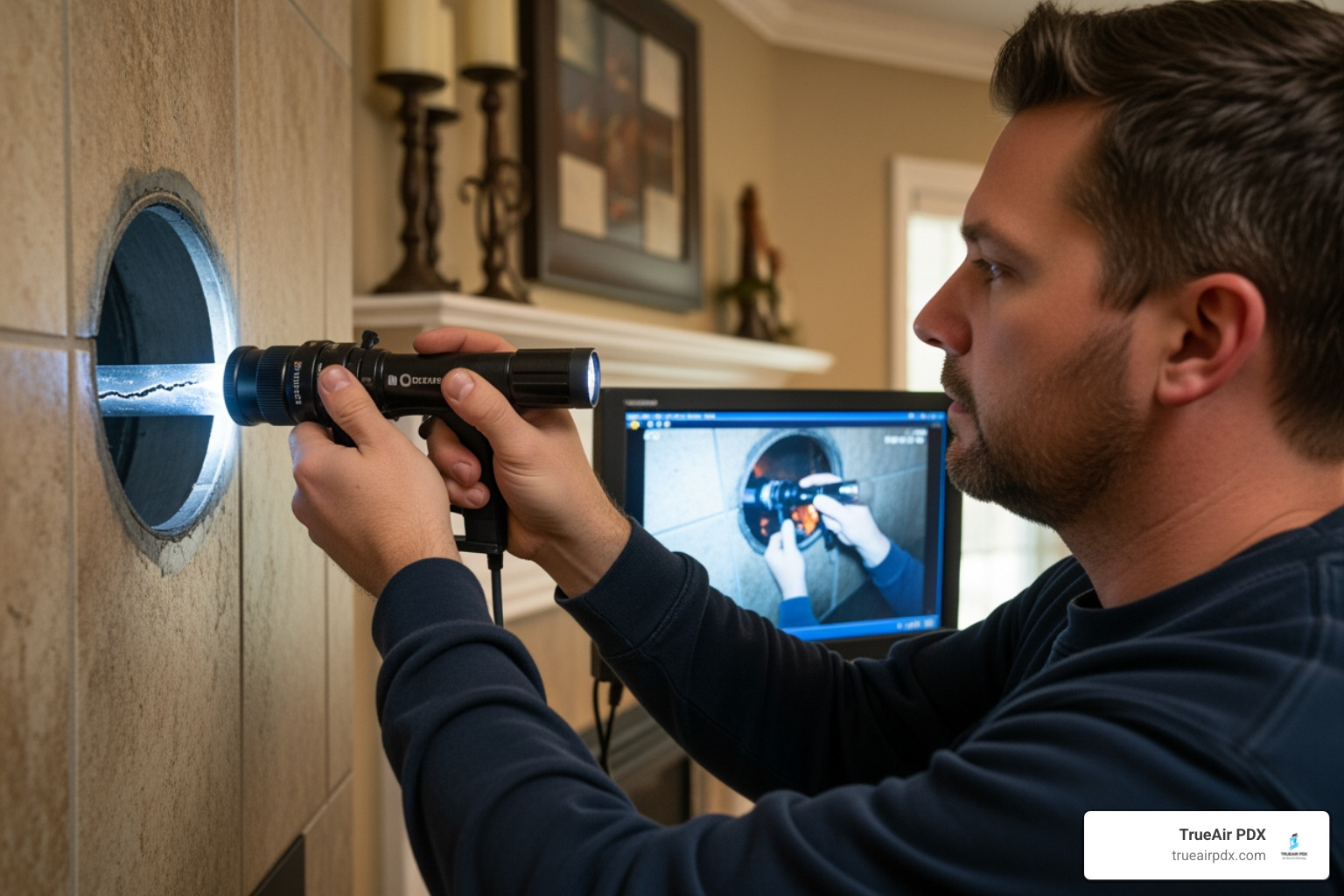
- Flashlight and Mirror: For inspecting the flue before and after cleaning.
- Shop Vacuum with HEPA Filter: A regular household vacuum won’t cut it; soot particles are so fine they will blow right through the filter and into your room.
- Drop Cloths and Plastic Sheeting: To seal off the fireplace and protect your flooring.
For those who prefer a professional touch, we offer affordable chimney cleaning in Portland using industrial-grade vacuums and specialized tools that keep your home spotless.
Understanding Creosote and Fire Hazards
To master chimney flue maintenance, you have to understand the enemy: creosote. It doesn’t just appear; it evolves.
The Three Stages of Creosote
- Stage 1 (Soot): This is a flaky, black powder. It’s easy to brush away and is the result of a relatively efficient fire.
- Stage 2 (Flakes): This looks like crunchy, tar-like flakes. It contains more unburned oils and is harder to remove than simple soot.
- Stage 3 (Glazed Creosote): This is the “final boss” of chimney problems. It looks like shiny black ice or dried tar. It is extremely flammable and nearly impossible to remove with a standard brush. Often, it requires chemical treatments or specialized mechanical tools used by professionals.
Why Does It Form?
Creosote forms when “tar vapors” in the smoke cool down before they can exit the chimney. This happens if:
- You burn “green” or unseasoned wood (which has too much moisture).
- The flue is too cold (common in chimneys on the exterior of a house).
- The fire is “starved” for oxygen (closing the damper too much).
To stay safe, always have working smoke detectors and carbon monoxide alarms on every level of your home. If you’re unsure about the state of your flue, you can use the WETT-certified technician search to find a qualified inspector, or reach out to us for a local Portland expert.
A Step-by-Step Guide to Cleaning Your Flue
Cleaning a chimney is a messy, physical job. If you have a fear of heights or respiratory issues, we strongly suggest calling us. But if you’re ready to tackle it, here is the general process.
1. Preparation and Sealing
Before you even touch a brush, you must protect your home.
- Move furniture away from the hearth.
- Lay down heavy drop cloths.
- The Secret Pro Tip: Tape plastic sheeting over the fireplace opening. Leave just enough of a gap to insert your vacuum hose. This creates a “negative pressure” environment so soot doesn’t billow into your Alberta Arts District bungalow.
2. The Top-Down Method
This is the most common professional method.
- Go to the roof (use a harness!).
- Remove the chimney cap.
- Attach the brush to the first rod and scrub from the top down.
- Add rods as you go until you reach the smoke shelf.
- Scrub vigorously in a vertical motion.
3. The Bottom-Up Method
Best for those who want to stay off the roof.
- You work from inside the fireplace, pushing the brush up through the damper.
- It is significantly messier, as the soot falls directly toward you.
4. The Dual-Line Method
This requires two people: one on the roof and one at the fireplace. A rope is attached to both ends of the brush, allowing the team to “pulley” the brush up and down for a very thorough scrub.
Masonry vs. Stainless Steel Liner Maintenance
| Feature | Masonry (Clay Tile) | Stainless Steel Liner |
|---|---|---|
| Brush Type | Heavy-duty Wire | Polypropylene (Soft) |
| Common Issue | Cracked tiles / Missing mortar | Kinks / Corrosion from soot |
| Cleaning Frequency | Once a year | Once a year (or every 2 weeks for tee-joints) |
| Durability | High, but susceptible to water | High, but sensitive to chemicals |
5. Post-Cleaning Cleanup
Once the flue is scrubbed, you’ll have a pile of debris on the smoke shelf and in the firebox. Use your HEPA vacuum to suck it up. Dispose of the soot in a metal container, as lingering embers can stay hot for days.
Best Practices for Prevention and Ongoing Care
Maintenance isn’t just a once-a-year event; it’s a daily habit. Here is how to keep your flue cleaner for longer:
- Burn Seasoned Wood: This is the #1 way to reduce creosote. Wood should be split and dried for at least 6–12 months. It should have a moisture content of less than 20%. You can buy a cheap moisture meter at any hardware store in Southeast Portland to check.
- Use a Chimney Cap: A cap with a screen (spark arrestor) keeps rain, snow, and “uninvited guests” like raccoons or chimney swifts out of your flue.
- Monitor Temperature: A magnetic stove thermometer helps you ensure your fire is burning in the “safe zone” (usually 250°F–500°F). Too cold, and you create creosote; too hot, and you risk a chimney fire.
- Creosote Sweeping Logs (CSLs): These logs contain minerals that help dry out sticky creosote, making it easier to brush away later. Note: A CSL is not a replacement for a manual cleaning; it is a supplement.
- Professional Inspections: Sometimes, a simple cleaning isn’t enough. If you’ve just moved into a new home or had a chimney fire, you need Level 2 chimney inspection details to ensure the internal structure is still sound.
When to Hire a Professional Chimney Sweep
We love a good DIY project, but chimney flue maintenance involves high stakes. You should put down the brush and call a pro if:
- You have “Glazed” Creosote: If your flue looks like it’s coated in black glass, a DIY brush won’t touch it.
- The Roof is Dangerous: If you have a steep pitch or a multi-story home in the West Hills, don’t risk a fall.
- You Smell “Campfire” in the House: This indicates a draft issue or a blockage that needs professional diagnostic tools.
- Animal Nests: Removing a stubborn bird or squirrel nest without damaging the flue liner is tricky business.
- Structural Damage: If you see white staining on the outside of your chimney (efflorescence) or crumbling bricks, you need Portland chimney repair services.
- Gas Fireplace Issues: Gas flues don’t get creosote, but they can get blockages from debris or failing components that leak CO. These require specialized sensors to detect.
Frequently Asked Questions about Chimney Maintenance
How often should I clean my chimney if I use it daily?
If your fireplace is your primary heat source during a cold Portland January, you should inspect it every month. Generally, daily users need a full professional sweeping at least twice a year—once before the season starts and once midway through.
Can I use a creosote sweeping log instead of a manual cleaning?
No. Think of a sweeping log like mouthwash—it helps, but it doesn’t replace brushing your teeth. The log chemically alters the creosote to make it brittle, but you still need a physical brush to remove the debris from the chimney walls.
What are the signs that my chimney flue is blocked?
Watch for smoke entering the room when you start a fire, a strong “musty” or smoky smell even when no fire is lit, or visible debris (like twigs or bits of brick) falling into the firebox. If you see any of these, stop using the fireplace immediately.
Conclusion
Related: Fireplace Inspection Cost in Portland: What to Expect in 2026
Related: Chimney Cleaning and Inspection Cost in Portland: Complete 2026 Pricing Guide with Local Data
A fireplace is the heart of a home, especially during our long, rainy Oregon winters. By staying on top of your chimney flue maintenance, you’re doing more than just keeping the glass clean—you’re protecting your family from fire and toxic gases while ensuring your home stays cozy and efficient.
At TrueAir PDX, we take pride in helping our neighbors in Portland, Sellwood, Irvington, and beyond breathe easier. Whether you need a routine sweep, a safety inspection, or help with a stubborn blockage, we’re here to provide eco-friendly, transparent service.
Don’t wait for the first snow to fall. Schedule your professional chimney cleaning today and enjoy the peace of mind that comes with a safe, clean flue. Stay warm, burn safely, and let us handle the soot!