
Why a Clean Flue is Crucial for Your Home and Health
If you need to clean fireplace flue systems in your home, here’s what you need to know:
Quick Answer: How to Clean Your Fireplace Flue
- Inspect – Check for 1/8-inch or more creosote buildup
- Prepare – Gather chimney brush, rods, drop cloths, and safety gear
- Protect – Cover your hearth and seal the fireplace opening
- Clean – Scrub the flue liner from top-down or bottom-up
- Finish – Clean the firebox and properly dispose of debris
- When in doubt – Call a certified chimney sweep for safety
Your fireplace creates warmth and comfort during Portland’s chilly evenings. But inside your chimney flue, something dangerous is building up with every fire you burn.
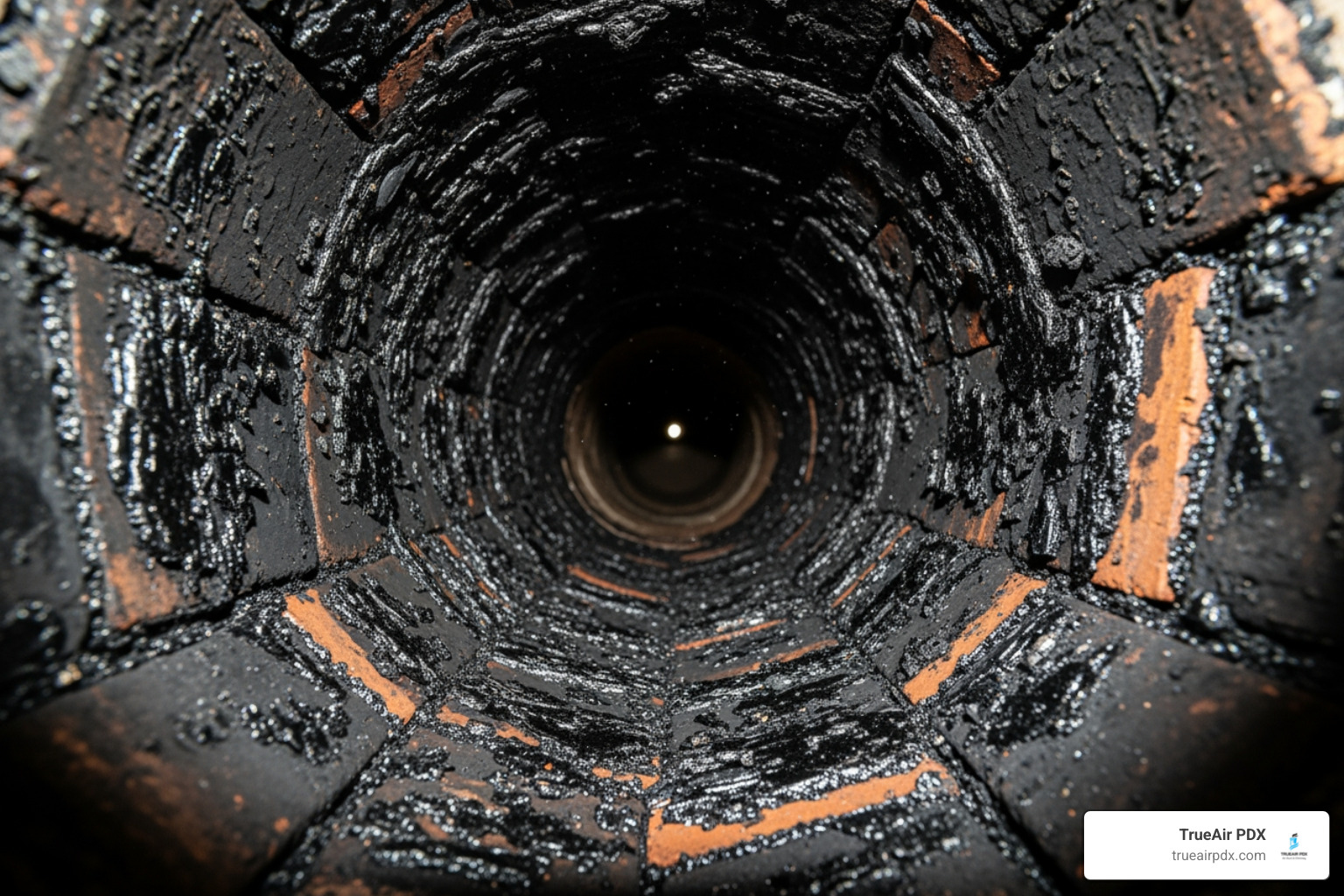
Creosote is a black, tar-like substance that forms when wood smoke cools and condenses on your chimney walls. It’s not just dirty—it’s highly flammable. When creosote buildup reaches more than 1/8 inch thick, you’re sitting on a potential fire hazard.
The risks go beyond fire. A dirty flue can leak carbon monoxide into your home, expose your family to lung irritants, and make your fireplace work less efficiently. In masonry chimneys, creosote seeps into cracks and speeds up deterioration. In stainless steel liners, it causes corrosion.
According to industry data, unclean chimneys contribute to nearly one-third of all home heating fires. If left unchecked, that creosote can ignite, leading to a dangerous chimney fire that could spread to your entire home.
The good news? Regular cleaning prevents these problems. Most homeowners should clean their chimney at least once a year—or after burning about one cord of wood.
In this guide, you’ll learn exactly how to inspect your flue, gather the right tools, and clean it safely. We’ll also help you decide when to tackle it yourself and when to call in the pros.
The Dangers of Creosote Buildup
Creosote is the primary culprit behind most chimney-related hazards. It’s a byproduct of burning wood, and its formation is a natural part of the combustion process. However, when it accumulates, it becomes a serious threat. This tar-like substance has many flammable properties, and if the buildup in your chimney were to catch on fire, it could act as a fuel source, burning the rest of your home and putting you and your family in danger.
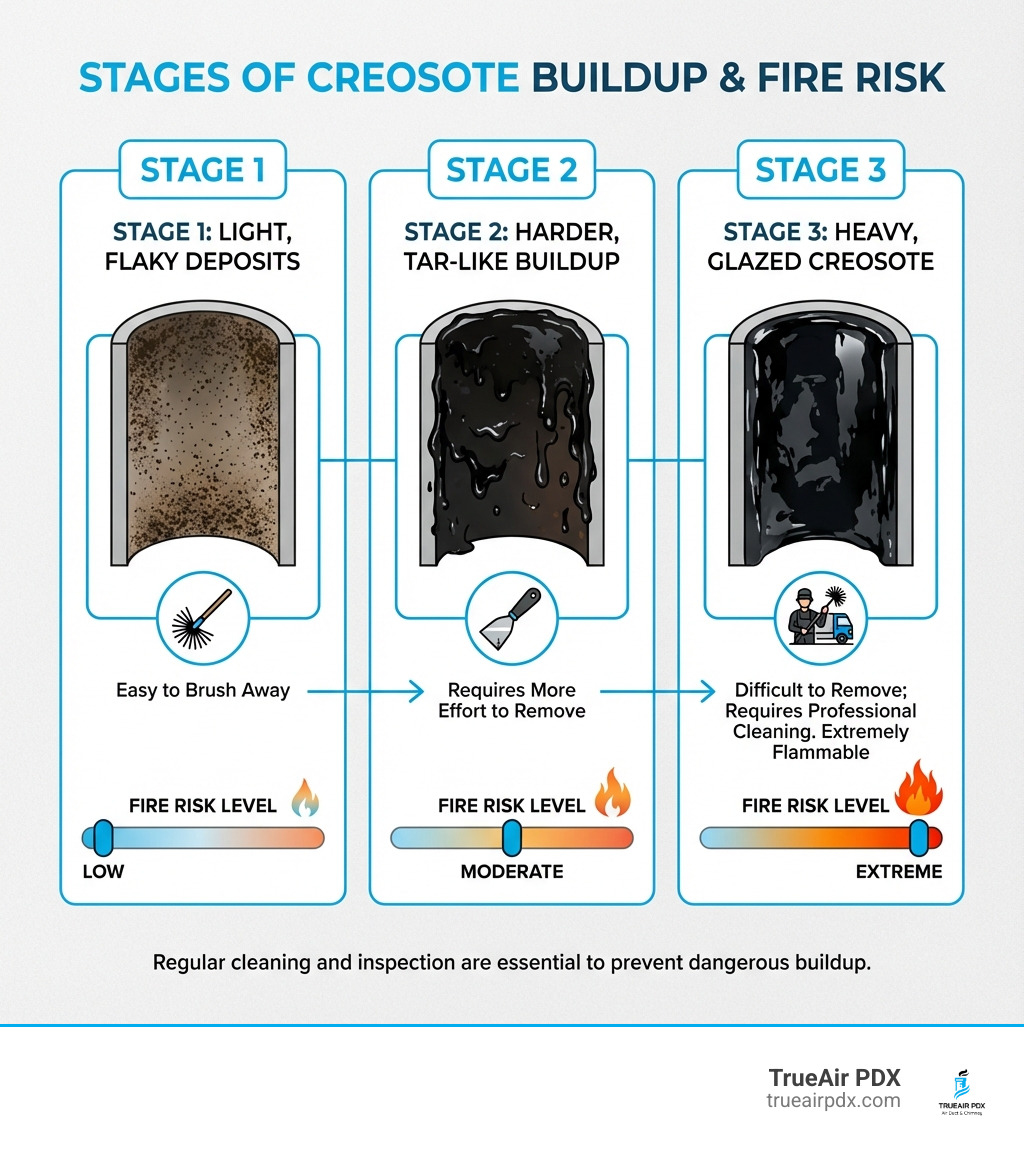
There are different stages of creosote buildup, each with increasing risk:
- Stage 1 (Light, flaky soot): This is typically a fine, black dust that’s relatively easy to brush away. While not immediately dangerous, it’s a sign that creosote is forming.
- Stage 2 (Tar-like, crunchy deposits): As more fires are burned, this becomes a harder, more tar-like substance that can be difficult to remove. It’s more flammable than stage 1 creosote.
- Stage 3 (Glazed, shiny creosote): This is the most dangerous form. It’s a hard, shiny, and extremely flammable layer that resembles solidified tar. Glazed creosote is very difficult to remove and indicates a high risk of chimney fire. If you see this, it’s time to call a certified chimney sweep.
Beyond the immediate fire risk, creosote can also cause significant damage to your chimney structure. In masonry chimneys, creosote can seep into cracks, accelerating deterioration and making your chimney weaker over time. For those with stainless steel chimney liners, excessive creosote can lead to corrosion, compromising the integrity of the liner and potentially allowing smoke and gases to escape.
Health Risks and Poor Performance
The dangers of a dirty flue aren’t limited to fire. An obstructed or dirty chimney can lead to a host of health hazards and poor fireplace performance:
- Carbon Monoxide Leakage: If your flue is blocked by creosote or debris, dangerous gases like carbon monoxide (CO) can be forced back into your home. CO is colorless and odorless, making it particularly insidious. Symptoms of CO poisoning can range from headaches and dizziness to seizures and death. This is a critical reason why regular cleaning and inspection are vital.
- Lung Irritants and Smoke Backdraft: When your fireplace doesn’t draft properly due to buildup, smoke can blow back into the room. This smoke contains fine particulate matter, soot, and other gaseous byproducts of combustion, which are irritants for lungs and throats. Prolonged exposure can lead to respiratory illnesses and other health problems.
- Poor Fireplace Efficiency: A buildup of creosote reduces the efficiency of your fireplace. It obstructs airflow, meaning your fire won’t burn as hot or as cleanly. This results in less heat for your home and more wood consumed, costing you money and time.
- Unpleasant Odors: That lingering smoky smell in your home, even when your fireplace isn’t in use? It’s often due to creosote buildup, especially during humid weather. A clean fireplace flue means a fresher-smelling home.
Before You Begin: Inspection, Tools, and Prep Work
Before you dive into the dirty work, a little preparation goes a long way. This includes knowing when to clean, gathering your supplies, and protecting your home from the inevitable mess.
How to Know When It’s Time for a Clean
Knowing when to clean fireplace flue systems is as important as knowing how. We recommend annual chimney cleanings and inspections for most homeowners. Ideally, this should happen in the spring or at the end of your burning season, rather than waiting until fall when chimney sweeps are busiest.
Here are the key signs and guidelines we look for:
- Annual Recommendation: Even if you don’t burn wood frequently, an annual inspection is crucial. Chimneys should be cleaned at least once a year.
- 1/8-inch Buildup Rule: If creosote has accumulated to a depth of more than 1/8 inch, the chimney should be cleaned. You can check this by shining a flashlight up your flue and scraping the residue with a poker or metal tool.
- After Burning One Cord of Wood: If you use your fireplace frequently, cleaning at least once per burning season or every 1 cord of wood burned is a must.
- Visible Soot or Tar: If you can see significant black, sticky deposits of creosote or tar inside your firebox or flue, it’s definitely time.
- Smoky Smell in the Room: A strong smoky odor, especially when the fireplace isn’t in use, is a tell-tale sign of creosote buildup.
- Fires Burn Poorly: If your fire takes longer to light, burns inconsistently, or struggles to stay lit, it could be due to reduced airflow from a dirty flue. Smoke blowing back into the room is another clear indicator.
- Animals Nesting: Sounds of chirping or rustling, or finding twigs and debris, suggest animals (like birds or squirrels) have made a home in your chimney. These blockages can be very dangerous.
Gathering Your Flue Cleaning Toolkit
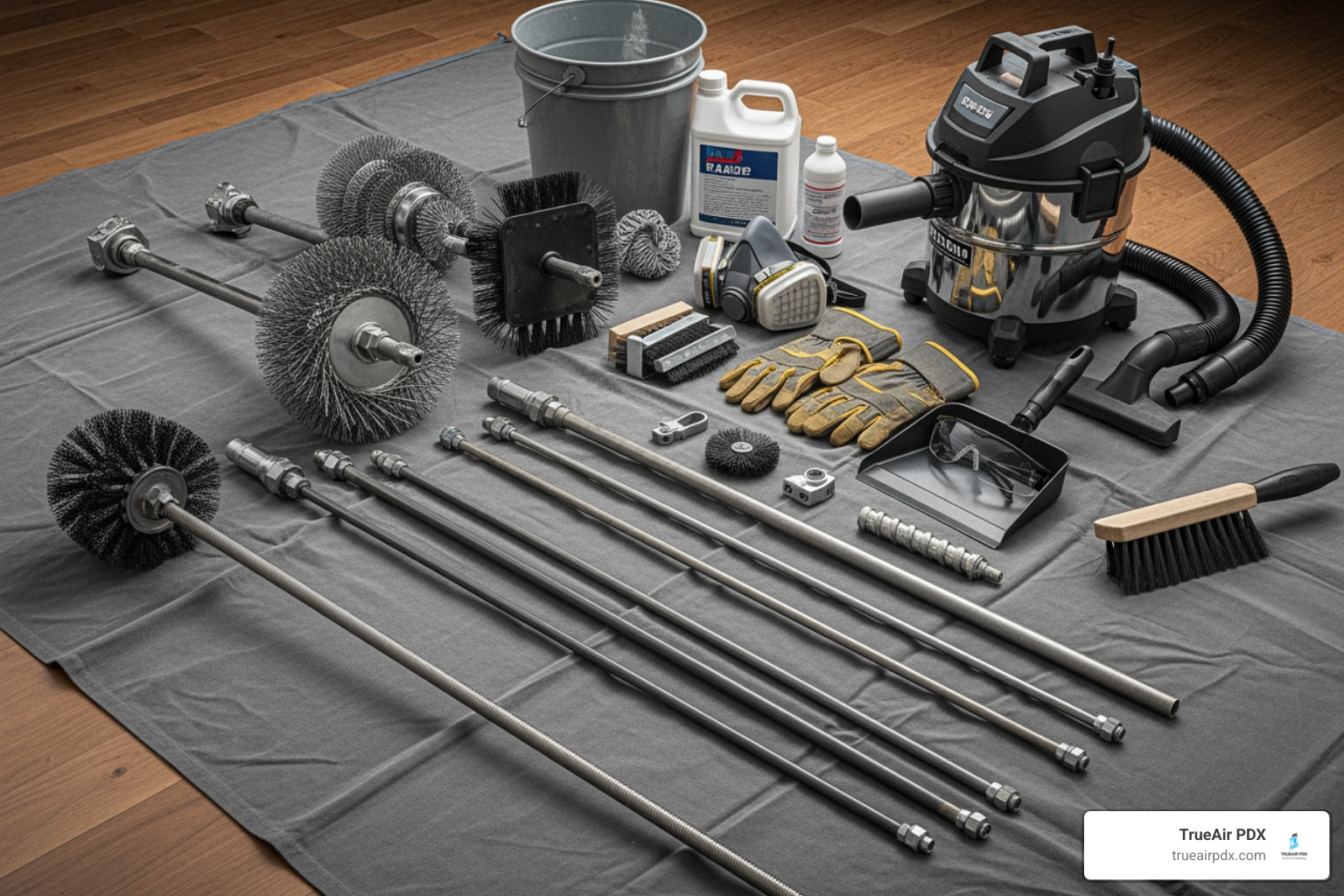
To ensure a thorough and safe job, you’ll need the right tools. Here’s what we recommend for your flue cleaning toolkit:
- Chimney Brush: This is crucial.
- Metal bristles: Use for masonry flues.
- Poly (plastic) bristles: Always use for stainless steel liners to prevent damage. Make sure the brush is sized correctly for your flue.
- Flexible Extension Rods: These attach to your brush and allow you to reach the entire length of the flue.
- Shop Vacuum with HEPA Filter: A powerful shop vac is essential for cleaning up soot. Ensure it has a HEPA filter to contain fine particles, or use a specialized ash vacuum. Do NOT use a regular household vacuum, as fine ash can damage the motor and pose a fire risk.
- Drop Cloths and Plastic Sheeting: To protect your floors and furniture from soot.
- Duct Tape: For sealing plastic sheeting and securing your work area.
- Flashlight: For inspecting the flue before and after cleaning.
- Sturdy Ladder: For safe access to the roof if performing a top-down clean.
- Safety Goggles and Dust Mask (or Respirator): Essential personal protective equipment to shield your eyes and lungs from soot and creosote particles.
- Work Gloves: To protect your hands from dirt and sharp edges.
- Stiff Wire Brush: For cleaning the smoke chamber and smoke shelf.
- Metal Bucket with Lid: For safe disposal of creosote and ash.
Preparing Your Home for a Mess-Free Clean
Cleaning a chimney can be a very messy job. Soot is fine, pervasive, and seems to get everywhere. Proper preparation will save you hours of cleanup time later.
- Ensure the Fire is Out and Cold: This is paramount. Wait at least 24-48 hours after your last fire to ensure all ashes and embers are completely cool.
- Cover the Hearth and Floor: Lay down heavy-duty drop cloths or old sheets from the hearth all the way to the floor in front of your fireplace. Extend them several feet out to catch any stray debris.
- Remove Fireplace Accessories: Take out grates, andirons, and any other items from the firebox. Clean them separately if needed.
- Seal the Fireplace Opening: This is your best defense against soot escaping into your living space. Use heavy-duty plastic sheeting (like painter’s plastic) and duct tape to completely seal off the fireplace opening. Make sure it’s airtight.
- Set Up the Shop Vac: If you’re cleaning from the bottom up, you can cut a small hole in your plastic sheeting and insert the hose of your shop vacuum (with the HEPA filter!) into the firebox. This will help capture falling soot as you brush. Seal around the hose with more duct tape.
- Close All Doors to the Room: This helps prevent any escaped soot from migrating to other parts of your home.
- Ensure Pets and Children are Away from the Area: This is not a spectator sport. Keep everyone safe and away from the work zone.
The Complete Guide to How You Clean a Fireplace Flue
Now that you’re prepared, it’s time to tackle the main event: how to clean fireplace flue systems effectively and safely.
Safety First: Essential Precautions
Your safety is our top priority. Please heed these precautions carefully:
- Wear Protective Gear: Always wear a dust mask or respirator and safety goggles to protect your lungs and eyes from irritating soot and creosote particles. Work gloves are also highly recommended.
- Use a Sturdy Ladder: If you’re going on the roof, ensure your ladder is stable and properly secured. Have someone spot you if possible.
- Roof Safety Harness: If you have a steep roof or are uncomfortable with heights, consider using a roof safety harness. If this makes you nervous, it’s a strong sign that you should call a professional.
- Ensure the Fire is Completely Out: As mentioned, wait at least 24-48 hours after your last fire. Hot embers or ash can cause serious burns or ignite debris.
- Let the Chimney Cool: The entire chimney system needs to be cool to the touch before you begin.
Choosing Your Method: Top-Down vs. Bottom-Up
There are two primary methods for cleaning a fireplace flue, each with its advantages:
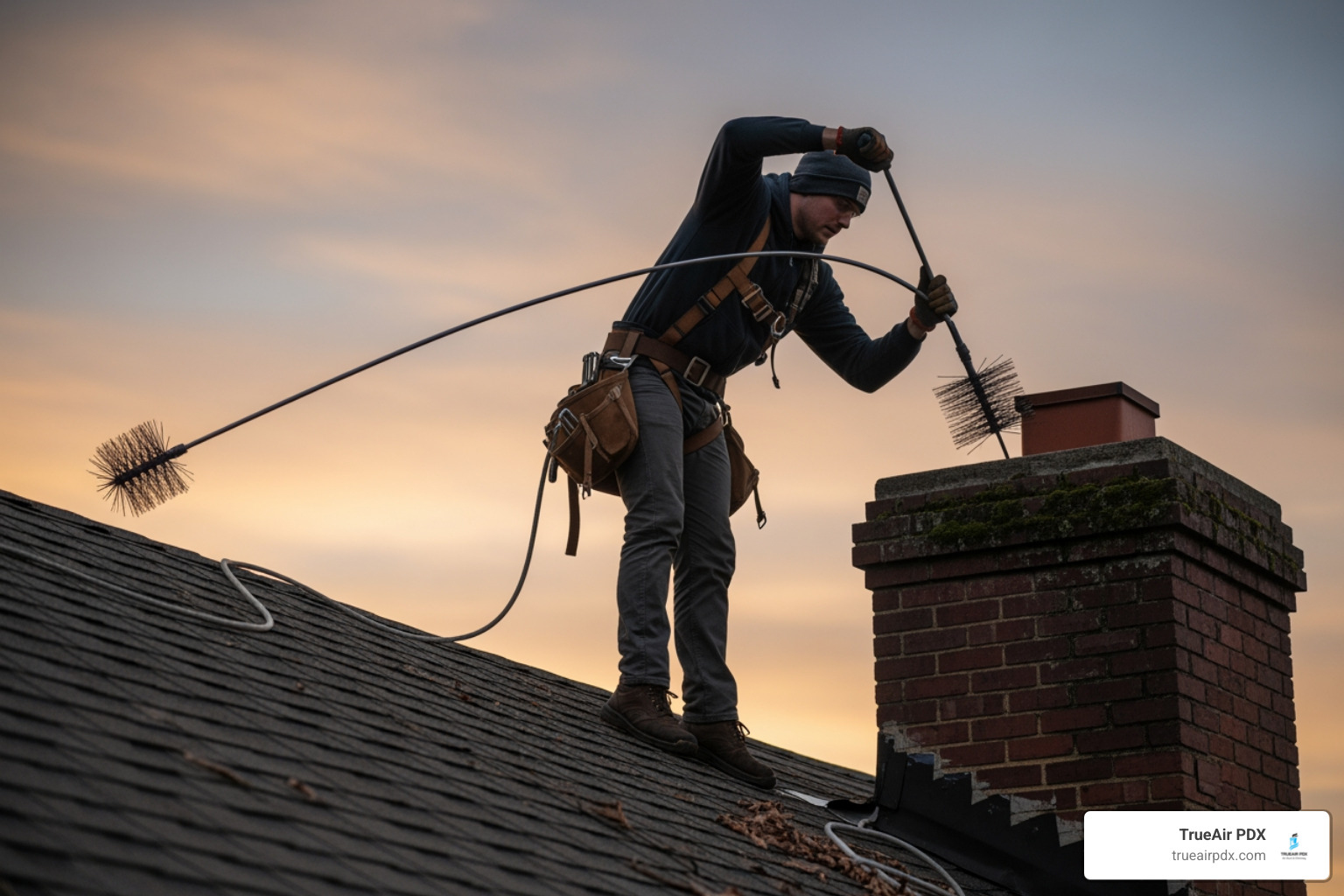
1. Top-Down Cleaning (from the roof):
* Pros: Often considered more effective as gravity helps pull loosened creosote down. You can get a good visual inspection of the chimney cap and top of the flue.
* Cons: Requires working on the roof, which can be dangerous. You’ll need a ladder and potentially a safety harness.
* When to Choose: Best for a thorough clean, especially if you have heavy buildup or want to inspect the chimney top.
2. Bottom-Up Cleaning (from the firebox):
* Pros: Safer as you stay on the ground. No need for roof access.
* Cons: Can be messier inside the house if not properly sealed. May not be as effective for very heavy, glazed creosote.
* When to Choose: Good for lighter cleanings, or if you’re uncomfortable with heights.
Dual-Line Method: This is a variation of the top-down method that makes it easier. One person on the roof lowers the brush (attached to a rope), while another person at the fireplace pulls it up and down. This allows for more controlled and thorough scrubbing.
The Step-by-Step Process to clean fireplace flue
Once you’ve chosen your method and ensured safety, here’s how we recommend you clean fireplace flue systems:
-
Access the Flue:
- Top-Down: Carefully climb onto the roof. Locate and remove the chimney cap or animal guard (it might be secured with screws).
- Bottom-Up: Ensure your fireplace opening is sealed with plastic, with a small access point for your rods and brush, and your shop vac hose inserted.
-
Assemble Brush and Rods:
- Attach the appropriate chimney brush (metal for masonry, poly for stainless steel) to your first extension rod.
- If working from the top, slowly lower the brush into the flue.
- If working from the bottom, push the brush up into the flue.
-
Scrub the Flue Liner in Sections:
- Top-Down: Begin scrubbing by pushing the brush down the flue. Work in sections, pushing down and pulling up several times to loosen creosote. As you reach the end of a rod, attach another one, and continue the process until you’ve brushed the entire length of the flue. You should hear creosote falling.
- Bottom-Up: Push the brush up the flue, adding rods as you go. Twist and scrub to loosen buildup. This method can sometimes be more physically demanding.
-
Clean the Smoke Chamber and Smoke Shelf:
- Once the main flue is brushed, move to the smoke chamber (the area directly above the firebox) and the smoke shelf (a flat area behind the damper). These areas are prone to heavy creosote buildup and are often where chimney fires originate.
- Use your stiff wire brush (or a smaller chimney brush) and flashlight to aggressively scrub these areas from inside the firebox. Be thorough.
-
Re-attach Chimney Cap: If you removed it, securely re-attach your chimney cap. This prevents rain, debris, and animals from entering your flue.
How to clean fireplace flue Aftermath: Firebox and Disposal
The flue is clean, but your firebox is likely full of soot and creosote. Now for the cleanup!
-
Cleaning the Firebox:
- Carefully remove the plastic sheeting from your fireplace opening, peeling it slowly to minimize dust.
- Use a small shovel and brush to scoop up the bulk of the fallen creosote and ash from the firebox.
- For the remaining fine dust, use your shop vacuum (with HEPA filter!) to thoroughly vacuum the interior of the firebox, hearth, and surrounding areas.
- Don’t forget to vacuum the smoke shelf and damper area again.
- If you have a fireplace ash dump, you can use that to transfer cooled ashes into a non-combustible container.
-
Vacuuming All Debris: Use your shop vac to clean up any dust or debris that escaped onto your drop cloths. Once vacuumed, carefully fold the drop cloths inward to contain any remaining dust, and dispose of them.
-
How to Properly Dispose of Creosote: Creosote, even after it’s been brushed out, remains flammable.
- Place all collected creosote, soot, and ash in a metal container with a tight-fitting lid.
- Store this container outdoors, away from your home and any combustible materials, for several days before placing it in your regular trash. This ensures any hidden embers are completely extinguished.
- Check with your local waste management services in the Portland area (including Gresham, Beaverton, or Tigard) for specific regulations on creosote disposal, as they can vary.
DIY vs. Hiring a Professional Chimney Sweep
Deciding whether to DIY or call a pro to clean fireplace flue systems is a common dilemma. While we provide the knowledge for safe DIY cleaning, there are situations where a certified professional is indispensable.
| Feature | DIY Chimney Cleaning | Professional Chimney Cleaning |
|---|---|---|
| Cost | Low initial cost (tools purchase) | Routine cleaning $150-$250 |
| Time | Can take several hours, plus prep and cleanup | Typically 1-2 hours |
| Safety | Requires careful adherence to safety protocols, roof work can be risky | Trained and equipped professionals, reduced personal risk |
| Thoroughness | Good for light, flaky creosote; can miss hidden issues | Comprehensive cleaning and inspection, specialized tools |
| Equipment | Basic brushes, rods, shop vac | Advanced brushes, vacuums, cameras for inspection |
When You Can DIY
Cleaning your own chimney can be a rewarding way to save money and stay connected with your home’s maintenance. You might be a good candidate for DIY if:
- Light, Flaky Soot: Your chimney mainly has Stage 1 creosote—light, powdery, and easy to brush away.
- Straight, Accessible Flue: Your flue is relatively straight with no complex bends, and you have safe, easy access to the roof or a clear path from the firebox.
- Experience with Home Maintenance: You’re comfortable with ladders, working with tools, and getting a little (or a lot) dirty.
- Proper Tools and Safety Gear: You have all the necessary equipment, including the correct brush for your flue type, safety gear, and a reliable shop vac.
When to Call a Professional
For many homeowners in the Portland area, calling a professional is the safest and most effective option. We strongly recommend professional cleaning and inspection if:
- Heavy, Glazed (Stage 3) Creosote: This is extremely flammable and very difficult to remove without specialized tools and techniques. If you see shiny, tar-like buildup, call a pro immediately.
- Suspected Blockages or Damage: If you suspect an animal nest you can’t reach, or if you’ve noticed cracked mortar, loose bricks, or other damage during your inspection. Professionals use cameras to inspect the entire flue.
- Uncomfortable with Heights or Mess: There’s no shame in admitting that climbing on a roof or dealing with excessive soot isn’t for you. Safety first!
- First-Time Cleaning: If you’ve never had your chimney cleaned, or if you’ve just moved into a new home, a professional can provide a baseline inspection and cleaning.
- For a Certified Inspection: Even if you DIY the cleaning, an annual inspection by a certified sweep is crucial. They can spot subtle signs of trouble that an untrained eye might miss. You can find a certified professional via the CSIA, the Chimney Safety Institute of America, at http://www.csia.org.
For those in Portland, Gresham, Beaverton, Tigard, and surrounding areas, TrueAir PDX offers expert chimney cleaning services. Learn more about our professional services: More info about our professional Chimney Cleaning services.
Frequently Asked Questions about Flue Cleaning
Are creosote sweeping logs a substitute for cleaning?
No, creosote sweeping logs are not a substitute for mechanical cleaning by a brush and certainly not for a professional chimney sweep. They are a supplement. These logs contain minerals that, when burned, release chemicals that actively help to dry out creosote and tar. This can reduce the risk of chimney fires by changing the chemical composition of the creosote, making it less flammable and easier for a professional to remove later. The benefits can continue for two to three weeks after burning. However, they do not physically remove the creosote, and the CSIA (Chimney Safety Institute of America) explicitly states that they are not a replacement for regular, mechanical cleaning.
Do gas fireplace flues need to be cleaned?
Yes, absolutely! While gas fireplaces don’t produce creosote, their flues still require annual inspection. The main concerns for gas fireplace flues are:
- Blockages: Animals can still build nests in gas flues, and debris can fall in, creating dangerous obstructions. A blocked flue can lead to carbon monoxide leakage into your home.
- Ventilation: Ensuring proper ventilation is critical to prevent carbon monoxide issues. An inspector will check the exhaust system and firewall containment.
- Component Deterioration: Artificial logs can deteriorate and cause buildup. Other components, like the chimney cap, need to be intact to prevent blockages.
An annual inspection by a professional is vital to ensure the system is working efficiently and safely, checking for any issues that could compromise its operation.
What’s the best way to reduce creosote buildup?
Reducing creosote buildup is key to maintaining a safe and efficient fireplace. Here are our top tips:
- Burn Only Dry, Seasoned Hardwood: Wet or “green” wood contains a lot of moisture, which cools the fire and produces more smoke, leading to rapid creosote buildup. Dry, seasoned wood (typically air-dried for 6-12 months) burns hotter and cleaner.
- Avoid Burning Wet or Green Wood: This is the single biggest factor in preventing excessive creosote.
- Ensure Proper Airflow and Hot Fires: A hot, brisk fire sends smoke rapidly up the flue, reducing the chances of condensation and creosote formation. Avoid smoldering fires. Keep your damper fully open when starting a fire and ensure adequate air supply.
- Consider Using a Wood moisture meter: If you chop your own logs or buy from a new supplier, a moisture meter is an invaluable tool to ensure your firewood has a moisture content below 20%.
Maintaining a Safe and Efficient Fireplace
A functional fireplace brings joy and warmth to your home, but it demands respect and regular care. We’ve covered why a clean fireplace flue is crucial for preventing dangerous chimney fires, carbon monoxide poisoning, and maintaining a healthy indoor environment. Annual cleaning and inspection are not just recommendations; they are essential safety measures for every homeowner in the Portland area.
The peace of mind that comes with knowing your fireplace is operating safely and efficiently is invaluable. Whether you choose to tackle the cleaning yourself with the right tools and precautions, or you opt for the thoroughness and expertise of a certified professional, regular maintenance is key.
For homeowners throughout Portland, including Gresham, Beaverton, Tigard, and beyond, TrueAir PDX offers expert chimney cleaning services designed to keep your home safe and warm. We’re here to help you enjoy your fireplace worry-free.