
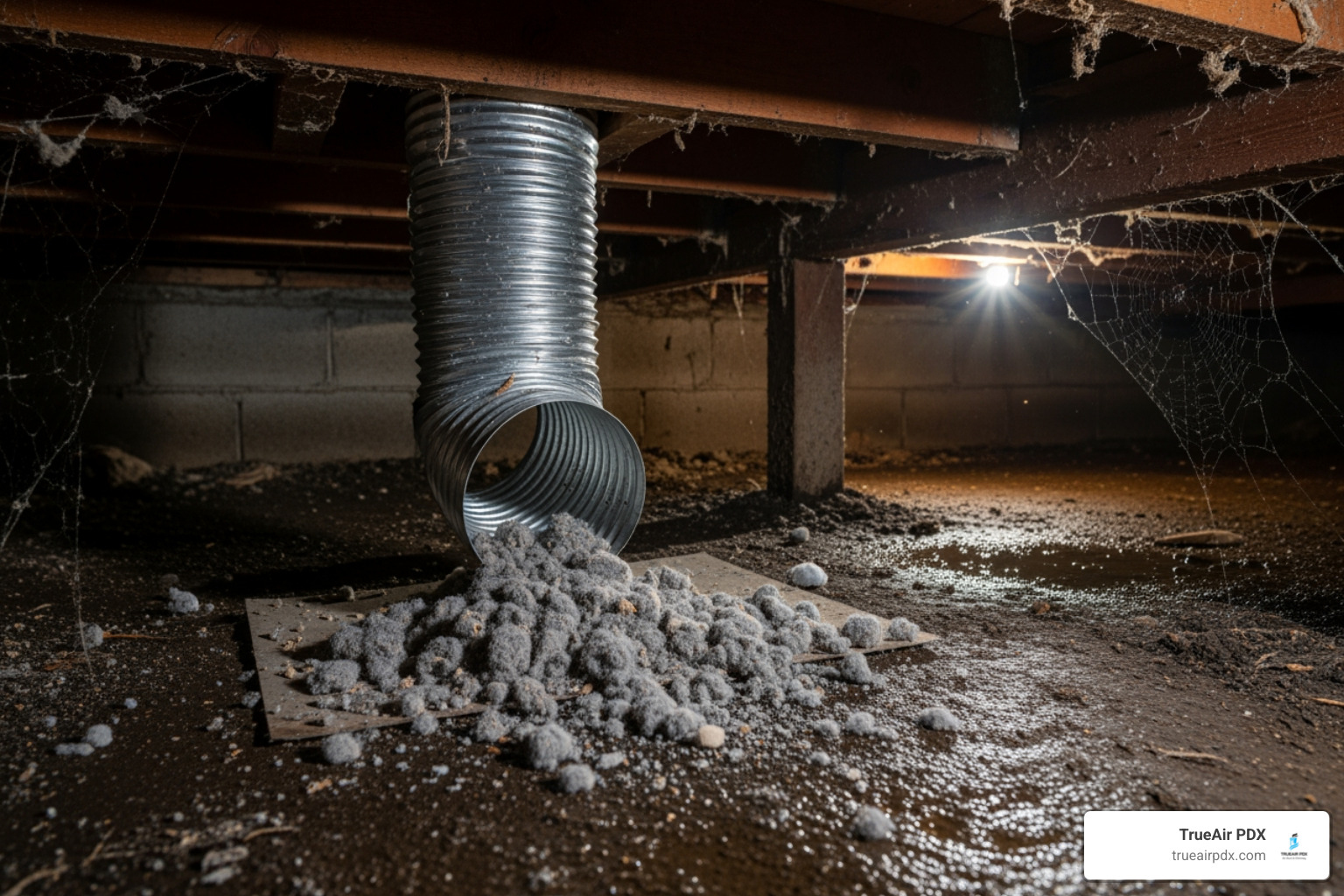
Why Dryer Venting Under House is Extremely Dangerous
Dryer venting under house is a common but dangerous mistake that puts your home and family at serious risk. If your dryer exhausts into your crawl space instead of directly outside, you’re creating a perfect storm of fire hazards, mold growth, and structural damage.
Quick Answer: Can I vent my dryer under my house?
No. Building codes and safety standards strictly prohibit venting dryers into crawl spaces, attics, or any enclosed area. Here’s why:
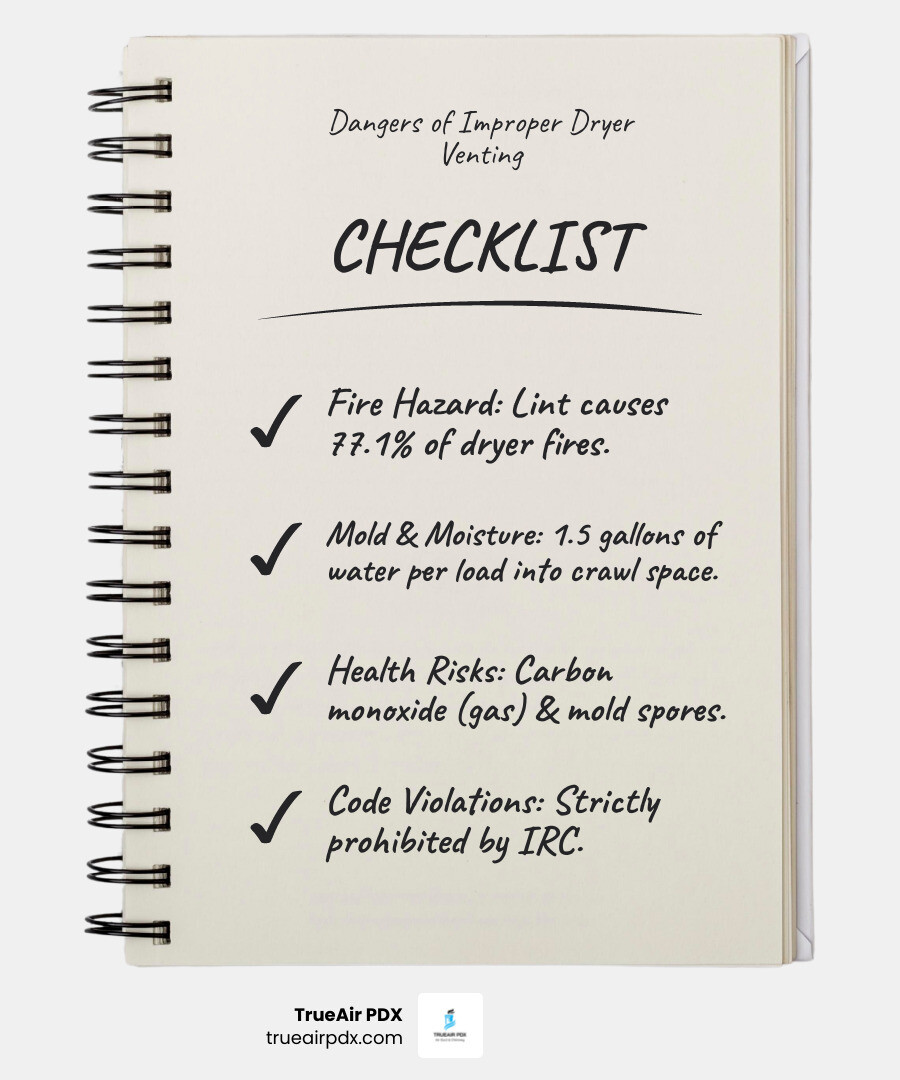
- Fire Risk: Lint buildup is highly flammable and causes 77.1% of residential dryer fires
- Mold & Moisture: A single load of laundry releases up to 1.5 gallons of water into your crawl space
- Health Hazards: For gas dryers, carbon monoxide can seep into your home; for all dryers, mold spores affect air quality
- Code Violations: The International Residential Code (IRC) requires dryer vents to terminate outdoors
- “Life-Threatening” Deficiency: HUD classifies improper dryer venting as a life-threatening deficiency requiring 24-hour correction
One foundation repair company inspector described a common scenario: “Does your dryer empty all your used lint and hot air into your crawlspace? If so, you could have a major fire hazard on your hands.”
The good news? There is a safe way to route a dryer vent through your crawl space—but only if it exits properly to the exterior. This guide will show you exactly what’s at stake, what the code requires, and how to do it right.
Whether you’re a Portland homeowner dealing with a moldy crawl space or you’re installing a new dryer, understanding proper venting isn’t optional—it’s essential for your family’s safety.
The Hidden Dangers of Improper Dryer Venting
We rely on our clothes dryers, but rarely consider where the hot, moist air goes. When a dryer isn’t vented properly, especially into an enclosed space like a crawl space, it poses hidden dangers to your home and health. These dangers can lead to significant structural damage, serious health issues, and even life-threatening situations.
A single load of wet clothes can contain as much as 1.5 gallons of water. When this moisture is dumped into a crawl space, it creates a damp, humid environment that leads to several problems:
- Moisture Damage: Hot, humid air can warp wood, corrode metal, and degrade insulation, compromising your home’s structural integrity and leading to costly repairs.
- Mold and Mildew Growth: A damp crawl space is a perfect breeding ground for mold. Spores can travel into your living spaces, causing poor indoor air quality and respiratory issues. Lint from the dryer provides a food source for mold, making the problem worse.
- Structural Rot: Prolonged moisture can rot wooden joists, beams, and subflooring, weakening your home’s structure and causing sagging floors.
- Pest Infestations: Warm, damp crawl spaces attract pests like rodents and insects. These pests can cause damage, chew wires, and spread diseases. As one source notes, mice and rats can carry a variety of diseases, making their presence a serious health concern.
Improper venting also worsens indoor air quality. Lint, dust, and mold spores from the crawl space can enter your home through the HVAC system or floor cracks, affecting the air you breathe.
For homes with gas dryers, the stakes are even higher. Gas dryers produce combustion byproducts, including carbon monoxide (CO). If a gas dryer is improperly vented, this dangerous, odorless gas can leak into your home, posing a severe risk of poisoning.
All these issues pale in comparison to the most alarming risk of all: fire.
The Alarming Fire Risk
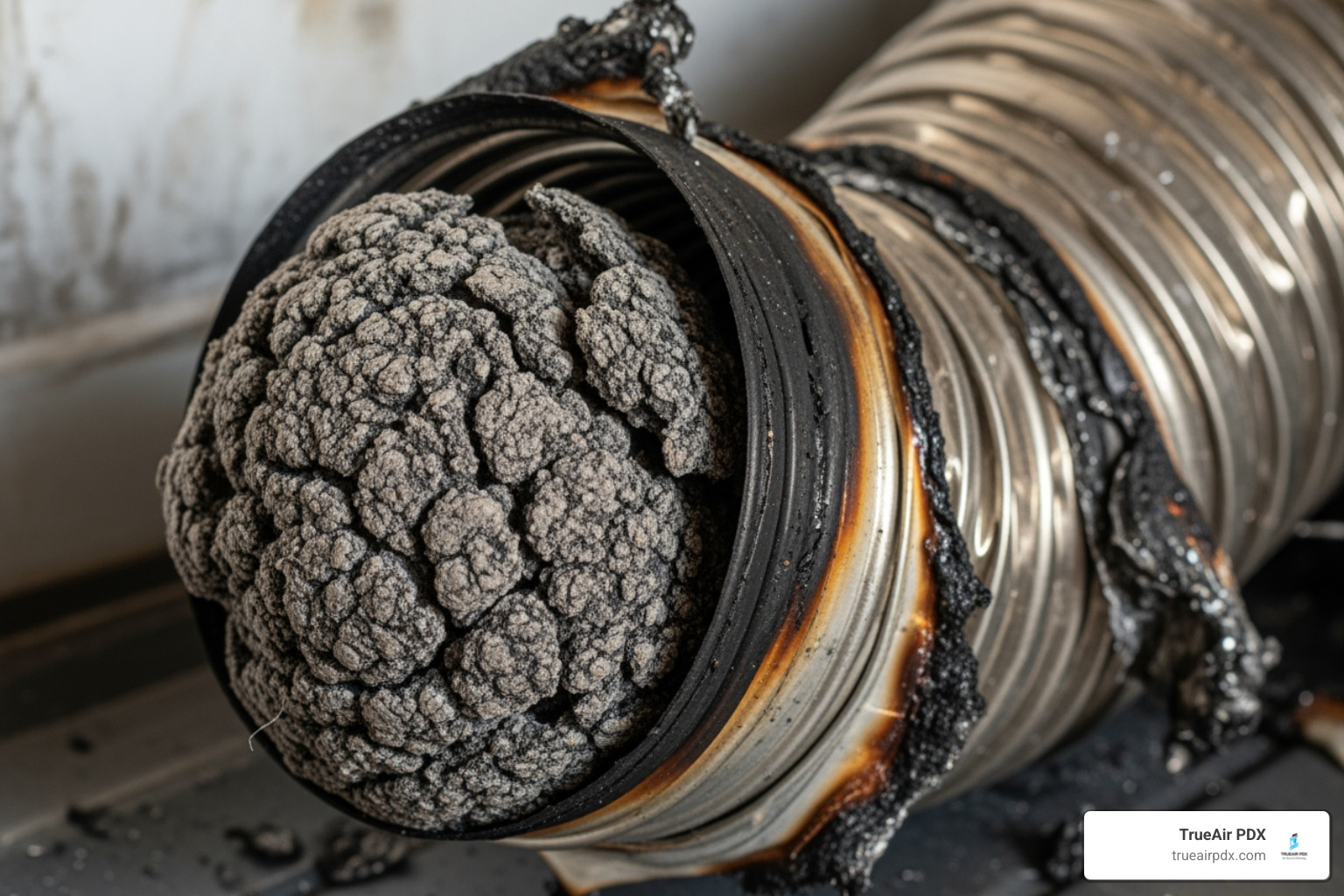
The fire risk from improper dryer venting is incredibly serious. Lint—a collection of fibers from clothes—is highly flammable. While your dryer has a lint filter, it doesn’t catch everything. Lint is carried through the vent system, and if it accumulates in a long, kinked, or improperly routed vent, it can restrict airflow.
Here’s the dangerous chain reaction:
- Restricted Airflow: A clogged or blocked vent means the hot, moist air from your dryer can’t escape efficiently.
- Heat Buildup: The dryer has to work harder and longer, causing the machine to overheat and temperatures within the duct to rise dramatically.
- Ignition: The combination of high heat and highly combustible lint creates a perfect recipe for disaster. Sparks from an overheating dryer can ignite the trapped lint.
The statistics are stark: 77.1% of residential dryer fires are attributed to clothes dryers and the lint they produce. The U.S. Department of Housing and Urban Development (HUD) classifies restricted airflow in a dryer exhaust system as a “Life-Threatening” deficiency, requiring correction within 24 hours.
The Problem with Dryer Venting Under House
Specifically, dryer venting under house by exhausting directly into a crawl space is a recipe for disaster. The crawl space becomes a hot, humid incubator for mold and mildew. The lint expelled by the dryer, mixed with moisture, creates a perfect breeding ground for biological growth and attracts pests.
We’ve seen many Portland homes with perpetually damp and musty crawl spaces, with visible lint debris scattered everywhere. Over time, this constant moisture and biological activity can compromise your home’s foundation, devalue your property, and create an unhealthy living environment.
Building Code and Safety Standards You Can’t Ignore
Proper dryer installation isn’t just a suggestion—it’s mandated by building codes and safety standards to protect your home and family.
The golden rule is that dryer exhaust must terminate outdoors. The International Residential Code (IRC) and International Mechanical Code (IMC) are clear: dryer exhaust systems shall be independent of all other systems and shall convey the moisture to the outdoors and shall terminate on the outside of the building.
This means venting into attics, soffits, ridge vents, or crawl spaces is expressly prohibited. Doing so violates code and creates the fire and moisture hazards we’ve already discussed. As stated in the Proper Clothes Dryer Venting standards, these systems are designed to safely expel moisture-laden air and combustion gases (for gas dryers) directly to the exterior.
Gas vs. Electric Dryer Venting Requirements
While all dryers must vent outdoors, gas and electric models have different requirements based on their operational byproducts.
| Feature | Electric Dryer | Gas Dryer |
|---|---|---|
| Heat Source | Electric heating element | Natural gas or propane burner |
| Exhaust Byproducts | Hot, moist air; lint | Hot, moist air; lint; combustion gases (carbon monoxide, sulfur dioxide) |
| Primary Concern | Moisture damage, mold, fire hazard from lint | Carbon monoxide poisoning, moisture damage, mold, fire hazard from lint |
| Venting Criticality | Crucial for moisture and fire prevention | Absolutely critical for life safety and fire prevention |
Gas dryers pose a severe risk: carbon monoxide (CO) poisoning. The combustion process produces CO, a colorless, odorless, and lethal gas. If a gas dryer’s vent is compromised, these toxic fumes can back up into your home, making proper venting critical for life safety. We always recommend installing carbon monoxide alarms in your laundry area if you have a gas dryer.
Electric dryers, while not producing CO, still expel hot, moist air and lint. Therefore, proper outdoor venting is equally vital to prevent moisture damage, mold growth, and lint-related fire hazards. The commonality is clear: all dryers need to vent safely and efficiently to the outside.
Unsuitable Materials and “Life-Threatening” Deficiencies
The materials used for your dryer vent are just as important as where it terminates. Many homes, especially older ones, use materials now considered dangerous and illegal by current building codes.
The U.S. Department of Housing and Urban Development (HUD) classifies dryer transition ducts constructed of unsuitable material as a “Life-Threatening” deficiency, a serious hazard that needs immediate attention.
What are these “unsuitable materials”?
- Vinyl, Plastic, or Foil Flexible Ducts: These are the worst offenders, are not code-compliant, and are a serious fire hazard.
- They Trap Lint: Their ribbed interiors catch lint, restricting airflow and increasing fire risk.
- Easily Crushed: These flimsy materials are easily kinked or crushed, reducing airflow and causing overheating.
- Cannot Withstand Heat: During a lint fire, these materials can melt or even catch fire, accelerating its spread.
- Void Warranties: Using these materials may void your dryer’s warranty.
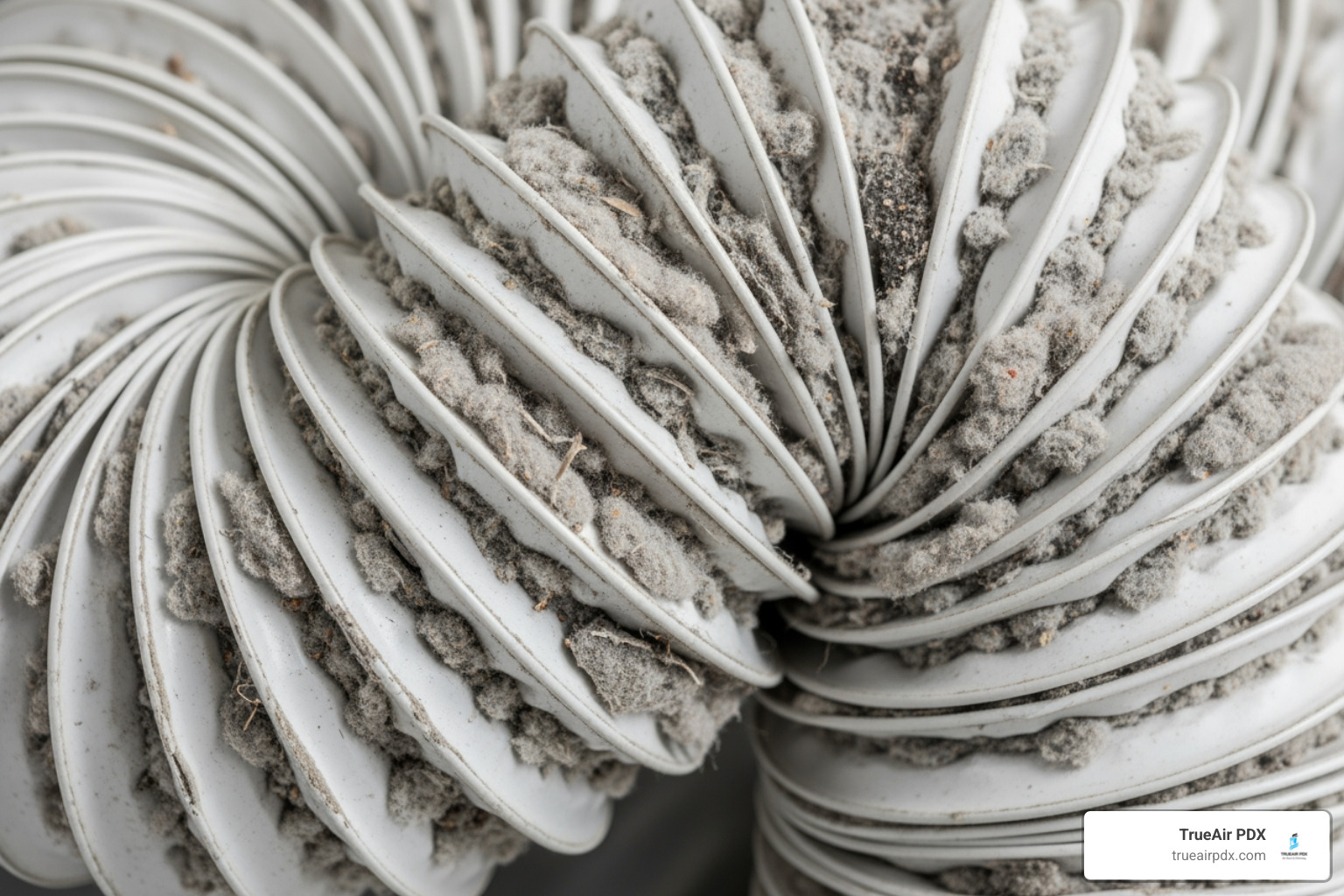
Modern building standards and safety experts strongly recommend against using these materials. They are difficult to clean, prone to sagging, and pose significant risks. If you have any of these materials in your home’s dryer vent system, we urge you to replace them immediately.
Best Practices for Dryer Venting Under House and Through Crawl Spaces
We’ve established that venting directly into a crawl space is a big no-no. However, you can route the vent through a crawl space to reach an exterior wall. The key is that the duct must pass through the crawl space and then terminate safely and correctly outside the building. This is the only safe and code-compliant method for under-house routing.
Choosing the Right Materials
A safe and efficient dryer vent system lies in using the right materials. Forget about flimsy plastic or foil ducts; they’re fire hazards. Here’s what we recommend:
- Rigid Metal Ducting (Aluminum or Steel): This is the gold standard, offering the best airflow and resistance to crushing and high temperatures.
- Smooth Interior Surface: Ensure the ducting has a smooth interior to minimize lint accumulation and reduce fire risk.
- 4-inch Diameter Minimum: Your dryer vent ducting should be at least 4 inches in diameter.
- Metal Foil Tape for Sealing Joints (Not Duct Tape!): Use UL-listed metal foil tape to seal all joints and connections for an airtight seal.
- Periscope Vents for Tight Spaces: A periscope-style vent can help maintain proper airflow and prevent kinking in tight spots behind the dryer.
Correctly Routing a Dryer Vent: The Under-House Method
Routing a dryer vent through a crawl space requires careful planning. This is where DIY projects often go awry, which is why professional installation is often the safest bet.
- Plan the Shortest, Straightest Path: The shorter and straighter the path, the better. Minimize bends, as each one adds resistance and reduces the vent’s effective length.
- Maximum Length: The standard maximum distance is 25 feet, though some brands allow up to 35 feet (always check manufacturer specifications). This maximum is for a perfectly straight run.
- Deductions for Bends: This is critical. Subtract 2.5 feet from the maximum length for every 45-degree turn and 5 feet for every 90-degree turn. A 25-foot maximum run with three 90-degree bends allows for only 10 feet of straight duct (25 – (3 x 5) = 10).
- Slope Ducting Downwards: For horizontal runs, ensure a slight downward slope (about ¼-inch per foot) towards the exterior exit to help drain condensation.
- Support the Duct: Support the duct every 4-5 feet to prevent sagging. Sags create low spots where lint and moisture can accumulate, leading to clogs.
- Secure Connections: Join sections securely with the crimped end pointing in the direction of airflow. Seal all joints with metal foil tape. Never use screws that protrude into the duct, as they snag lint.
- Access Points: For long or complex runs, consider installing access points for easier cleaning and maintenance.
While this guide provides essential information, the installation can be complex. For homeowners in Portland, OR, who need assistance with routing a dryer vent through a crawl space, we offer professional installation services. You can find More info about our professional installation services.
Proper Exterior Termination
The final step in a safe dryer vent system is its termination point on the exterior of your home.
- Location, Location, Location: The exhaust duct must terminate outside at least 3 feet from any building opening (like windows or doors) and 10 feet from an air conditioner or heat pump condenser. Terminate it above the average snow line in your area.
- Backdraft Damper: The termination should be fitted with a backdraft damper to prevent cold air, pests, and moisture from entering the duct when the dryer is not in use.
- Never Use a Screen: This is a crucial point. Screens on exterior vents are a major fire hazard because lint quickly accumulates on them, restricting airflow. Instead, use a hooded, louvered gravity damper designed specifically for dryer vents. If your current vent has a screen, we strongly advise removing it.
Warning Signs of a Bad Dryer Vent and When to Clean It
Even with the best installation, dryer vents need attention. Over time, lint will accumulate, and knowing the warning signs of a poorly functioning dryer vent system can save you from costly repairs, energy waste, and even a house fire.
Here are the common red flags to watch for:
- Longer Drying Times: If your clothes are taking longer than usual to dry or you have to run multiple cycles, it’s a strong indicator that your vent is restricted.
- Clothes Are Hot to the Touch: If clothes feel excessively hot after a cycle, it means the dryer is overheating because the hot air can’t escape. This is a significant fire risk.
- Burning Smell: A burning smell from your laundry area is a critical warning sign that lint is scorching. Stop using your dryer immediately and get it inspected.
- Visible Lint Around the Exterior Vent: A significant amount of lint building up around the exterior vent hood is a clear sign of a blockage within the duct.
- Humidity in the Laundry Room: An unusually hot or humid laundry room during a cycle could mean moisture is leaking from a damaged duct or the vent is completely blocked.
If you notice any of these signs, it’s time to take action.
Inspection and Cleaning Frequency
Regular inspection and cleaning are your best defense against dryer vent hazards. It’s preventative maintenance for one of your home’s hardest-working appliances.
- Lint Trap Cleaning: Clean your dryer’s lint screen after every single load of laundry. This simple habit helps prevent lint buildup in the duct.
- Inspect Vent System Every 6 Months: Visually inspect the transition duct behind your dryer and the exterior vent cap every six months. Look for kinks, damage, or blockages. If you can safely access your crawl space, check the duct run there for any signs of damage.
- Professional Cleaning Recommended Annually: We recommend a professional dryer vent cleaning at least once a year, as lint will still accumulate in the duct over time. Larger families, those who do a lot of laundry, or homes with longer vent runs may need more frequent cleaning. Professional cleaning ensures the entire duct run is clear, safe, and efficient.
Our team at TrueAir PDX specializes in thorough dryer vent cleaning for homes across Portland, Gresham, Beaverton, Tigard, and surrounding areas. We can ensure your system is clear, safe, and efficient. Don’t wait for a problem to arise; be proactive! Get a quote for a professional Dryer Vent Cleaning today.
Frequently Asked Questions about Dryer Venting
Here are answers to some of the most common questions we hear about dryer venting:
Can I use a flexible plastic or foil duct to vent my dryer?
No. These materials are a serious fire hazard and not code-compliant. Their ribbed interiors trap lint, and they are easily crushed, restricting airflow. They can’t withstand high temperatures and can melt or spread a fire. Always use rigid or semi-rigid metal ducting with a smooth interior for maximum safety and efficiency.
How can I prevent condensation in a vent running through a cold crawl space?
Condensation is a concern when warm, moist dryer air travels through a cold duct in a crawl space. The best methods to prevent this are:
- Use Insulated Rigid Ducting: In a cold or unconditioned crawl space, using insulated rigid metal ducting helps maintain the air temperature inside the duct, reducing condensation.
- Ensure Proper Slope: As mentioned, slope the duct slightly downwards (about ¼-inch per foot) towards the exterior exit. This allows any condensation that does form to drain outside rather than pooling in the duct.
- Minimize Length and Bends: Shorter, straighter runs reduce the time warm air spends in the cold duct, thus reducing the chance of condensation.
A combination of insulation and proper sloping provides the most robust defense against moisture buildup in cold crawl space runs.
What happens if my dryer vent is too long?
A dryer vent that exceeds the manufacturer’s recommended length (typically 25-35 feet, with deductions for bends) will have significantly reduced airflow. This leads to several negative consequences:
- Lint Buildup: Weak airflow allows lint to settle and accumulate within the duct, leading to clogs.
- Longer Drying Times: Your dryer can’t efficiently expel moist air, so your clothes take much longer to dry.
- Increased Energy Use: Running your dryer for extended periods consumes more energy, leading to higher utility bills.
- Increased Wear and Tear on Dryer: The dryer has to work harder, leading to overheating and a shorter appliance lifespan.
- Significantly Higher Risk of a Dryer Fire: This is the most critical consequence. Restricted airflow and lint buildup create the perfect conditions for a dryer fire.
Always adhere to the maximum length specifications, accounting for all bends, to ensure your dryer operates safely and efficiently.
Conclusion
We’ve covered a lot of ground today, but the message is clear: dryer venting under house or directly indoors is a recipe for disaster. This practice leads to a dangerous trifecta of fire hazards, mold growth, and significant health risks. The only safe, code-compliant, and healthy solution is a properly installed rigid metal dryer vent that terminates directly to the outdoors.
For homeowners in Portland, OR, and our service areas including Gresham, Beaverton, Tigard, Milwaukie, and throughout Northwest and Southeast Portland, ensuring your dryer vent system is safe and efficient is not just about convenience—it’s crucial for the well-being of your home and family.
At TrueAir PDX, we understand the unique challenges and needs of homes in our community. We offer expert inspections, professional cleaning, and skilled installation services to protect your home and ensure your dryer operates safely and efficiently. Don’t leave your family’s safety to chance.