
Dirty Furnace Coil: Critical Problems 2026
Why Your Furnace’s Hidden Coil Could Be Costing You Money
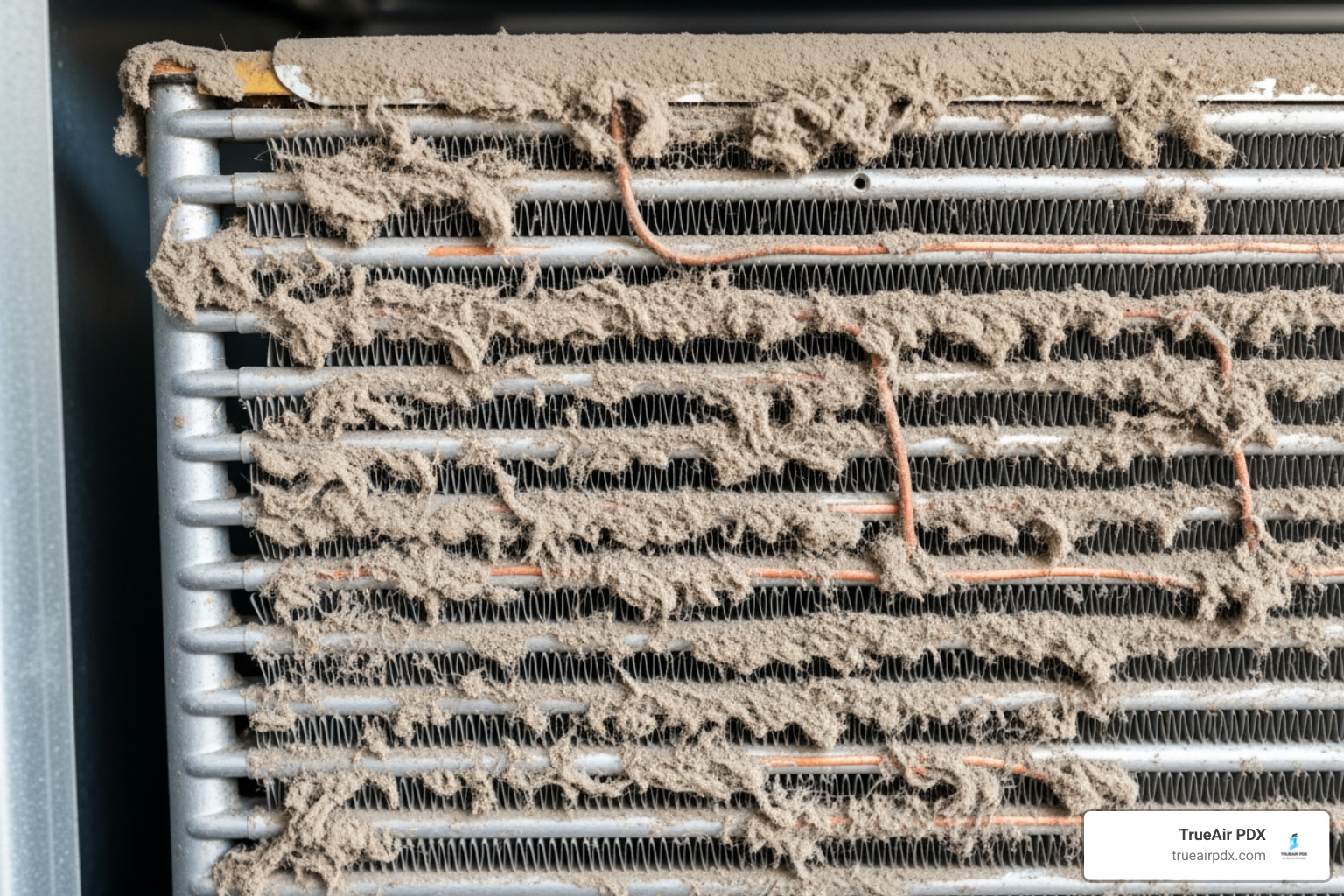
A dirty furnace coil is one of the most overlooked problems in your home’s HVAC system, yet it can dramatically affect your heating performance, energy bills, and indoor air quality. This component—often called the evaporator coil—sits inside your furnace cabinet where heated air passes through on its way to your home’s ductwork.
Quick Answer: What You Need to Know About Dirty Furnace Coils
- What it is: The evaporator coil sits alongside your furnace’s heat exchanger and has hundreds of small air passages
- How it gets dirty: Dust, mold, and debris accumulate when air filters aren’t changed regularly
- Main symptoms: Reduced airflow, higher energy bills, ice formation, unpleasant odors, and uneven heating
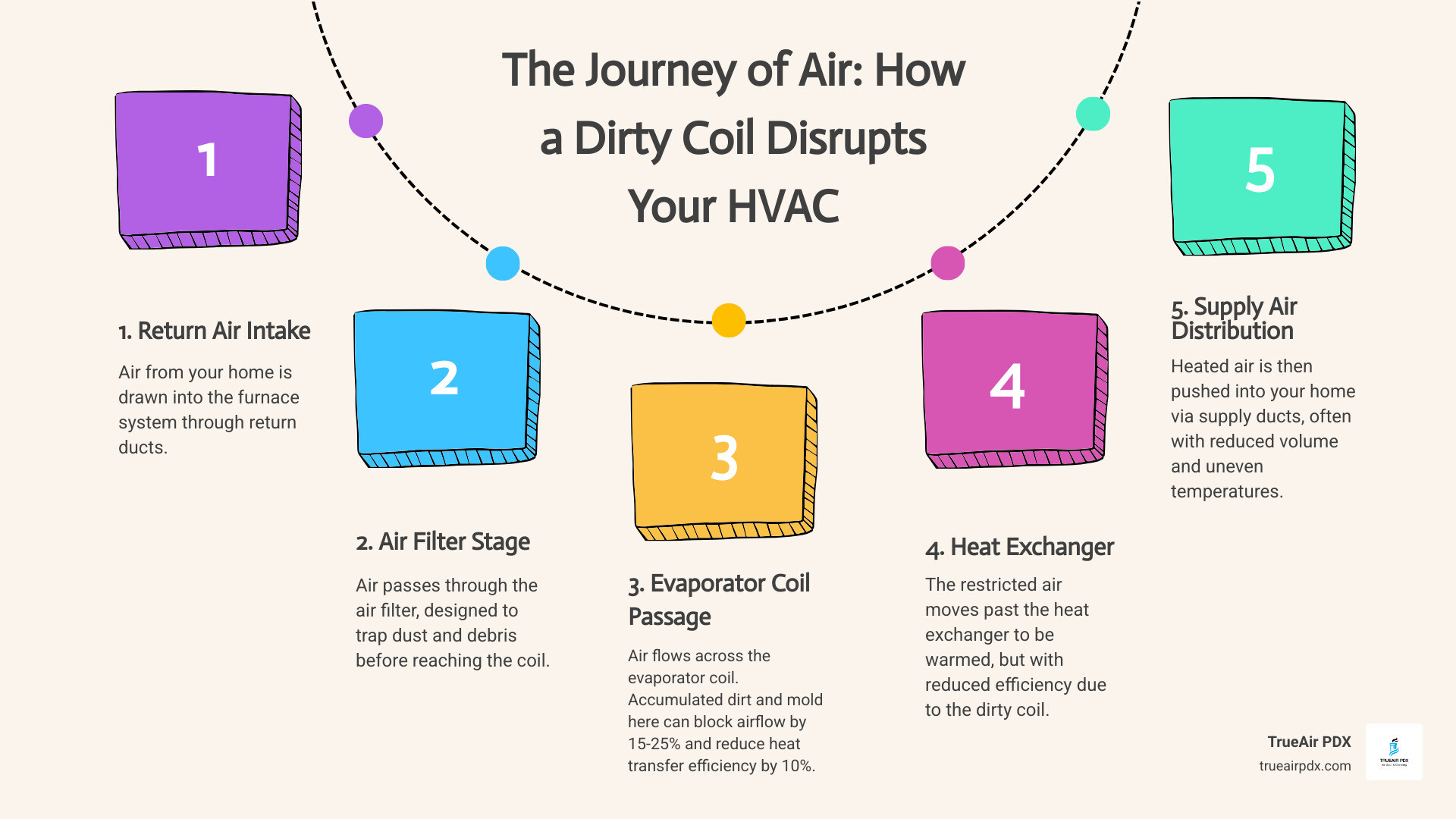
- Performance impact: Can reduce heat transfer by up to 10% and decrease airflow by 15-25%
- Solution: Professional cleaning by an HVAC technician, combined with regular filter changes
Here’s the problem most Portland homeowners don’t realize: when you’re running your furnace, heated air travels across this coil. But dirt particles and mold can build up on the warm, moist surface, clogging those small channels and blocking vital airflow. It’s like trying to breathe through a dirty filter—your HVAC system has to work much harder to push air through.
The consequences go beyond just comfort. A clogged coil forces your system to run longer to reach your thermostat’s temperature setting, driving up your utility bills. Even worse, the accumulated dirt acts as an insulator, preventing proper heat transfer. And in Portland’s humid climate, mold growth on these coils is especially common, which can affect your family’s respiratory health.
Many homeowners know that a clogged air filter can choke their HVAC system, but few realize that a dirty furnace coil can do the exact same thing—and it’s much harder to spot and fix.
Recognizing the Red Flags: Symptoms of a Dirty Coil
A dirty furnace coil doesn’t usually announce itself with a flashing warning light. Instead, it often presents with a series of subtle, and sometimes not-so-subtle, symptoms that can easily be mistaken for other HVAC issues. Being attuned to these red flags can save you from significant headaches and expenses down the line.
Reduced Heating and Cooling Performance
The most immediate and noticeable impact of a dirty furnace coil is a decline in your system’s ability to heat or cool your home efficiently. Our furnaces and AC units are designed to move air smoothly across the coil’s many small passages. When these passages are clogged with dirt, dust, and debris, that smooth airflow becomes restricted.
This restriction means your furnace has to work much harder to push air through, resulting in weak airflow coming from your vents. You might notice that some rooms feel warmer or colder than others, leading to uneven temperatures throughout your home. The system may run constantly, struggling to reach the thermostat’s set temperature because it’s simply not moving enough conditioned air. In severe cases, the restricted airflow can cause your furnace to overheat, triggering the high limit switch and causing the unit to short cycle or even shut down completely as a safety measure. This can be a significant issue, as a dirty coil can lose 10% of its heat transfer capability, and airflow can fall as much as 15% to 25% due to fouling. To understand more about how dirt impedes your system, check out What Happens When a Coil is Loaded with Dirt?.
Skyrocketing Energy Bills
If your heating or cooling bills have been steadily climbing without a corresponding increase in usage, a dirty furnace coil is a prime suspect. When your HVAC system has to work harder and longer to achieve the desired temperature, it naturally consumes more energy. This increased energy consumption directly translates to higher utility bills for Portland homeowners.
A dirty coil acts as an insulator, preventing the efficient transfer of heat (or cold, during AC operation). This means your furnace or AC unit has to run for extended periods just to achieve the same effect that a clean coil would manage with less effort. Think of it this way: the system is consuming more power, but delivering less comfort. This reduced efficiency means you’re paying more for less, which is a frustrating situation for any homeowner. The statistics are clear: your furnace has to work extra hard to satisfy the thermostat’s temperature setting when airflow is restricted, so it consumes more energy and your heating costs rise. Similarly, when dirt restricts the heat absorption process, the AC has to run longer and work harder to achieve the same cooling effect, leading to increased energy consumption.
Poor Indoor Air Quality and Strange Odors
Beyond comfort and cost, a dirty furnace coil can significantly impact the air you breathe inside your home. The dirt, dust, mold, and other contaminants that accumulate on the coil don’t just stay there; they can become dislodged and recirculated throughout your home via the ductwork. This can lead to increased allergies and asthma symptoms for sensitive individuals in your household.
In our humid Portland climate, the evaporator coil, especially during summer AC use, is a prime breeding ground for mold and mildew due to condensation. When the furnace turns on in colder weather, this dried mold can become airborne, contributing to poor indoor air quality. You might also notice musty smells or other unpleasant odors emanating from your vents. This phenomenon, sometimes called “Dirty Sock Syndrome,” is a smell that comes from an evaporator coil, particularly when it first comes on or shifts from heat to cool. It’s caused by biological material that dries out on the coil. If you’re experiencing these issues, it might be time to consider professional cleaning. For more details on this particular problem, read What Causes Dirty Sock Syndrome?. For a broader look at improving your home’s air quality, explore More info about air duct cleaning services.
From Dirt to Ice: The Freezing Phenomenon
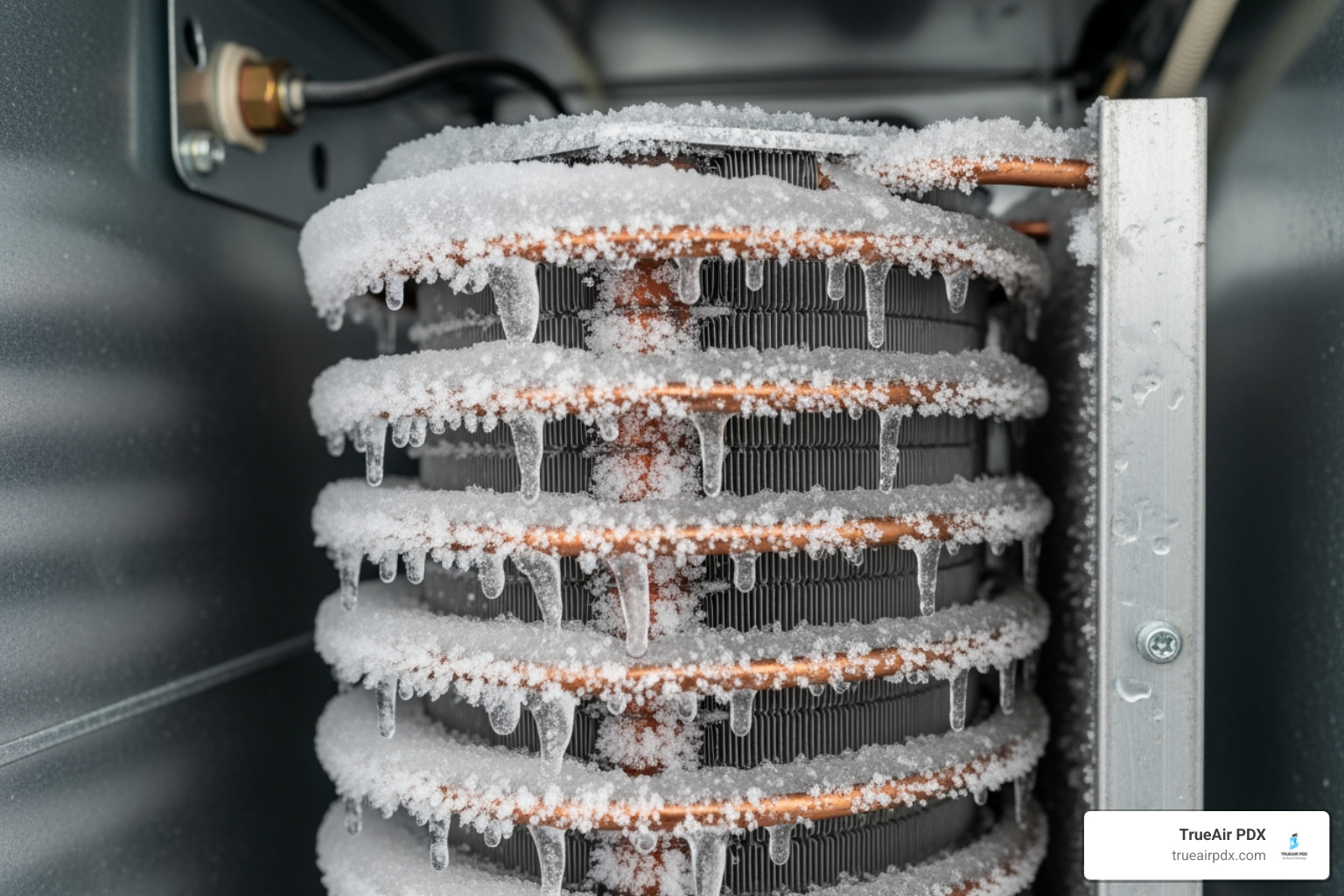
While we’re discussing furnaces, the same coil often serves your air conditioning system as an evaporator coil. A dirty furnace coil (in its role as an evaporator coil) is a leading cause of your AC freezing up. When dirt and debris clog the coil, it severely restricts airflow over its surface. This lack of warm air passing over the coil causes the refrigerant inside to get too cold, leading to ice formation on the coil itself.
This ice buildup creates a vicious cycle: more ice further restricts airflow, which makes the coil even colder, leading to more ice. This can also impact refrigerant pressure, putting additional strain on your system. You might see visible ice on the coil, or notice water pooling around your furnace due to blocked condensation drainage and subsequent thawing. Running your AC with a frozen coil can cause serious damage to costly components like the compressor. Allowing the system to defrost naturally and addressing the root cause—the dirty coil—is crucial. For more on this, check out Here’s How a Dirty Furnace Coil Affects Your HVAC System.
The Domino Effect of a Dirty Furnace Coil on Your Home
The journey of a dirty furnace coil from a minor annoyance to a major problem is often a gradual one, creating a domino effect throughout your entire HVAC system and home environment. Understanding this chain reaction can underscore the importance of proactive maintenance.
Why Coils Get Clogged: The Role of the Air Filter
The primary culprit behind a dirty furnace coil is almost always a neglected air filter. Your air filter is the first line of defense against airborne contaminants entering your HVAC system. Its job is to capture dust, pet dander, pollen, mold spores, and other debris before they can reach the delicate components deeper inside.
When an air filter becomes overloaded with particulate matter, it restricts airflow. In an attempt to get enough air, your system’s blower motor may pull air around the sides of the clogged filter, allowing unfiltered air to bypass it entirely. This bypassed dust and debris then travels directly to your furnace coil, where it accumulates on the moist, finned surfaces. Over time, this buildup creates the thick insulating layer we discussed earlier.
The quality of your filter also plays a significant role. While any filter is better than no filter, a basic MERV 6 or 8 filter might not be adequate for all homes, especially those with pets, allergies, or higher dust levels. Investing in a higher-quality filter with a better MERV rating can significantly reduce the amount of particulate matter reaching your coil.
The Risks of Ignoring a Dirty Furnace Coil
Ignoring a dirty furnace coil is akin to ignoring a slow leak in your car tire – eventually, it leads to a much bigger, more expensive problem. The consequences can range from minor inefficiencies to catastrophic system failures:
- Component Wear and Tear: Your HVAC system is designed to operate within specific parameters. When a dirty coil restricts airflow, components like the blower motor and compressor have to work much harder and longer to compensate. This excessive strain accelerates wear and tear, shortening the lifespan of these expensive parts.
- Blower Motor Strain: The blower motor is responsible for pushing air through your system. With a clogged coil, it faces increased resistance, forcing it to consume more energy and operate under duress. This can lead to premature motor failure.
- Compressor Failure: As mentioned, a dirty evaporator coil can lead to the AC freezing. Running an AC with a frozen coil places immense stress on the compressor, which is the heart of your cooling system. A burnt-out compressor is one of the most expensive HVAC repairs, often costing as much as a new unit.
- Costly Repairs: The cumulative effect of increased wear and tear and component failures means you’re far more likely to face unexpected and expensive repair bills. Preventative maintenance, including coil cleaning, is almost always cheaper than reactive repairs.
- System Lifespan Reduction: An HVAC system under constant strain from a dirty coil will simply not last as long as a well-maintained one. You could be looking at replacing your entire furnace or AC unit years earlier than necessary.
- Safety Shutdowns: In extreme cases, a severely restricted coil can cause the furnace to overheat, triggering safety mechanisms like the high-limit switch to shut down the system. While this protects your home from a fire hazard, it means you’re left without heat until the issue is resolved.
The Solution: Cleaning and Prevention
The good news is that a dirty furnace coil is a solvable problem. The key lies in understanding when to call in the professionals and what preventative measures you can take to keep your system running smoothly.
DIY vs. Professional Cleaning: What’s the Best Method?
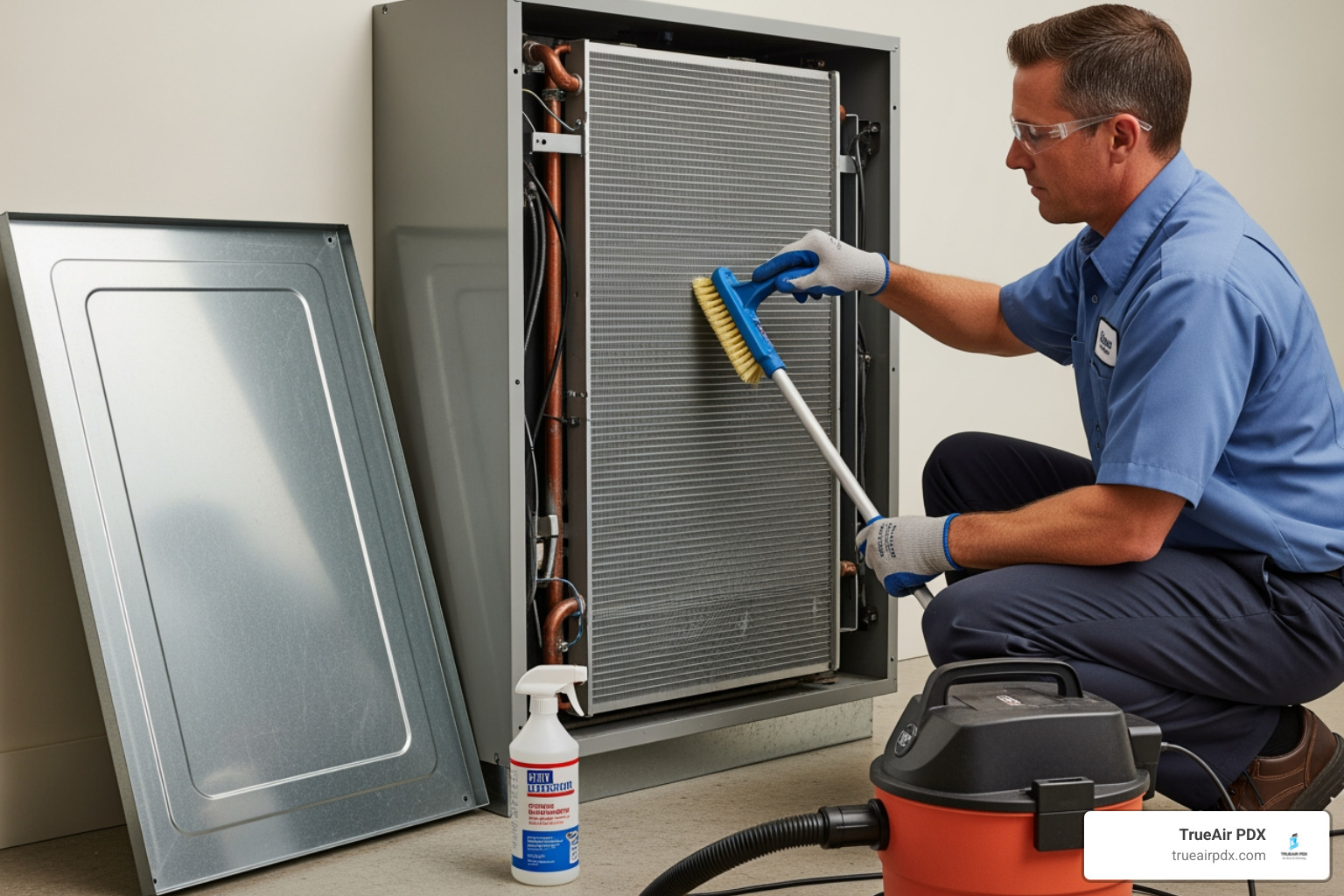
While some minor dust on the exterior of your coil might tempt you to reach for a brush, cleaning a dirty furnace coil is typically best left to the professionals.
DIY Cleaning Methods (for light dust only):
- Soft Brush: For very light, superficial dust on easily accessible parts of the coil, a soft-bristle brush can gently remove some debris.
- Compressed Air: A can of compressed air can help dislodge loose dust from between the fins.
- Foaming Coil Cleaner: There are specialized foaming coil cleaners available that you spray on, and they are supposed to foam up and carry dirt away as they drip.
Risks of DIY Cleaning:
The evaporator coil is an incredibly delicate component. It’s made of hundreds of paper-thin fins spaced about 1/8 of an inch apart. It’s fragile and difficult to access, usually nestled deep within your furnace plenum. Trying to clean it yourself carries significant risks:
- Damaging Fins: It’s very easy to bend or crush the delicate aluminum fins, which further restricts airflow and reduces efficiency.
- Electrical Hazards: Your furnace contains electrical components. Attempting DIY cleaning without proper knowledge can lead to electric shock or damage to the system.
- Refrigerant Lines: The coil contains refrigerant lines. Damaging these can lead to costly leaks and environmental hazards.
- Incomplete Cleaning: You might only clean the visible parts, leaving significant dirt and mold in deeper, harder-to-reach areas.
- Chemical Residue: Using the wrong cleaner or not rinsing properly can leave corrosive residue that damages the coil over time.
When to Call a Professional:
For these reasons, we strongly recommend calling an HVAC professional for furnace coil cleaning. Our technicians have the specialized tools, expertise, and safety training to:
- Properly access the coil without damaging surrounding components.
- Use appropriate, eco-friendly cleaning solvents and techniques.
- Thoroughly remove stubborn dirt, mold, and biological growth from both sides of the coil.
- Inspect for other potential issues during the cleaning process.
If your heating and airflow are affected by a dirty furnace coil, we can professionally restore your comfort. Learn more about our specialized service at Furnace HVAC Coil Cleaning.
Keeping Your Coils Clean: Long-Term Prevention
Prevention is always better than cure, especially when it comes to keeping your furnace coil clean. Implementing a few simple habits can drastically reduce the chances of significant dirt buildup. Here are our top recommendations for homeowners in Portland and the surrounding areas:
- Regular Filter Changes: This is the single most important preventative measure. Check your air filter monthly, especially during peak heating and cooling seasons, and replace it every 30-90 days, depending on factors like pets, allergies, and system usage. A clean filter is your coil’s best friend.
- Annual HVAC Maintenance: Schedule annual professional preventive maintenance for your entire HVAC system. During these visits, technicians can catch minor issues before they become major problems, including inspecting and often cleaning the coil. This also helps ensure your heat pump, furnace, and AC are running efficiently year-round.
- Using High-Quality Filters: While basic filters are better than none, consider upgrading to a higher MERV (Minimum Efficiency Reporting Value) rated filter. These filters capture smaller particles more effectively, preventing them from ever reaching your coil. However, ensure your system can handle a higher MERV filter, as some can restrict airflow if your system isn’t designed for them.
- Keeping Vents Clear: Ensure all return vents and supply registers throughout your home are unobstructed by furniture, rugs, or drapes. Restricted airflow at any point in the system can lead to issues that affect the coil.
- Control Humidity: In our damp Portland climate, managing indoor humidity can help prevent mold and mildew growth on coils. Ensure proper ventilation and consider a dehumidifier if humidity levels are consistently high.
For a comprehensive guide on maintaining your heating system, refer to our Furnace Cleaning Portland Guide 2025.
Frequently Asked Questions about Dirty Furnace Coils
We understand that a dirty furnace coil can seem like a complex issue. Here are some common questions we hear from homeowners in Portland, Gresham, Beaverton, and other communities we serve:
How often should furnace coils be cleaned?
The frequency of furnace coil cleaning largely depends on several factors, but a good rule of thumb is to have them inspected annually as part of your regular HVAC maintenance. If your technician finds significant buildup, they can clean it then.
Factors that might necessitate more frequent cleaning include:
- Home Environment: Homes with pets, smokers, recent renovations, or high levels of indoor dust may accumulate coil dirt faster.
- System Usage: Systems that run almost constantly throughout the year (like heat pumps in our climate) might need more attention.
- Filter Quality and Replacement Frequency: If you frequently forget to change your air filter or use a lower-quality filter, your coil will get dirty much faster.
Can a dirty coil cause the furnace to stop working completely?
Yes, absolutely. A severely dirty furnace coil can definitely cause your furnace to stop working completely. Here’s how:
- High-Limit Switch: As mentioned earlier, restricted airflow due to a dirty coil can cause the furnace’s heat exchanger to overheat. To prevent damage and potential fire hazards, a safety device called the high-limit switch will trip, shutting down your furnace.
- Blower Motor Failure: The increased strain on the blower motor to push air through a clogged coil can lead to its premature failure. If the blower motor stops working, your furnace won’t be able to distribute heat, essentially rendering it inoperable.
- Overheating Risk: Beyond the high-limit switch, prolonged overheating can cause irreversible damage to other internal components, leading to a complete system breakdown.
These safety shutdowns are designed to protect your home and your expensive equipment, but they mean you’ll be without heat until a professional can diagnose and fix the underlying issue.
Will cleaning my air ducts also clean the furnace coil?
This is a common and excellent question! While air duct cleaning is crucial for overall indoor air quality, it’s important to clarify its relationship with furnace coil cleaning.
When TrueAir PDX performs a professional air duct cleaning, we clean the entire HVAC system, which includes the ducts, furnace, and often the A/C coil. The coil is an integral part of the HVAC system, typically located within the furnace plenum. Our comprehensive cleaning process aims to remove dust, dirt, debris, mold, and other contaminants not just from the ductwork but also from accessible components of the furnace and coil.
So, while “air duct cleaning” focuses on the extensive network of ducts, a thorough, professional service like ours often includes attention to the furnace coil as part of the overall system cleaning. However, it’s always best to confirm with us that furnace coil cleaning is explicitly part of your service when scheduling. For more information on our comprehensive cleaning approach in areas like Gresham, check out Air Duct Cleaning Gresham Guide 2025.
Restore Your System’s Health and Efficiency
We’ve covered a lot about the hidden dangers of a dirty furnace coil—from plummeting performance and skyrocketing bills to compromised indoor air quality and even system breakdowns. It’s clear that this often-overlooked component plays a critical role in the health and efficiency of your entire HVAC system.
The good news is that these problems are preventable and fixable. By understanding the symptoms, taking proactive steps like regular filter changes, and knowing when to call in the experts, you can safeguard your home’s comfort and your family’s health.
At TrueAir PDX, we pride ourselves on being a local, trusted, and eco-friendly business dedicated to ensuring cleaner air and a safer home environment for our neighbors in Portland, Gresham, Beaverton, Tigard, Milwaukie, and throughout Northwest Portland, Southeast Portland, the Pearl District, Irvington, Montavilla, Alberta Arts District, Sellwood, NW District, Alberta, Hawthorne, Laurelhurst, East Portland, and Mt Tabor. Our comprehensive home air system cleaning services, including professional furnace coil cleaning, are designed to restore your system’s health and efficiency.
Don’t let a dirty coil leave you in the cold, or with higher bills. Experience the difference a professionally cleaned coil can make—improved airflow, lower energy costs, and cleaner, healthier air for your family.