
Why Your Home’s Comfort Depends on Clean Coils
Furnace coil cleaning is a crucial maintenance task that can boost your HVAC system’s efficiency by up to 16%, lower your energy bills, and prevent costly breakdowns. Here’s what you need to know:
Quick Answer: How to Clean Furnace Coils
- Turn off power at the circuit breaker
- Locate and access the coils behind the access panel
- Inspect for damage (call a pro if severely damaged)
- Clean gently with a soft brush or vacuum for light dust
- Apply cleaner (non-acidic foaming coil cleaner) for stubborn grime
- Rinse carefully if required by product instructions
- Dry completely before reassembling
- Restore power and test the system
Picture this: It’s a cold winter evening in Portland, you’re settling in with a good book, and you notice the room just isn’t warming up like it should. Your furnace is running, but something’s off. The culprit? Those hidden furnace coils, quietly collecting dust and grime, silently driving up your energy bills.
Dirty coils can increase your energy consumption by up to 37% and put serious strain on your system. When dust, pollen, and debris coat your furnace coils, they act like an insulating blanket—blocking the heat transfer your system needs to keep your Portland home comfortable.
The good news? Cleaning your furnace coils is a manageable task that can make a huge difference. Whether you tackle it yourself or call in the pros, understanding the process helps you maintain a more efficient, reliable heating system.
In this guide, we’ll walk you through everything you need to know about furnace coil cleaning—from identifying when your coils need attention to step-by-step cleaning instructions that prioritize safety and effectiveness.
Why Clean Furnace Coils? Understanding the Heart of Your HVAC
At the heart of your HVAC system, whether it’s heating your home in Gresham or cooling it in Beaverton, are the coils. These vital components come in a couple of forms within your system: the furnace’s heat exchanger (often referred to as furnace coils in heating mode) and the evaporator coils (for air conditioning, usually housed within the same indoor unit).
The furnace’s heat exchanger is a series of serpentine tubes where fuel is burned, and the resulting heat is absorbed. Once heated, your furnace’s blower pushes air across these hot coils, warming it before distributing it throughout your living space. This is how your home gets that cozy warmth on a chilly Portland evening.
When your system is in cooling mode, the evaporator coils take center stage. These coils are where the magic of heat absorption happens. As warm indoor air passes over the cold evaporator coils, the coils absorb the heat, and the refrigerant inside them carries that heat to the outdoor condenser unit to be released. This continuous cycle is what keeps your home cool and comfortable.
So, why is furnace coil cleaning so critically important? Simply put, these coils are constantly interacting with the air circulating through your home. Over time, they inevitably accumulate a layer of dust, dirt, pet dander, pollen, and other airborne particles. This accumulation acts like an insulating blanket, severely hindering the coils’ ability to efficiently transfer heat.
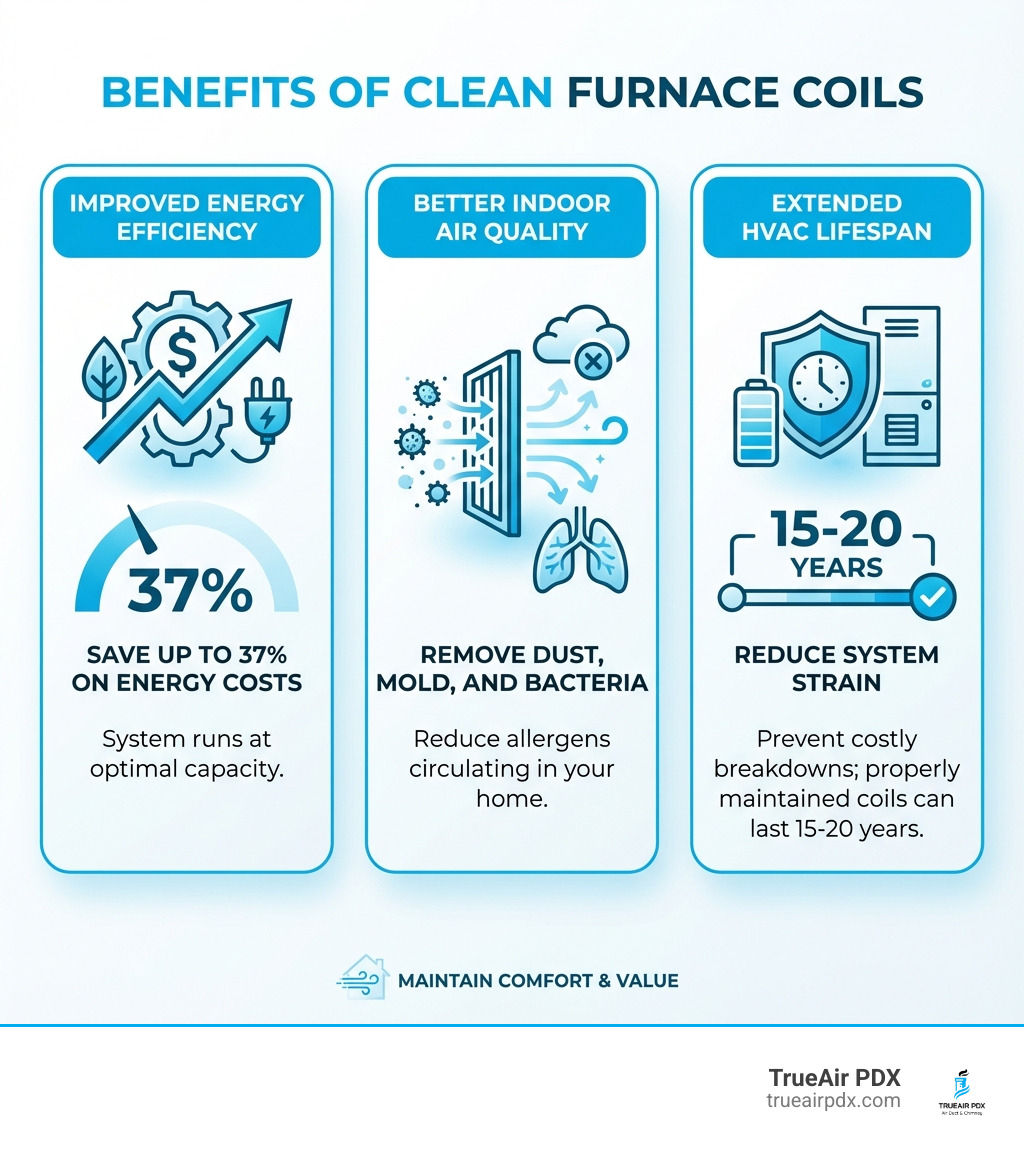
A dirty coil means your furnace has to work much harder and run longer to achieve your desired temperature. This increased effort directly translates to higher energy consumption—studies show that an HVAC system operating with dirty coils can consume up to 37% more power! This isn’t just bad for your wallet; it also puts immense strain on your entire system. Increased operating pressure and temperatures, a direct result of dirty coils, can break down the compressor’s lubricant, significantly increasing the risk of equipment failure.
Beyond efficiency and system longevity, clean coils are essential for healthy indoor air quality. Dust, moisture, and warmth create an ideal breeding ground for mold, mildew, and bacteria on dirty coils. These contaminants can then be circulated throughout your home, affecting air quality and potentially impacting your family’s health.
Signs Your Furnace Coils Need Cleaning
Your HVAC system is usually pretty good at telling you when something’s not right, and dirty coils are no exception. Keeping an eye out for these signs can save you from bigger problems down the road:
- Reduced Airflow: If you notice that the air coming from your vents isn’t as strong as it used to be, dirty coils could be restricting the flow.
- Poor Heating or Cooling: Is your furnace running but your home still feels chilly, or your AC struggling to cool in the summer? Dirty coils are notorious for reducing your system’s ability to transfer heat effectively.
- Higher Energy Bills: If your utility bills are mysteriously climbing, especially during peak heating or cooling seasons, your system might be working overtime due to dirty coils. A system with dirty coils can consume significantly more power.
- System Runs Constantly or Longer: To compensate for reduced efficiency, your furnace or AC might run for extended periods or cycle more frequently, trying to reach the thermostat setting.
- Unusual Noises: While not always coil-related, a struggling system can sometimes produce unfamiliar sounds as components work harder.
- Frozen Evaporator Coil: This is a classic sign of severely dirty evaporator coils (or a dirty air filter). When airflow is restricted, the moisture on the coils can freeze, turning your coil into a block of ice.
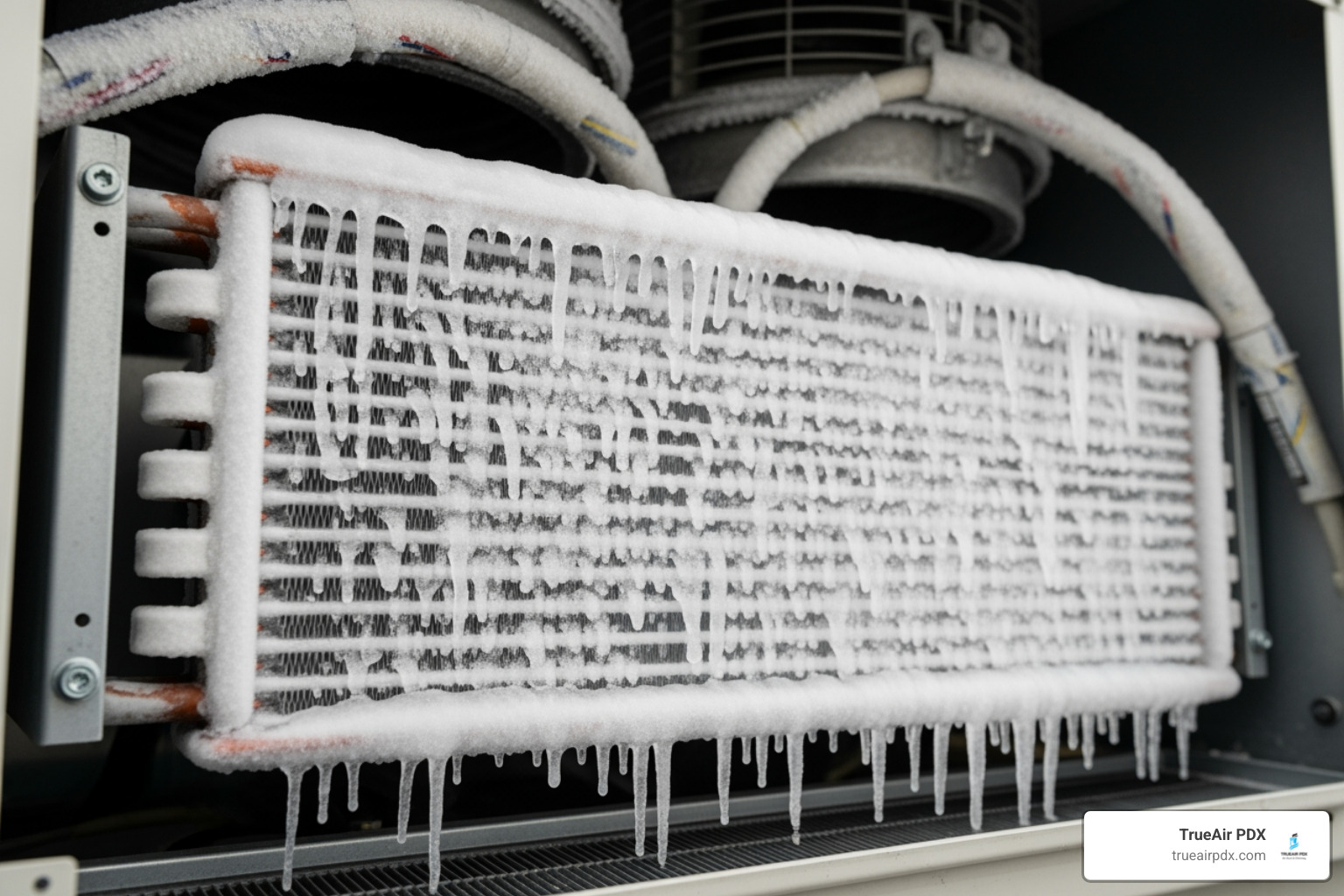
If you see ice on your indoor unit, it's a clear indicator that something is impeding airflow, and dirty coils are a primary suspect.
The Consequences of Neglecting Furnace Coil Cleaning
Ignoring the signs and letting your furnace coils remain dirty can lead to a cascade of costly and uncomfortable issues for your Portland home:
- Decreased Efficiency: As mentioned, dirty coils are terrible insulators. This means your HVAC system has to work much harder to achieve the desired temperature, leading to a significant drop in efficiency and an uncomfortable living environment.
- Increased Operating Costs: That decreased efficiency directly translates to higher energy bills. Your system will consume more power, costing you more money every month.
- Shorter System Lifespan: The constant strain on your furnace’s components, especially the compressor in AC mode, accelerates wear and tear. This can drastically shorten the overall lifespan of your HVAC unit, leading to premature replacement.
- Costly Repairs: Dirty coils increase operating pressure and temperatures, which can break down the compressor’s lubricant and result in equipment failure. Replacing a compressor is one of the most expensive HVAC repairs you can face.
- Poor Indoor Air Quality: Coils caked with dust, mold, and bacteria can become a breeding ground for these contaminants. When your system runs, it circulates these particles throughout your home, potentially aggravating allergies and respiratory issues.
- Potential for Water Damage from Frozen Coils: If your evaporator coil freezes due to restricted airflow, the melting ice can overflow the condensate pan, leading to water leaks and potential damage to your furnace, ceilings, or flooring.
Don’t let dirty coils turn into a nightmare scenario. Regular maintenance, including furnace coil cleaning, is a simple step to protect your investment and ensure your home stays comfortable and healthy. For more information about maintaining your entire home air system, explore our full range of HVAC services.
DIY Furnace Coil Cleaning: A Step-by-Step Guide
Tackling furnace coil cleaning yourself can be a rewarding way to maintain your HVAC system and save on energy costs. For light dust and accessible coils, it’s definitely achievable. However, it’s crucial to approach this task with care, prioritizing safety and using gentle cleaning methods to avoid damaging delicate components. While we’re empowering you with knowledge, complex issues or severe buildup are best left to professionals. The NADCA (National Air Duct Cleaners Association) provides clear standards for HVAC cleaning, emphasizing assessment, visual inspection, dry cleaning, and wet cleaning, all of which require careful execution. You can review the recommendations from ACR, The NADCA Standard for professional guidance.
Safety Precautions Before You Begin
Before you even think about touching your furnace coils, safety is paramount. We cannot stress this enough: always prioritize your well-being and the integrity of your system.
- Turn Off Power at Breaker: Locate your home’s main electrical panel and switch off the circuit breaker that controls your furnace or HVAC system. This is the single most important step to prevent accidental electrocution or damage to the unit. Double-check that the system is completely off.
- Wear Safety Goggles: Dust, debris, and cleaning chemicals can irritate or harm your eyes. Protect them with appropriate safety goggles.
- Use Protective Gloves: Cleaning solutions can be harsh on your skin, and coils can have sharp fins. Gloves will protect your hands.
- Ensure Proper Ventilation: If you’re using chemical cleaners, make sure the area is well-ventilated to avoid inhaling fumes. Open windows and doors if possible.
- Keep Water Away from Electronics: Your furnace contains sensitive electrical components. Be extremely cautious when using any liquids, ensuring no water or cleaning solution comes into contact with wiring, circuit boards, or motors.
- Do Not Lift or Move Coils: Evaporator coils, especially, are delicate and connected to refrigerant lines. Kinking or rupturing these lines can be costly to repair and may even violate federal laws. Clean them in place.
Essential Tools and Materials for Furnace Coil Cleaning
Having the right tools makes the job much easier and safer. Here’s what we recommend you gather before you start your furnace coil cleaning adventure:
- Soft-bristle brush: For gently sweeping away loose dust and debris.
- Commercial no-rinse coil cleaner: Look for a non-acidic, foaming cleaner specifically designed for HVAC evaporator or condenser coils. These are formulated to break down grime without damaging the coil material and often don’t require rinsing.
- Pump sprayer: To apply the coil cleaner evenly.
- Shop vacuum with brush attachment: Excellent for removing dry dust and debris without pushing it deeper into the coils.
- Screwdrivers (Phillips and flathead): For removing access panels.
- Gloves: Chemical-resistant gloves are ideal.
- Goggles: As mentioned, eye protection is crucial.
- Rags/towels: For wiping up any spills or excess moisture.
- Flashlight or headlamp: To illuminate hard-to-reach areas.
- Fin comb (optional): If you notice bent fins, this tool can gently straighten them to improve airflow.

Step-by-Step Cleaning Instructions
Once you’ve got your safety gear on and your tools ready, it’s time to get down to business. Follow these steps for effective furnace coil cleaning:
- Locate the Access Panel: Your furnace coils (specifically the evaporator coils if you have central AC) are usually housed in the indoor unit, typically above the furnace itself, behind an access panel. This panel might be secured with screws or clips.
- Remove the Panel: Carefully unscrew or unclip the access panel. You might need to gently pry it open. Set the panel and its fasteners aside in a safe place.
- Inspect Coils for Damage: Before cleaning, take a good look at the coils. Are the fins severely bent? Do you see any signs of corrosion, leaks (oily residue), or significant damage? If you spot any severe issues, or if the coils are completely caked in a thick, hardened layer of grime that looks beyond a DIY clean, it’s best to call a professional. Attempting to clean severely damaged coils can cause further harm.
- Dry Cleaning with Brush and Vacuum: For light dust and surface debris, start with dry cleaning. Using your soft-bristle brush, gently brush the surface of the coils, working from top to bottom. Simultaneously, use your shop vacuum with a brush attachment to suck up the loosened dust. For outdoor condenser coils, you can use compressed air to blow dust and debris from the outside in, opposite the direction of normal airflow, then vacuum up the loosened material.
- Wet Cleaning with Foaming Cleaner: For more stubborn dirt and grime, it’s time for a wet clean.
- Apply Cleaner: Follow the manufacturer’s instructions for your chosen non-acidic, foaming coil cleaner. Typically, you’ll spray the cleaner evenly over the coil surface using your pump sprayer. The foam will expand, encapsulating the dirt and grime.
- Let it Sit: Allow the cleaner to dwell for the recommended time (usually 5-15 minutes). The foaming action will work to break down the buildup.
- Wipe (if needed) & Self-Rinse: Many modern coil cleaners are “no-rinse” and are designed to drip into the condensate pan and evaporate or drain away. For heavier grime, after the cleaner has sat, you can gently wipe the coils with a soft cloth, being careful not to bend the delicate fins.
- Compressed Air for Tough Spots: For especially stubborn dirt in hard-to-reach areas, a can of compressed air can be useful. Hold the nozzle at a 90-degree angle to the fins and use short bursts to dislodge debris, directing it towards the condensate pan or a vacuum.
- Rinsing the Coils (if required): If your coil cleaner explicitly states that rinsing is required, or if you’re using a mild detergent and water solution (mix a few drops of dish soap with warm water in your sprayer), you’ll need to rinse. Use a gentle spray from a garden hose (for outdoor coils) or a very light misting from a sprayer (for indoor coils). Control the water flow carefully to avoid oversaturating the area and ensure the water drains into the condensate pan without overflowing. Crucially, avoid getting water on any electrical components.
- Cleaning the Drain Pan: While the coils are drying, inspect the condensate drain pan (located directly beneath the evaporator coils). Clear any standing water, slime, or blockages. You can use a mild bleach solution (1 part bleach to 16 parts water) to clean the pan and pour some down the drain line to help clear it.
- Allowing Coils to Dry Completely: This is a critical step. Ensure the coils are thoroughly dry before proceeding. This can take some time, especially for indoor coils. You can speed up the process by turning on the furnace fan (without heat) for a short period.
- Reassembling the Unit: Once everything is dry, carefully replace the access panel and secure it with its screws or clips.
- Turn the Power On: Go back to your electrical panel and flip the circuit breaker back to the “on” position. Test your furnace or AC to ensure it’s operating correctly.
When to DIY vs. When to Call a Professional
Knowing when to roll up your sleeves and when to pick up the phone for a professional is key to effective HVAC maintenance. While light furnace coil cleaning is certainly within the field of DIY, several factors influence whether you should attempt it yourself or seek expert help. These include the accessibility of your coils, the severity of the buildup, and your comfort level with working around electrical components and delicate equipment.
Environmental factors in areas like Portland, Beaverton, or Tigard can also play a role. Homes near construction sites, busy roads, or those with pets and heavy pollen seasons might experience faster coil buildup, necessitating more frequent attention. High-efficiency furnaces, for instance, often have reheat coils that are notoriously difficult to access without professional tools and expertise.
Let’s break down the considerations:
| Feature | DIY Cleaning | Professional Cleaning |
|---|---|---|
| Cost | Low (cost of materials: brush, cleaner, gloves) | Moderate to High (service fee) |
| Time | 1-3 hours (depending on accessibility and skill) | Typically 1-2 hours (often part of a larger service) |
| Tools Required | Basic (brush, vacuum, sprayer, cleaner, screwdrivers) | Specialized (high-pressure low-volume washers, industrial vacuums, advanced chemicals, fin combs, diagnostic tools) |
| Effectiveness | Good for light dust, surface grime, accessible coils | Excellent for deep cleaning, severe buildup, inaccessible coils, diagnosis of underlying issues |
| Risk | Moderate (potential for damage to fins, electrical components, refrigerant lines; personal injury from chemicals) | Low (trained technicians, insured, proper safety protocols) |
| Warranty | Potential to void warranty if done improperly | Usually maintains or validates warranty |
How Often Should Coils Be Cleaned?
The general recommendation for furnace coil cleaning (including evaporator and condenser coils) is at least once a year under normal environmental conditions. This annual cleaning is often part of a comprehensive HVAC tune-up before the heating or cooling season.
However, certain conditions in areas like Milwaukie, Gresham, or other parts of the Pacific Northwest might warrant more frequent cleaning:
- High Dust or Pollen Levels: If your home is in a particularly dusty area, or you live near fields or construction, coils can get dirty faster.
- Pets: Homes with furry friends often have more pet dander circulating, which can quickly clog coils.
- Heavy HVAC Usage: If your system runs almost continuously, coils will accumulate debris more rapidly.
- Extreme Conditions: For condenser coils exposed to very dirty or corrosive environments, quarterly cleaning might be necessary. Units within one mile of saltwater (though less common in our service area, important for coastal regions) might even need monthly cleaning.
- Signs of Frequent Buildup: If you notice reduced airflow or higher energy bills shortly after a cleaning, it’s a sign your environment requires more frequent maintenance.
Signs It’s Time to Call an Expert
While DIY furnace coil cleaning can be effective for routine maintenance, there are definite red flags that tell us it’s time to call in the professionals. Our TrueAir PDX technicians are trained and equipped to handle these more complex situations, ensuring the job is done safely and correctly.
- Severely Clogged Coils: If the coils are caked with thick, hardened grime that your brush and spray can’t penetrate, a professional deep clean is needed. We have specialized equipment that can remove even the toughest buildup.
- Bent or Damaged Fins: If you notice many bent or crushed fins, our technicians can use specialized fin combs to gently straighten them, restoring proper airflow without causing further damage.
- Suspected Refrigerant Leak: If you see oily residue on or around your evaporator coil, it could indicate a refrigerant leak. Refrigerant is a hazardous substance, and handling it yourself is illegal and dangerous. A professional can detect, repair, and properly recharge your system.
- Persistent Freezing Issues: If your evaporator coil continues to freeze up even after cleaning your air filter and trying a DIY coil clean, it could signal a deeper problem, such as a low refrigerant charge or a malfunctioning component.
- Inaccessible Coils: Some coils, especially in high-efficiency furnaces or A-frame evaporator coils, are incredibly difficult to reach without extensive disassembly. Our technicians have the training and tools to access these tricky spots safely.
- Uncomfortable with Electrical Components: If you’re hesitant about working around your furnace’s electrical system, it’s always best to leave it to the pros. Safety first!
- HVAC System Still Experiencing Issues: If you’ve cleaned your coils and your system is still not performing optimally (e.g., poor airflow, insufficient heating/cooling), it’s time for a professional diagnosis. The problem might extend beyond just dirty coils.
When in doubt, or if you prefer the peace of mind that comes with professional precision, don’t hesitate to reach out. Our team at TrueAir PDX serves Portland, Gresham, Beaverton, Tigard, Milwaukie, and surrounding areas, ready to provide expert care for your HVAC system. We also offer comprehensive Air Duct Cleaning in Portland to ensure your entire air delivery system is pristine.
Frequently Asked Questions about Furnace Coil Cleaning
Here are some of the most common questions we hear about furnace coil cleaning:
What happens if you don’t clean your furnace coils?
A dirty coil acts as an insulator, drastically reducing your system’s ability to heat or cool your home. This forces the system to run longer and work harder, leading to up to 37% higher energy consumption, increased wear and tear, and a shorter lifespan for your HVAC unit. Beyond efficiency, dirty coils can become breeding grounds for mold and bacteria, negatively impacting your indoor air quality and potentially leading to costly repairs like compressor failure.
Can I clean the evaporator coils myself, or is it best left to professionals?
You can perform light cleaning on accessible evaporator coils using a soft brush or a can of compressed air. However, for deep cleaning, dealing with delicate fins, or using chemical cleaners, it’s often safer and more effective to hire a professional to avoid potential damage to the coil or electrical components. Professionals have the right tools, knowledge, and experience to clean thoroughly without causing harm, and they can also identify other potential issues.
What is the best thing to clean AC coils with?
The best option is a commercially available, non-acidic, foaming coil cleaner specifically designed for HVAC systems. These cleaners are formulated to break down dirt and grime without corroding the delicate aluminum fins and copper tubing. A simple solution of mild detergent and water can be used for light cleaning, but always ensure it’s rinsed properly if not a “no-rinse” formula. Always follow the manufacturer’s instructions for any cleaning product you use.
Keep Your System Running Smoothly
Regular furnace coil cleaning is more than just a chore; it’s an investment in your home’s comfort, your family’s health, and the longevity of your HVAC system. By keeping your coils clean, you open up a wealth of benefits: significant energy savings, improved heating and cooling performance, better indoor air quality, and a longer lifespan for your valuable equipment.
We understand that DIY cleaning can be daunting, especially with the delicate nature of coils and the electrical components involved. That’s where we come in. At TrueAir PDX, we’re your local, trusted, and eco-friendly experts in comprehensive home air system cleaning. Serving Portland, Gresham, Beaverton, Tigard, Milwaukie, and all the vibrant neighborhoods from the Pearl District to Mt. Tabor, we provide transparent pricing and exceptional service.
Whether you’re in Northwest Portland struggling with reduced airflow, or in Laurelhurst concerned about energy bills, our certified technicians are here to help. We’re committed to keeping your furnace in peak condition, ensuring your comfort all winter long and efficient cooling in the summer. Don’t get coiled up in frustration; let us handle the dirty work!
Ready to breathe easier and save on energy? Get a Free Quote for your Furnace & HVAC Coil Cleaning today.