
How Often Should Chimney Be Inspected in Beaverton: Complete 2026 Guide
Quick Answer
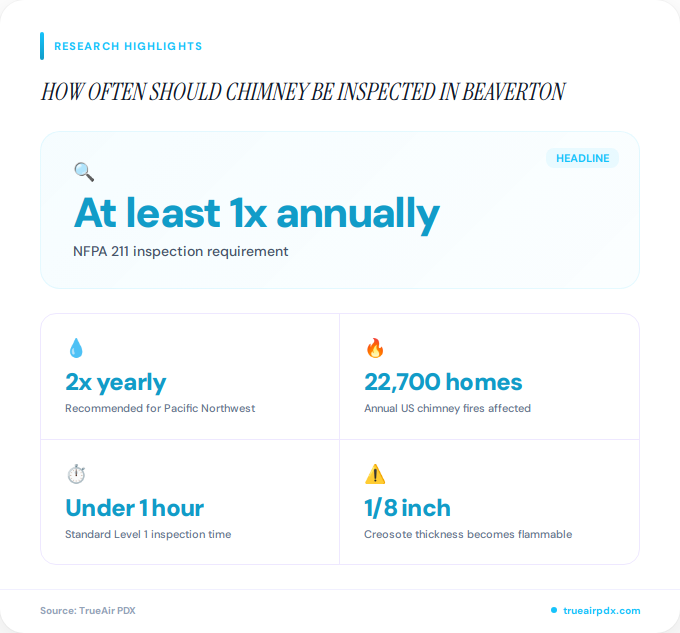
Chimneys in Beaverton should be inspected at least annually according to NFPA 211 standards, with many local experts recommending twice yearly inspections for optimal safety, especially given the Pacific Northwest’s wet climate that accelerates moisture damage and creosote buildup. This frequency applies even to unused chimneys, with additional inspections required after home purchases, repairs, or severe weather events.
Did you know that chimney fires affect over 22,700 homes annually across the United States, with many incidents traced back to inadequate inspection and maintenance schedules? For homeowners in Beaverton, Oregon, understanding how often should chimney be inspected in Beaverton is not just about compliance with safety standards, it is about protecting your home, family, and investment in the face of the Pacific Northwest’s unique environmental challenges.
The question of inspection frequency becomes particularly critical in our region, where residential air quality and ventilation systems face constant exposure to moisture, rain, and temperature fluctuations that accelerate deterioration. While national standards provide baseline guidance, local conditions in Beaverton demand a more nuanced approach to chimney maintenance.
Why Inspection Frequency Matters in Beaverton
Chimney inspection frequency directly impacts home safety, heating efficiency, and long-term maintenance costs. The Pacific Northwest climate creates unique challenges that make regular inspections even more critical than in drier regions of the country.
Moisture infiltration represents the primary threat to chimney systems in Beaverton. When water penetrates masonry, it causes spalling (flaking or breaking of brick surfaces), deteriorates mortar joints, and compromises the structural integrity of the entire system. During freeze-thaw cycles, even minimal moisture can expand and create cracks that worsen exponentially over subsequent seasons.
Creosote buildup poses an equally serious concern. This tar-like substance accumulates inside chimneys when wood burns incompletely, and Beaverton’s damp climate means firewood often contains higher moisture content. Creosote deposits exceeding 1/8 inch thickness become highly flammable and can ignite at temperatures as low as 451°F, creating dangerous chimney fires that spread rapidly to structural components.
Professional inspections catch these issues early, when repair costs remain manageable. 69% of professional chimney inspectors complete standard Level 1 inspections in under one hour, making this a relatively quick process that yields significant safety benefits.
What Do NFPA 211 Standards Require for Chimney Inspections?
The National Fire Protection Association (NFPA) 211 standard establishes the baseline for chimney inspection frequency across the United States. This code mandates that all chimneys, fireplaces, and vents must be inspected at least once a year, regardless of usage frequency.
This annual requirement applies even to chimneys that appear unused or dormant. Chimneys can deteriorate from weather exposure, animal intrusion, and structural settling even when no fires are burned. The NFPA standard recognizes that hidden damage poses the same risks as active wear-and-tear.
The standard distinguishes between three inspection levels, each appropriate for different circumstances. Level 1 inspections represent routine annual checks for systems with no changes. Level 2 inspections become necessary after events like home sales, fuel type changes, or weather incidents. Level 3 inspections involve partial dismantling when serious hazards are suspected.
While NFPA 211 sets the minimum, many Beaverton chimney service providers recommend more frequent inspections based on local conditions. The combination of heavy rainfall, temperature swings, and typical wood-burning patterns in the region often warrants semi-annual inspections for maximum safety.

How Does Beaverton’s Climate Affect Chimney Inspection Needs?
Beaverton’s climate significantly influences how often chimney inspections should occur. The region receives substantial annual rainfall, with wet conditions persisting from October through May. This prolonged moisture exposure creates accelerated deterioration patterns not seen in drier climates.
Water represents masonry’s primary enemy. When moisture penetrates brick and mortar through small cracks or compromised flashing, it begins a destructive cycle. During colder periods, trapped water freezes and expands, widening existing cracks. When temperatures rise, the ice melts and allows more water to penetrate deeper into the structure. This freeze-thaw action repeats dozens of times each winter season.
The Pacific Northwest’s moderate temperatures also create unique combustion challenges. Homeowners often burn fires during transitional seasons (fall and spring) when temperatures hover in the 40-60°F range. These moderate conditions result in incomplete combustion and increased creosote formation compared to the hotter, cleaner burns that occur during colder winter months.
| Climate Factor | Impact on Chimneys | Recommended Action |
|---|---|---|
| Heavy rainfall (40+ inches annually) | Accelerated masonry deterioration, water staining | Twice-yearly inspections, waterproofing treatments |
| Moderate temperatures | Increased creosote from incomplete combustion | Mid-season inspections during active use |
| Freeze-thaw cycles | Crack expansion, mortar joint failure | Spring inspections to assess winter damage |
Similar to how air duct systems require regular maintenance to function properly in various climates, chimneys need attention tailored to regional conditions. The damp environment also promotes biological growth, with moss, algae, and lichen frequently appearing on chimney exteriors, indicating moisture problems that may extend to internal components.
What Are the Different Types of Chimney Inspections?
Understanding the three levels of chimney inspections helps homeowners determine which type they need and when. Each level provides progressively more detailed examination of the chimney system.
Level 1 Inspections represent standard annual examinations for chimneys in normal operating condition with no changes to the system. Inspectors examine readily accessible portions of the chimney interior and exterior, checking for basic soundness, freedom from deposits, and proper clearances. This inspection level typically takes 30-60 minutes and covers visible components without requiring special equipment.
Level 2 Inspections include everything in Level 1 plus video scanning of internal flue surfaces and inspection of attics, crawl spaces, and other concealed areas where the chimney passes through. This level becomes necessary when selling or buying a home, after changing fuel types or appliances, following chimney fires or weather events, or when making modifications to the system. Video scans typically add 1-2 hours to inspection time.
Level 3 Inspections involve removing or dismantling portions of the chimney or building structure to access hidden areas when serious hazards are suspected. These inspections occur rarely, typically only after Level 2 inspections reveal concerning issues that cannot be fully evaluated through video scanning.
When Needed: Annual routine maintenance
Scope: Accessible areas only
Cost Range: $150 to $400
When Needed: Home sales, fuel changes, events
Scope: Video scanning, concealed areas
Cost Range: $250 to $800+
When Needed: Suspected serious hazards
Scope: Partial dismantling required
Cost Range: $2,000 to $5,000+
For Beaverton homeowners, annual Level 1 inspections provide baseline protection, while Level 2 inspections should occur at recommended intervals or when purchasing property. The local climate makes the investment in comprehensive Level 2 inspections particularly worthwhile every 2-3 years, even without specific triggering events.
What Warning Signs Require Immediate Inspection?
Certain indicators demand immediate professional inspection, regardless of your regular maintenance schedule. Recognizing these warning signs can prevent catastrophic failures and expensive emergency repairs.
Visible deterioration represents the most obvious concern. White staining (efflorescence) on exterior masonry indicates moisture infiltration and salt migration. Cracked or missing mortar joints allow water penetration and structural instability. Broken or displaced chimney tiles visible from below signal serious internal damage that requires immediate attention.
Operational issues often indicate hidden problems. Smoke entering the room instead of exhausting properly suggests blockages, draft problems, or damaged flue liners. Persistent odors when the fireplace is not in use may indicate moisture problems, animal intrusion, or creosote buildup. Difficulty starting or maintaining fires points to inadequate draft or ventilation issues.
Performance changes warrant investigation. If your previously well-functioning fireplace suddenly produces more smoke, burns less efficiently, or creates unusual sounds, these changes indicate developing problems. Soot accumulation on fireplace fronts or ceiling stains near the chimney opening suggest combustion issues or draft reversals.
Structural indicators require urgent attention. Masonry pieces falling from the chimney crown or chase, visible cracks in the chimney structure, or leaning chimney stacks represent serious safety hazards. Interior water damage near the chimney, including ceiling stains or peeling wallpaper, indicates active leaks that will worsen without intervention.
How Much Do Chimney Inspections Cost in Beaverton?
Chimney inspection costs in Beaverton vary significantly based on inspection level, chimney height and accessibility, system complexity, and the inspector’s qualifications and equipment. Understanding these factors helps homeowners budget appropriately for proper maintenance.
Basic Level 1 inspections typically range from $150 to $400 for standard residential chimneys. This cost covers visual examination of accessible components, draft testing, and basic safety assessment. Pricing varies based on whether the inspection is standalone or bundled with cleaning services, which many providers recommend scheduling simultaneously.
Level 2 inspections with video scanning generally cost $250 to $800 or more, depending on chimney height, the number of flues, and accessibility challenges. The video documentation provides valuable records for insurance purposes and future reference. Some providers charge separately for travel to certain areas of Beaverton or for weekend and evening appointments.
Bundled services often provide better value. Many Beaverton chimney companies offer package deals combining inspection, cleaning, and minor repairs for $400 to $900+. These comprehensive appointments ensure all aspects of chimney maintenance occur simultaneously, potentially saving on multiple service call fees.
It is important to note that inspection costs represent a small fraction of potential repair expenses. Addressing minor issues discovered during routine inspections typically costs $200 to $2,000, while major repairs for neglected chimneys can exceed $5,000 to $15,000 or more. Similar to how preventive maintenance reduces major repair costs in other home systems, regular chimney inspections prevent expensive emergency interventions.
Pricing varies based on your specific chimney configuration, accessibility, and the scope of services required. Premium service providers emphasize thoroughness, advanced diagnostic equipment, and comprehensive documentation over lowest-cost options. When evaluating providers, consider certifications (CSIA, NFI), insurance coverage, and local reputation rather than price alone. Contact qualified professionals for custom quotes based on your home’s specific needs.
When Is the Best Time to Schedule Inspections?
Timing chimney inspections strategically maximizes safety and convenience while potentially reducing costs. In Beaverton, seasonal patterns significantly influence optimal inspection scheduling.
Early fall (September through October) represents the ideal window for annual inspections. This timing allows homeowners to address any issues before the primary heating season begins. In Beaverton, most chimney cleanings and inspections occur between September and March, creating high demand during late fall and winter months. Scheduling early secures preferred appointment times and avoids rush fees.
Spring inspections (April through May) serve as excellent secondary checkpoints, particularly for wood-burning systems used heavily during winter. Post-season inspections identify damage from freeze-thaw cycles before summer weather allows moisture to penetrate compromised areas. This timing also positions homeowners to complete repairs during contractor-friendly weather conditions.
For homeowners following twice-yearly inspection schedules recommended by many local experts, the combination of September and April inspections provides comprehensive monitoring. The fall inspection prepares the system for heavy use, while the spring inspection assesses wear and winter damage.
| Season | Advantages | Considerations |
|---|---|---|
| Early Fall (Sept-Oct) | Pre-season preparation, better availability | Book early for best rates and times |
| Spring (Apr-May) | Assess winter damage, repair-friendly weather | Less demand, often lower pricing |
| Summer (Jun-Aug) | Lowest demand, flexible scheduling | Too late for pre-season issues |
Avoid scheduling inspections during peak demand periods (November through January) unless necessary. During these months, providers face heavy workloads, appointment availability decreases, and emergency calls take priority over routine maintenance. Some companies implement seasonal pricing premiums during high-demand periods.
Key Takeaways
- Annual inspections are mandatory: NFPA 211 standards require all chimneys to be inspected at least once yearly, with twice-yearly inspections recommended for Beaverton’s wet climate conditions
- Climate matters significantly: The Pacific Northwest’s moisture-rich environment accelerates chimney deterioration through freeze-thaw cycles, creosote buildup, and masonry damage
- Three inspection levels exist: Level 1 for routine annual checks, Level 2 for home sales or system changes with video scanning, and Level 3 for suspected serious hazards requiring structural access
- Warning signs demand immediate action: White exterior staining, smoke entry into rooms, visible cracks, and performance changes require professional inspection regardless of schedule
- Optimal timing is strategic: Schedule inspections in early fall (September-October) before heating season or in spring (April-May) to assess winter damage and secure better pricing and availability
- Prevention saves money: Regular inspections costing $150 to $800 prevent major repairs that can exceed $5,000 to $15,000 for neglected systems
- Professional qualifications matter: Choose certified inspectors (CSIA, NFI) with proper insurance, advanced equipment, and strong local reputations over lowest-cost options
People Also Ask
How often should you have your chimney cleaned?
Chimneys should be cleaned when soot buildup reaches 1/8 inch thickness or whenever creosote accumulation (glazed or tar-like deposits) is visible. For wood-burning fireplaces used regularly in Beaverton, this typically means cleaning once or twice annually, often scheduled simultaneously with inspections during early fall and spring.
Do unused chimneys need to be inspected?
Yes, unused chimneys require annual inspections according to NFPA 211 standards. Chimneys deteriorate from weather exposure, animal intrusion, and structural settling even without active use. In Beaverton’s wet climate, moisture damage accelerates regardless of fireplace activity, making regular inspections essential for all chimney systems.
What happens during a Level 2 chimney inspection?
Level 2 inspections include all Level 1 components plus video scanning of internal flue surfaces and examination of concealed areas like attics and crawl spaces where chimneys pass through. Inspectors use specialized cameras to document interior conditions, checking for cracks, obstructions, or deterioration not visible from access points.
Can I inspect my own chimney?
While homeowners can perform basic visual checks for obvious problems like debris or animal nests, professional inspections are necessary for comprehensive safety evaluation. Certified inspectors have specialized training, equipment, and experience to identify hidden hazards, structural issues, and code compliance concerns that untrained observers typically miss.
How long does a typical chimney inspection take?
Standard Level 1 inspections typically take 30-60 minutes for most residential chimneys. Level 2 inspections with video scanning require 1-2 hours depending on chimney height, complexity, and the number of flues. More thorough examinations or chimneys with accessibility challenges may require additional time.
What is the difference between chimney cleaning and inspection?
Chimney cleaning removes creosote, soot, and debris from flue surfaces to prevent fires and improve draft. Inspection evaluates the structural condition, safety, and proper operation of the entire chimney system. While often performed together, they are distinct services, both professionals recommend combining them for comprehensive maintenance.
Frequently Asked Questions
How often should chimney be inspected in Beaverton for gas fireplaces?+
Gas fireplaces require annual inspections just like wood-burning systems according to NFPA 211 standards. While they produce less creosote, gas appliances can develop carbon monoxide hazards, blocked vents, or deteriorated seals. Beaverton’s climate still causes moisture damage to chimney structures regardless of fuel type, making yearly professional inspections essential for safety.
What certifications should chimney inspectors in Beaverton have?+
Reputable chimney inspectors should hold certifications from the Chimney Safety Institute of America (CSIA) or National Fireplace Institute (NFI). These credentials demonstrate standardized training, ongoing education, and adherence to industry best practices. Additionally, verify that inspectors carry proper liability insurance and workers’ compensation coverage to protect your property during service.
Does homeowners insurance cover chimney inspection costs in Beaverton?+
Standard homeowners insurance policies typically do not cover routine maintenance costs including inspections. However, some insurers offer discounts for documented regular maintenance or may require inspection records after claims. Insurance may cover repairs for sudden damage from covered events like storms, but not deterioration from deferred maintenance.
Should I get a chimney inspection before buying a home in Beaverton?+
Absolutely. Level 2 inspections with video documentation are recommended for all home purchases with chimneys. These inspections identify hidden damage, code violations, or safety hazards that standard home inspections might miss. Discovering major chimney issues before closing provides negotiating leverage and prevents unexpected repair expenses after purchase.
What months are best for chimney inspection appointments in Beaverton?+
September and October offer the best appointment availability, competitive pricing, and timely pre-season preparation. April and May provide excellent secondary timing for post-winter assessments and repair-friendly weather. Avoid November through January when demand peaks, availability decreases, and providers may charge premium rates for limited scheduling windows.
Can chimney inspections identify carbon monoxide risks?+
Yes, professional chimney inspections assess ventilation adequacy, draft performance, and structural integrity that directly impact carbon monoxide safety. Inspectors check for blockages, cracks, or backdrafting issues that could allow dangerous gases to enter living spaces. However, inspections complement but do not replace carbon monoxide detectors, which every home with fuel-burning appliances should have.
How do I prepare for a chimney inspection in Beaverton?+
Clear the area around your fireplace and provide roof access if needed. Remove decorative items from the mantel and cover nearby furniture to protect from soot. Provide any service history documentation and note specific concerns. Most importantly, avoid using the fireplace for 24-48 hours before inspection to ensure safe working conditions and accurate assessments.