
Why Portland Homeowners Are Asking About Air Duct Cleaning
HVAC air duct cleaning removes dust and contaminants from your heating and cooling system. But is it worth it? The answer depends on your home’s specific conditions.
Quick Answer: Should You Clean Your Air Ducts?
- Clean if: You see visible mold, rodent/insect infestation, or excessive dust from vents.
- Consider cleaning if: You have unexplained allergies, recently renovated, or haven’t cleaned in 5+ years.
- Skip routine cleaning: The EPA does not recommend it as a yearly maintenance requirement.
- Typical cost: $450-$1,000 for a whole-system cleaning.
- Warning: Avoid companies making unverified health claims or offering suspiciously low prices.
While studies haven’t conclusively shown that dirty ducts increase particle levels in all homes, ducts can accumulate substantial contamination. Indoor air can be two to five times more polluted than outdoor air, and dirty ducts are one potential source of pollutants.
Cleaning done improperly can cause more problems than it solves. An inadequate vacuum system can release more dust, and a careless provider can damage your HVAC system. This guide shows you when cleaning makes sense and how to spot professional service.
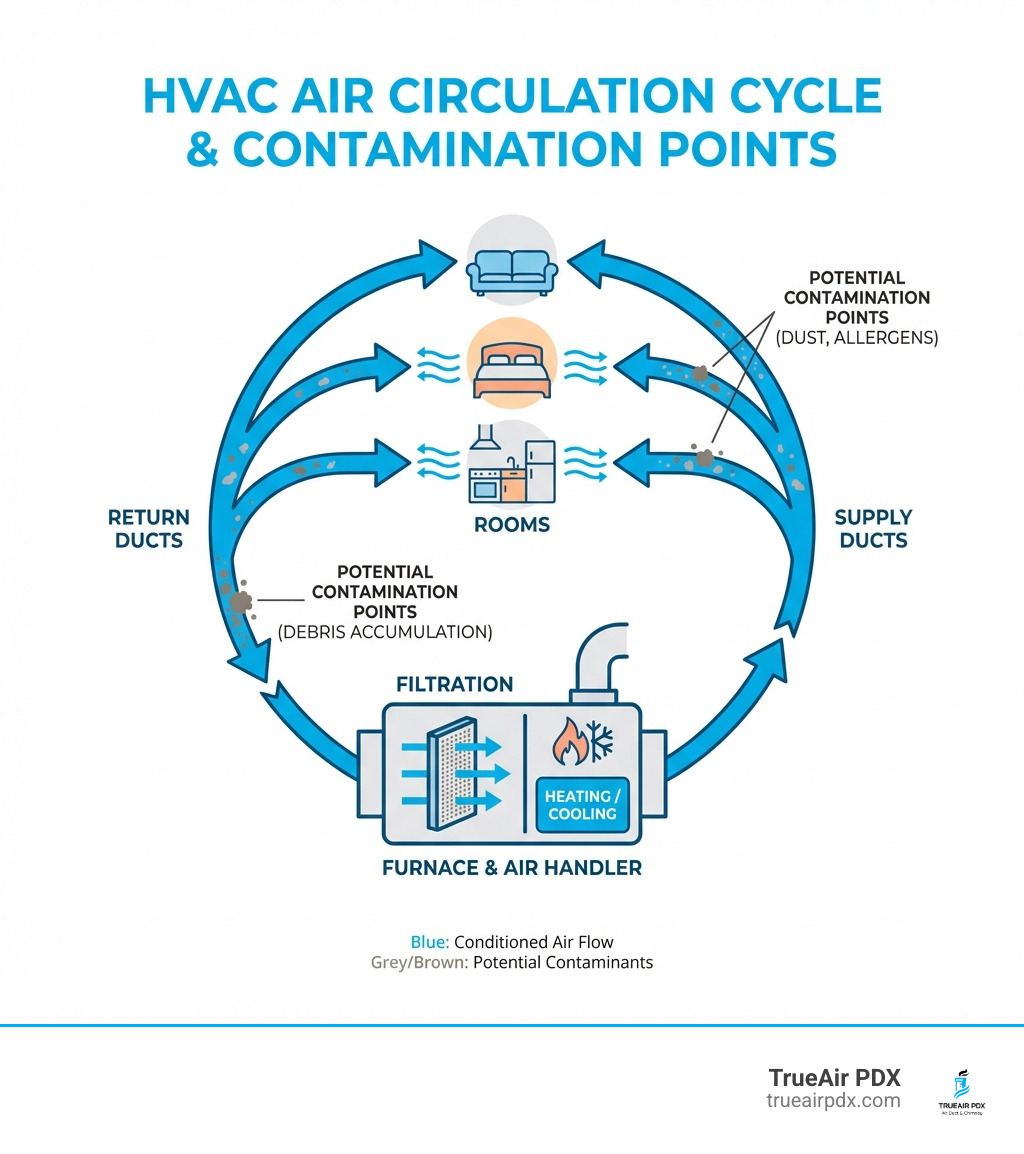
Basic HVAC air duct cleaning vocab:
Understanding the Process of HVAC Air Duct Cleaning
Effective HVAC air duct cleaning involves the entire heating and cooling system. Cleaning only the ducts while leaving other components dirty leads to rapid recontamination. A comprehensive process includes cleaning supply and return ducts, registers, grilles, heat exchangers, coils, drain pans, and the fan motor.
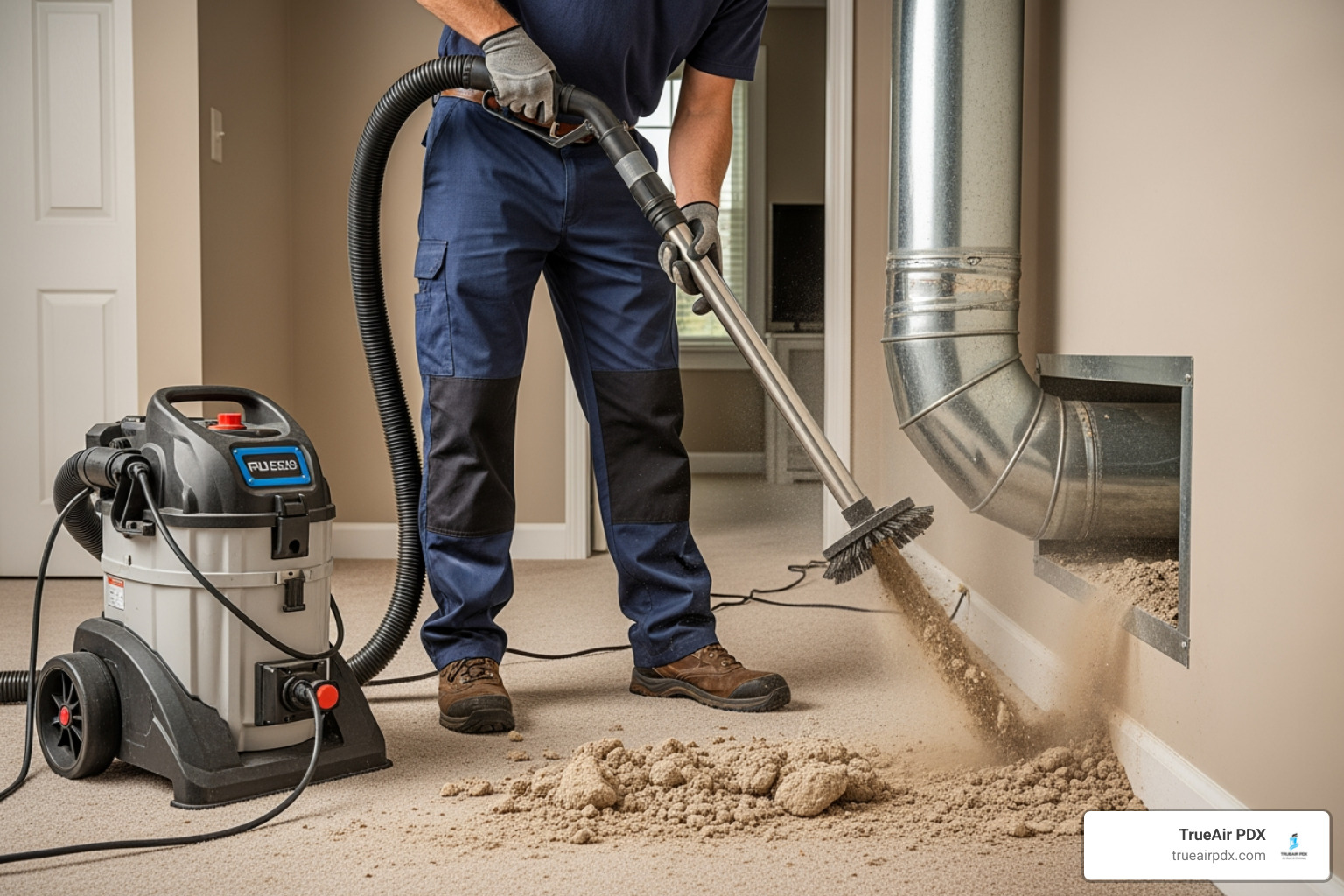
Professional cleaning relies on breaking contaminants loose and collecting them. Technicians use agitation devices like brushes and air whips to dislodge debris while the system is under continuous negative pressure from powerful vacuums. This ensures contaminants are pulled into a contained filtration system rather than spreading into your home. For more details, visit our page on air duct cleaning services.
Benefits for Indoor Air Quality
Many Portland and Gresham homeowners consider cleaning to improve indoor air quality (IAQ). Research shows indoor air can be two to five times more polluted than outdoor air.
- Allergen Reduction: Removing dust mites, pet dander, and mold spores can alleviate symptoms for asthma and allergy sufferers.
- Improved Airflow Efficiency: Clean ducts allow air to flow freely, reducing strain on your system and potentially lowering energy bills.
- System Longevity: Removing abrasive particles prevents wear on components like the blower motor and coils.
| Pollutant Type | Indoor Environment (Dirty Ducts) | Outdoor Environment (Typical Urban) |
|---|---|---|
| Dust/Particulates | High accumulation, recirculated | Variable, depending on local sources |
| Allergens | Concentrated (dander, pollen) | Seasonal (pollen) |
| Mold Spores | Potential for growth in damp areas | Present, but often dispersed |
| Chemicals | Off-gassing from products | Industrial emissions |
Comparing IAQ Solutions
HVAC air duct cleaning is part of a broader strategy. We also recommend:
- In-Duct Air Purifiers: Systems using UV-C light to detoxify air as it circulates.
- High-Efficiency Filters: The first line of defense against airborne particles. Ensure they fit properly without gaps.
Explore more services for superior air quality.
Signs Your Home Needs Professional Attention
The EPA suggests HVAC air duct cleaning on an “as-needed” basis. Here are the key indicators that your home needs professional attention:
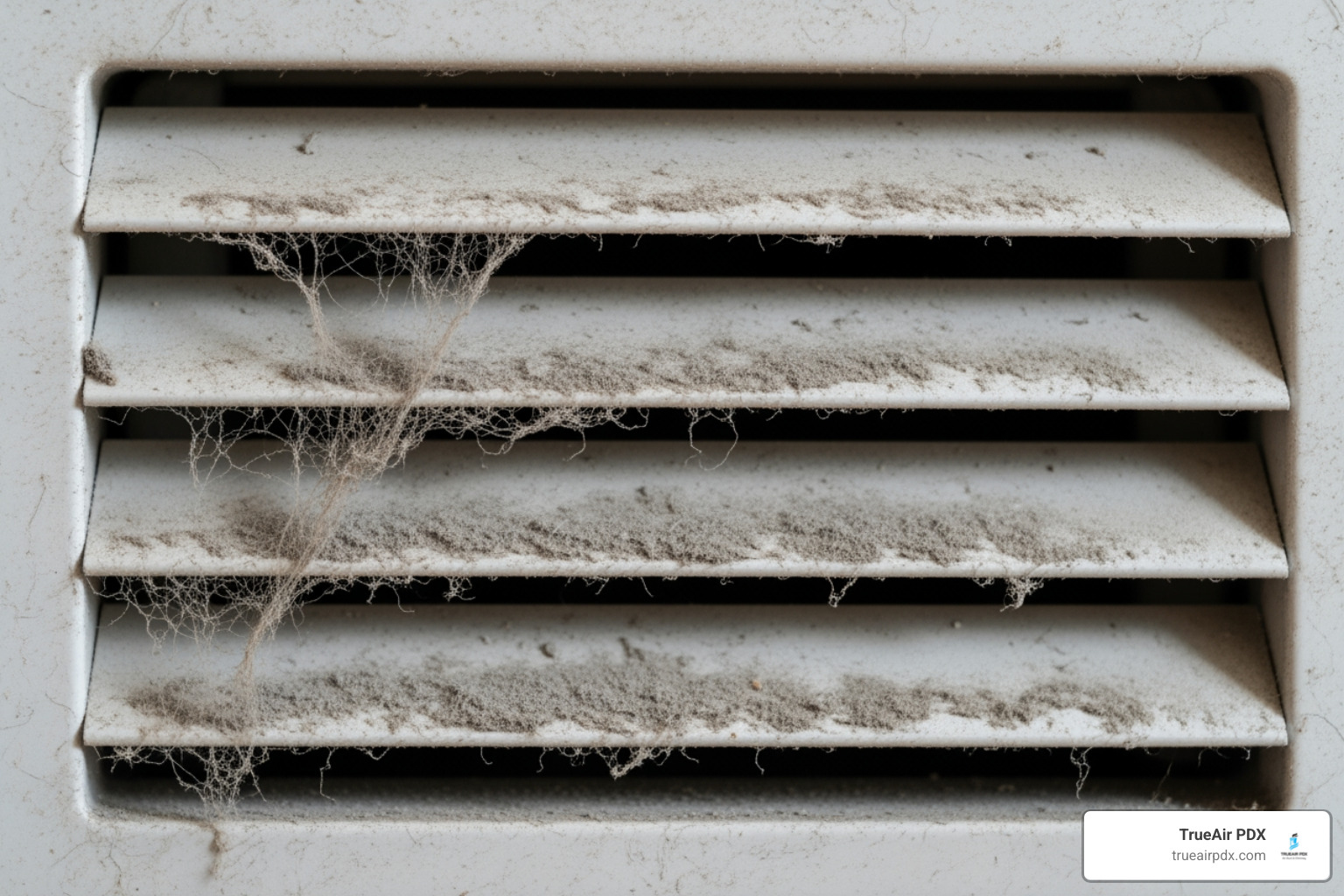
- Visible Mold Growth: Substantial mold inside hard surface ducts or on HVAC components is a major concern. If insulated ducts get wet or moldy, they must be replaced.
- Vermin Infestation: Rodents or insects leave droppings and nesting materials that contaminate your air.
- Excessive Debris: If ducts are visibly clogged or releasing particles into your living space, cleaning is necessary.
- Unexplained Symptoms: If family members experience unusual respiratory issues related to the indoor environment, dirty ducts may be a factor.
- Persistent Odors: Musty smells from vents often indicate microbial growth or trapped debris.
For local guidance, see our guide on how often you should clean your air ducts in Portland.
When to Schedule Cleaning
- After Renovations: Construction dust and drywall debris easily enter ductwork.
- Moving into a New Home: A cleaning offers a fresh start if the maintenance history is unknown.
- New Pets: Increased pet dander and hair accumulate quickly in ducts.
- General Intervals: Many homeowners choose an inspection every 3-5 years to manage natural dust accumulation.
Identifying Contamination Sources
Moisture control is the most effective way to prevent biological growth. Ensure condensate drain pans drain properly and that ducts in unconditioned spaces are sealed and insulated to prevent condensation. For issues related to the heart of your system, we also offer furnace coil cleaning.
The Cost of Professional Services and Avoiding Scams
Air duct cleaning typically costs between $450-$1000 according to NADCA and the EPA. Several factors influence the final estimate, including the type of ductwork, system size, and level of contamination.
Common Pricing Models
- Per-Vent Fees: A base fee plus a charge for each supply and return vent.
- Flat Fee + Per-Vent: A flat rate for basic service with extra charges for additional vents.
- Access Door Installation: Technicians may need to create service openings if your system lacks them.
Different factors can go into the estimate process, such as the complexity of the layout and environmental factors like pets or smokers. For a breakdown, see our page on duct cleaning charges.
How to Spot “Blow-and-Go” Scams
- Bait-and-Switch: Beware of “$99 whole-house” offers. These are often used to get in the door before pressuring you into expensive add-ons.
- Unsubstantiated Health Claims: Be wary of companies claiming to cure health issues solely through duct cleaning.
- EPA Certification Myths: The EPA does not certify duct cleaning companies. Look for NADCA certification instead.
- Incomplete Cleaning: Scammers often clean only visible registers. A proper job involves the entire HVAC system.
Essential Add-on Services
- Dryer Vent Cleaning: This should be done annually to prevent lint buildup that can lead to house fires.
- Antimicrobial Treatments: The EPA advises caution with biocides. They should only be used on bare sheet metal after mechanical cleaning and only if absolutely necessary.
At TrueAir PDX, we prioritize safety. Learn more about our eco-friendly duct cleaning methods.
Professional Standards and What to Expect
Professional HVAC air duct cleaning should adhere to standards set by the National Air Duct Cleaners Association (NADCA). Their “Assessment, Cleaning and Restoration (ACR)” standard is the industry benchmark.
The Role of NADCA and NAIMA
NADCA members must have certified Air System Cleaning Specialists (ASCS) on staff. For fiberglass-lined ducts, the North American Insulation Manufacturers Association (NAIMA) provides specific handling guidelines. A professional service cleans the entire system, including coils, drain pans, and blower motors. For Gresham residents, see our Gresham duct cleaning guide.
What to Expect During Service
- Inspection: Technicians assess the system’s condition and contamination levels.
- Access: Access ports are opened or created to reach all parts of the system.
- Containment: The system is placed under negative pressure to prevent dust from entering your home.
- Agitation: Tools like rotary brushes dislodge debris from duct surfaces.
- Component Cleaning: Coils, drain pans, and blower assemblies are cleaned. See our furnace cleaning Portland guide 2025 for more.
- Protection: Technicians protect your furnishings and carpets.
- Verification: Access points are sealed, and a final inspection is performed.
Verifying Quality and Understanding Risks
Verify cleanliness through a visual inspection or remote photography. Be aware that inexperienced technicians can damage flexible ducts. Furthermore, the use of chemical biocides or sealants is controversial; the EPA does not recommend their routine use. Ozone-generating methods should also be avoided due to potential health risks.
Best Practices for Preventing Duct Contamination
Preventing contamination reduces the need for frequent HVAC air duct cleaning.
Routine HVAC Maintenance
- Filter Maintenance: Change high-efficiency filters every 1-3 months. Ensure a proper fit to prevent air bypass.
- Coil Cleaning: Have your cooling coils and drain pans cleaned during regular maintenance to prevent mold. See our furnace coil cleaning guide 2025.
- Moisture Management: Promptly repair leaks. Ensure ducts in attics or crawl spaces are insulated to prevent condensation.
- Regular Cleaning: Vacuuming your home with a HEPA vacuum reduces the dust drawn into the HVAC system.
For cooling system care, see our air conditioning duct cleaning Portland guide.
Construction and Renovation Safety
- Seal Registers: Use plastic sheeting to cover registers during dusty work.
- Avoid HVAC Operation: Do not run the system during heavy construction.
- Post-Project Cleanup: Clean the area thoroughly before removing register seals.
Frequently Asked Questions about Air Duct Cleaning
How often should I have my air ducts cleaned?
The EPA does not recommend routine annual cleaning. However, most Portland homeowners should consider an inspection and potential cleaning every 3 to 5 years. You may need it more often if you have shedding pets, severe allergies, or have recently renovated.
Can air duct cleaning lower my energy bills?
Cleaning only the ducts rarely impacts efficiency unless they are severely blocked. However, a whole-system cleaning that includes the cooling coils and blower motor can improve heat exchange and airflow, potentially lowering energy costs and extending equipment life.
Is it safe to use chemical biocides in my ductwork?
The EPA advises caution as research on biocide effectiveness in ducts is limited. They should never be used on fiberglass ducts. If used on sheet metal, they must be EPA-registered and applied strictly according to label instructions after mechanical cleaning. We prioritize mechanical source removal over chemical treatments.
Conclusion
Deciding whether to clean your air ducts can feel overwhelming, but by understanding the process, recognizing the signs, and knowing what to expect from professionals, you can make an informed choice for your Portland home. While not a routine necessity, HVAC air duct cleaning plays a vital role when specific contamination issues arise, contributing to better indoor air quality, improved HVAC efficiency, and overall home safety.
At TrueAir PDX, we believe in transparency, education, and delivering exceptional service. Our team is dedicated to helping you breathe cleaner, healthier air and ensuring your HVAC system operates at its best. If you’re experiencing any of the signs your home needs attention, or if you simply want a professional assessment, we’re here to help.
Don’t let dirty ducts compromise your home’s comfort and air quality. Contact us today for a professional inspection and a clear, honest assessment of your HVAC system’s needs.